The last four names added to the periodic table arrived in a short sequence of announcements from IUPAC, the International Union of Pure and Applied Chemistry, between December 2015 and November 2016. The details are easy to blur: which were named after places, which after a person, who was allowed to suggest names and how the table is laid out. The IUPAC pages below were read on 8 November 2026 and are the only sources used.
30 December 2015: the seventh row is complete
IUPAC announced on 30 December 2015 that a joint working party of IUPAC and the International Union of Pure and Applied Physics had determined that the discovery claims for elements 113, 115, 117 and 118 had been fulfilled. The announcement said these elements complete the seventh row of the periodic table and that discoverers from Japan, Russia and the USA would be invited to suggest permanent names and symbols.
Until then the four carried temporary names: ununtrium (Uut), ununpentium (Uup), ununseptium (Uus) and ununoctium (Uuo). The announcement credited the RIKEN collaboration in Japan with element 113. For 115 and 117 it named the collaboration between the Joint Institute for Nuclear Research in Dubna, Russia, Lawrence Livermore National Laboratory and Oak Ridge National Laboratory, and for 118 the Dubna and Livermore collaboration.
8 June 2016: four names go to public review
IUPAC’s release of 8 June 2016 set out the proposed names: nihonium (Nh) for element 113, moscovium (Mc) for 115, tennessine (Ts) for 117 and oganesson (Og) for 118. It listed the traditions that new names can follow: a mythological concept or character, a mineral or similar substance, a place or geographical region, a property of the element, or a scientist. A five-month public review was set, expiring on 8 November 2016, before formal approval by the IUPAC Council.
The release described element 113 as the first element to have been discovered in an Asian country.
28 November 2016: the names are approved
A later IUPAC release reports that on 28 November 2016 the names and symbols were approved by the IUPAC Bureau. The two releases word the approving body differently, the June one naming the Council and the November one the Bureau, and both are reported here as written. IUPAC says comments from the public were many, some suggesting other names and some backed by petitions, but could not be accepted because under the current guidelines only the discoverers have the right to propose names and symbols.
Quiz traps in the four names
Three honour places, but only one is a country. IUPAC says nihonium comes from Nihon, one of the two ways to say Japan in Japanese, and its release says the name was proposed to make a direct connection to the nation where the element was discovered. Moscovium is in recognition of the Moscow region, and tennessine of the Tennessee region of the United States, including Oak Ridge National Laboratory, Vanderbilt University and the University of Tennessee at Knoxville.
One honours a person. Oganesson recognises Professor Yuri Oganessian, shown in IUPAC’s releases as born in 1933, for his contributions to transactinoid elements research. The releases do not say he is living, so a question that does should be checked elsewhere.
The endings follow a rule. IUPAC gives “-ium” for elements of groups 1 to 16, “-ine” for group 17 and “-on” for group 18, which is why 117 ends in “-ine” and 118 in “-on”.
The symbol Ts has another meaning. Members of the chemistry community raised that Ts is also a common abbreviation for the tosyl group. IUPAC concluded that, as many two-letter abbreviations have multiple meanings, the context makes the meaning unambiguous.
The table itself: what IUPAC does and does not say
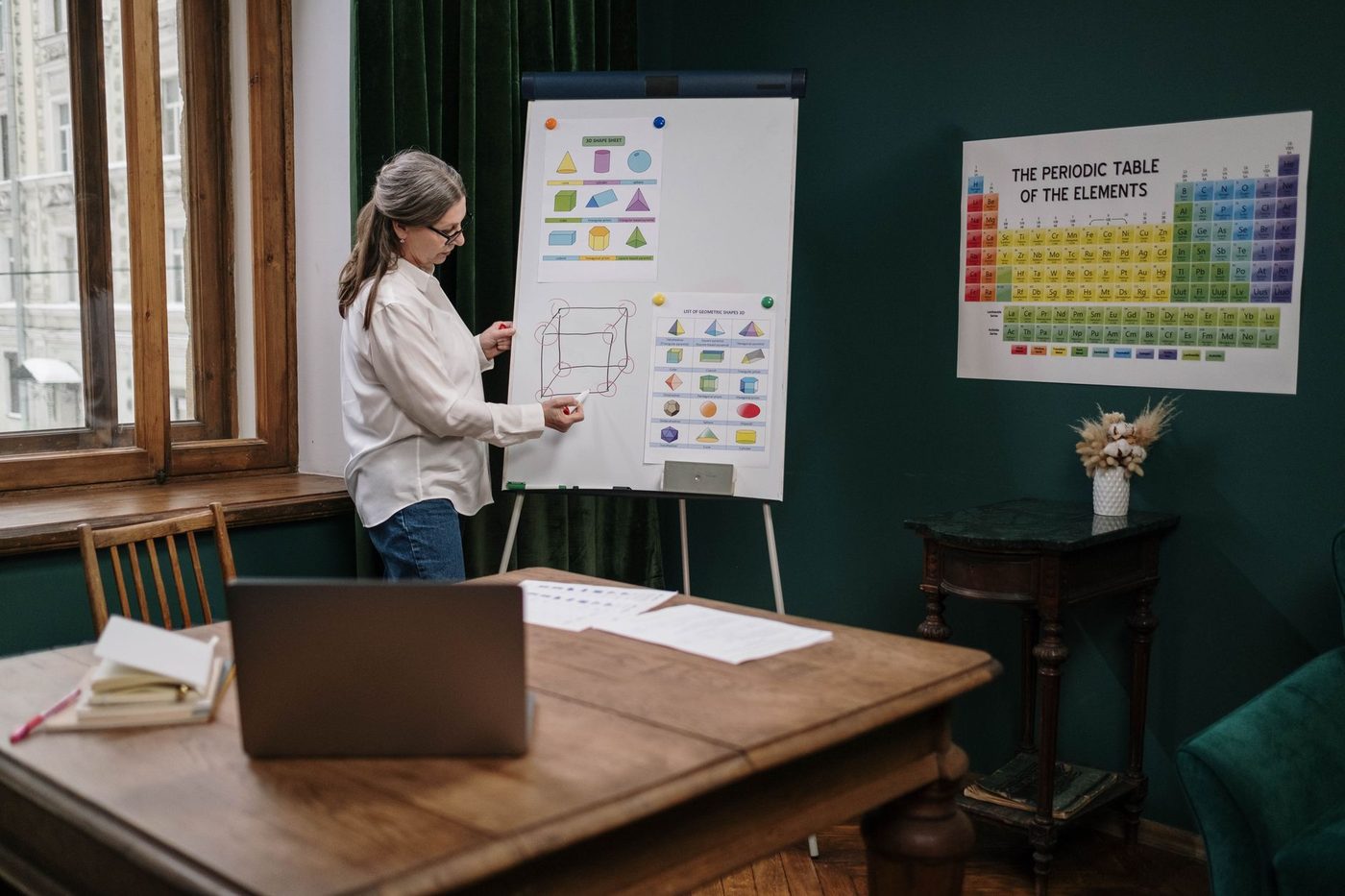
IUPAC’s periodic table page says its latest release of the table is dated 4 May 2022 and that it has no recommendation for a specific form of the table, whether 18-column or 32-column; the version shown is the conventional long form. The page says that since 1988 IUPAC has recommended that groups be numbered 1 to 18, and that the collective names lanthanoids and actinoids are recommended, with lanthanoids preferred over lanthanide. It describes the question of which elements belong in group 3 as one that has been debated from time to time.
On the question of what comes after the seventh row, the November 2016 release says scientists were searching for elements beyond it, and that IUPAC and IUPAP were establishing a new joint working group to examine the criteria used to verify claims.
The bottom line
IUPAC’s own pages put the verification of elements 113, 115, 117 and 118 on 30 December 2015, the proposed names on 8 June 2016 and the approval on 28 November 2016. Three names honour places or regions (Japan, the Moscow region, the Tennessee region) and one honours a scientist, and only the discoverers could propose them. IUPAC does not recommend an 18-column or 32-column layout. The pages describe their own dates and wording, and later changes should be checked on IUPAC’s site.
Sources
- Discovery and Assignment of Elements with Atomic Numbers 113, 115, 117 and 118, IUPAC press release, 30 December 2015, read 8 November 2026 (iupac.org)
- IUPAC is naming the four new elements nihonium, moscovium, tennessine, and oganesson, IUPAC, release dated 8 June 2016 on IUPAC’s periodic table page, read 8 November 2026 (iupac.org)
- Elements 113, 115, 117, and 118 are now formally named nihonium (Nh), moscovium (Mc), tennessine (Ts), and oganesson (Og), IUPAC, reports approval on 28 November 2016, read 8 November 2026 (iupac.org)
- Periodic Table of Elements, IUPAC, page shows a latest release dated 4 May 2022, read 8 November 2026 (iupac.org)
Leave a Reply