
Which ancient Chinese emperor is famous for the Terracotta Army?
 Severin.stalder / Wikimedia Commons / CC BY-SA 3.0
The Terracotta Army was made to accompany Qin Shi Huang, the first emperor of a unified China.
Whose teachings are recorded in the collection known as the Analects?
Severin.stalder / Wikimedia Commons / CC BY-SA 3.0
The Analects gathers sayings of Confucius and his followers, compiled after his lifetime.
What is the ancient network of trade routes linking China with the Mediterranean called?
Severin.stalder / Wikimedia Commons / CC BY-SA 3.0
The Silk Road carried silk, spices, ideas and religions between China, Central Asia and the Mediterranean.
Which material is traditionally credited to the Han court official Cai Lun around 105 AD?
Severin.stalder / Wikimedia Commons / CC BY-SA 3.0
Cai Lun is traditionally credited with improving and standardising papermaking in 105 AD.
Which river is often called the cradle of Chinese civilisation?
Severin.stalder / Wikimedia Commons / CC BY-SA 3.0
Early Chinese cultures and dynasties developed in the Yellow River (Huang He) valley.
Who is traditionally credited with writing ‘The Art of War’?
Severin.stalder / Wikimedia Commons / CC BY-SA 3.0
The military treatise ‘The Art of War’ is attributed to the general and strategist Sun Tzu.
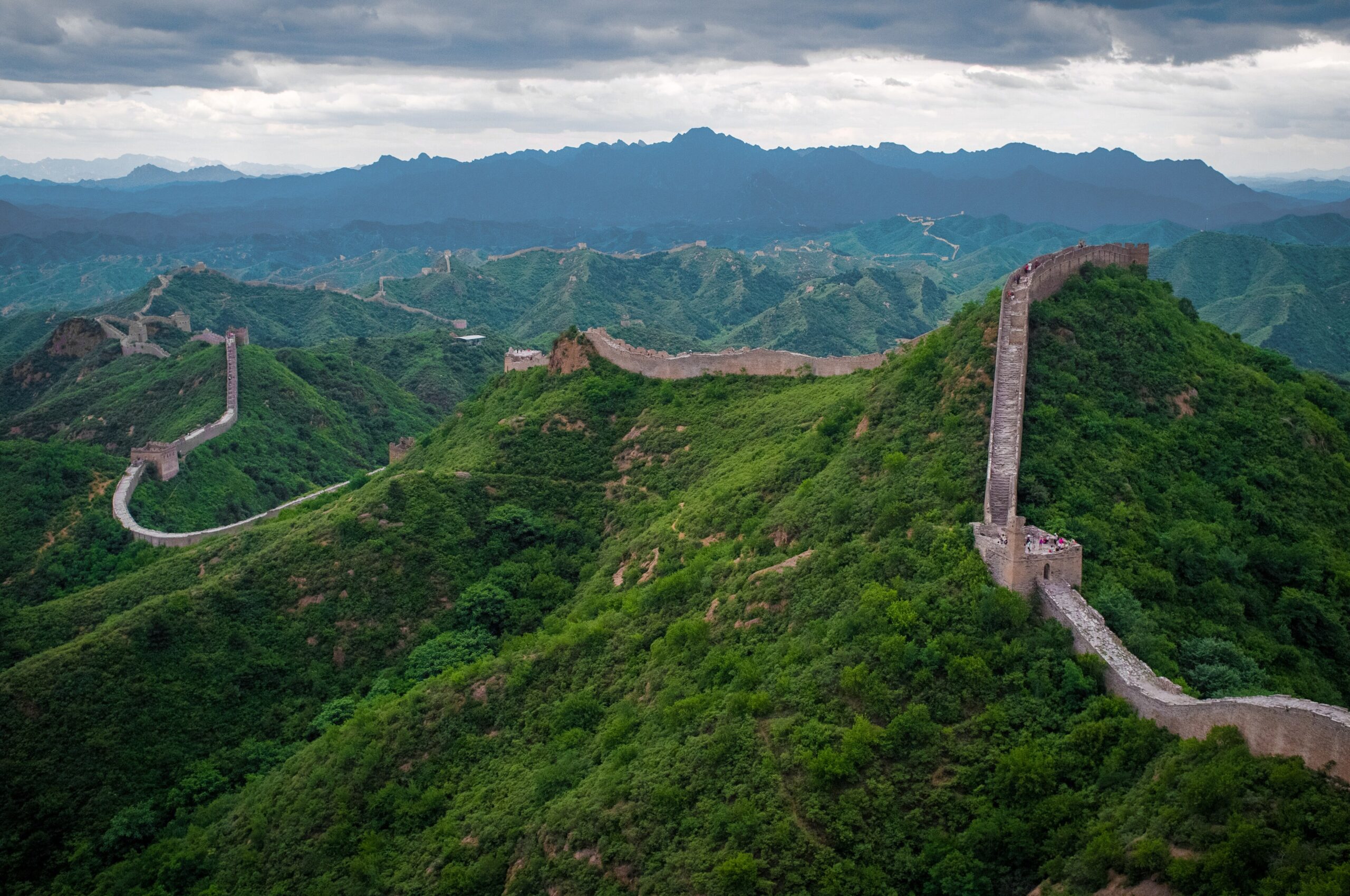
The Great Wall was built mainly to defend against raids from which direction?
Severin.stalder / Wikimedia Commons / CC BY-SA 3.0
The walls protected Chinese states from nomadic peoples of the northern steppes.
Which dynasty followed the Qin and ruled for about four centuries?
Severin.stalder / Wikimedia Commons / CC BY-SA 3.0
The Han dynasty ruled from 206 BC to 220 AD; the Han Chinese take their name from it.
Who is traditionally regarded as the author of the Tao Te Ching?
Severin.stalder / Wikimedia Commons / CC BY-SA 3.0
The Tao Te Ching, the founding text of Taoism, is traditionally attributed to Laozi.
Which navigational instrument grew out of Chinese experiments with lodestone ‘south-pointers’?
Severin.stalder / Wikimedia Commons / CC BY-SA 3.0
Early Chinese lodestone spoons pointed south; the magnetic compass was later used for navigation.
Share your Results: