
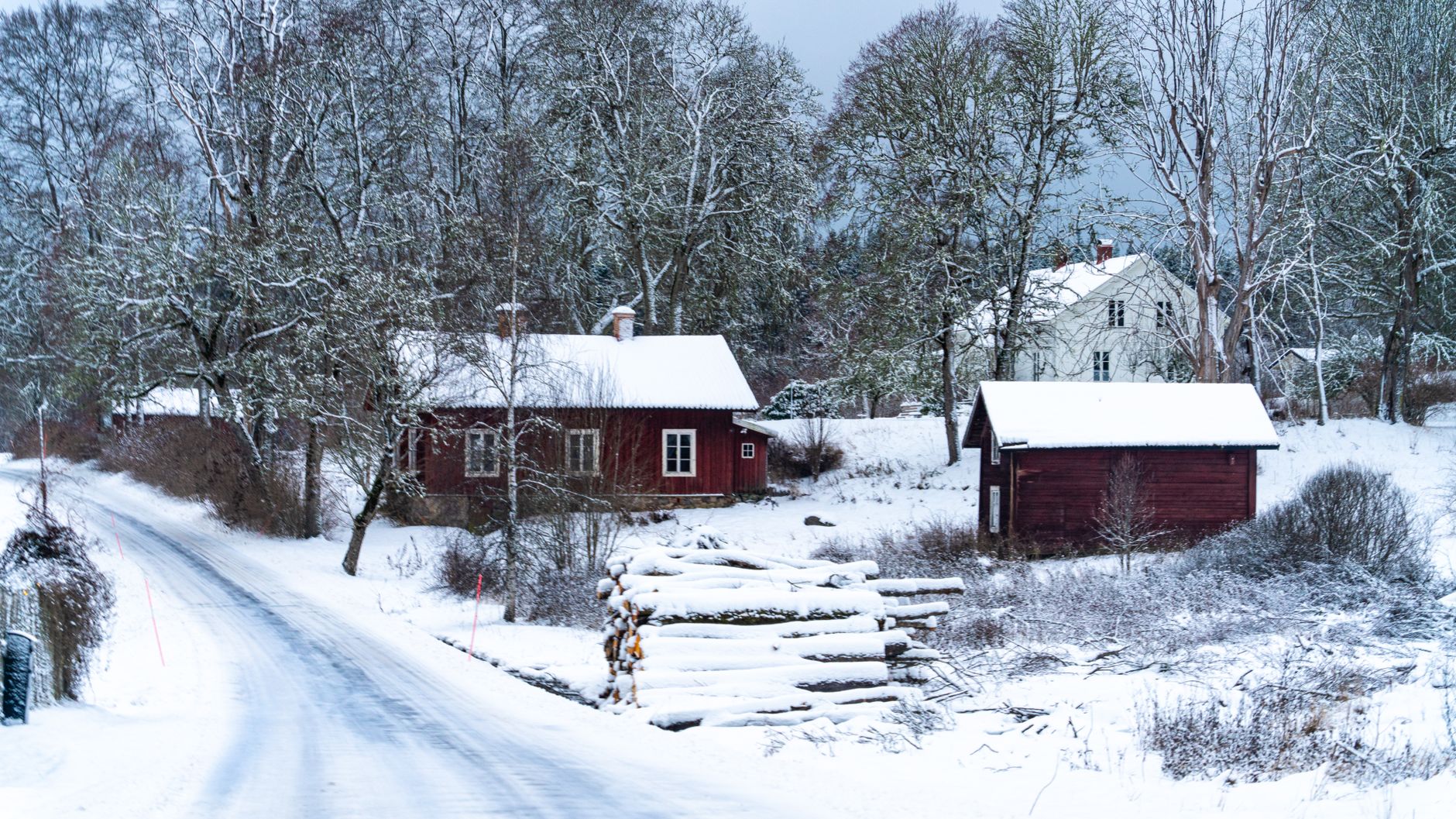
Three Christmas quiz questions are easy to get wrong: what counts as a white Christmas, who sent the first Christmas card, and when the first royal Christmas broadcast went out. This guide answers each from the Met Office (statistics last reviewed in October 2025), the Victoria and Albert Museum and a National Science and Media Museum blog post, all read on 17 November 2026.
Does Snow Have to Settle for a White Christmas?
No, and this is the trap most players fall into. For the Met Office to declare a white Christmas, a single snowflake has to be observed falling during the 24 hours of 25 December, by either an official Met Office observer or a Met Office automated weather station. Snow lying on the ground is not part of the definition.
That low bar changes the answer to “how often?”. The Met Office says that since 1960 around half of the years have seen at least 5% of its network record snow falling on Christmas Day, so it expects more than half of all Christmas Days to count as white. Snow covering the ground is much rarer: a widespread covering, defined as more than 40% of UK stations reporting snow on the ground at 9am, has happened only four times since 1960, in 1981, 1995, 2009 and 2010.
Which Recent Christmas Was the Last White One?
On the Met Office page, whose statistics were last reviewed in October 2025, 2023 is described as technically the last white Christmas in the UK, with 11% of stations recording snow falling and none reporting snow lying. The page also describes 2020 and 2021 as technically white, notes falling snow at 9% of stations in 2022, and says no station in the UK recorded snow falling in 2018 or 2019. A quiz written after Christmas 2025 should check the Met Office page again before using “last white Christmas” as a question.
Is Snow More Likely at Christmas Than Later in Winter?
The Met Office says the opposite. For most of the UK, Christmas falls at the beginning of the period when snow is likely, and snow is more likely in January and February than in December. Over the 1991 to 2020 averaging period, snow lay on the ground on an average of 3 days in December, 3.3 days in January, 3.4 days in February and 1.9 days in March.
The page adds that white Christmases were more frequent in the 18th and 19th centuries, and more so before the calendar change of 1752, which effectively brought Christmas Day back by 12 days. The site’s guide to leap year and calendar quiz traps covers the days Britain skipped that year.
The same page lists individual station records for Christmas Day that make good bonus questions:
- Deepest lying snow: 47 cm at Kindrogan, Perthshire, in 1981.
- Warmest: 15.6 °C at Killerton, Devon, in 1920.
- Coldest: −18.3 °C at Gainford, Durham, in 1878.
Who Sent the First Christmas Card, and When?
The V&A says its founding director, Henry Cole, sent the first Christmas card in 1843. Cole, a civil servant who had helped set up the Uniform Penny Post, asked his friend, the artist John Callcott Horsley, to illustrate the idea. Cole’s diary entry for 17 December 1843 records Horsley bringing his design. It shows three generations of the Cole family raising a toast, surrounded by scenes of giving, so the message combined celebration and charity.
Cole had a printer produce a thousand copies. The card was also offered for sale at a shilling each, which the V&A describes as expensive at the time, and the venture was judged a commercial flop. When one of the first cards was auctioned in 2013, it sold for £22,000.
Which Card Was Once Thought to Be Older?
This is the trap inside the trap. The second Christmas card, designed by William Maw Egley, dates from 1848, but the V&A says it was once thought to pre-date Horsley’s card because its date was misread as 1842. A question asking for “the year on the oldest Christmas card” can therefore have an outdated answer in older quiz books.
The same V&A article links the 1840s to other traditions: it credits Prince Albert with introducing various German Christmas traditions to the British public, including the decorated Christmas tree, notes that Charles Dickens published A Christmas Carol in 1843, and calls the Christmas cracker another Victorian invention.
When Did the First Royal Christmas Broadcast Go Out?
According to the National Science and Media Museum blog, George V gave the first royal Christmas broadcast in 1932. The idea had been put forward by Sir John Reith, the founder of the BBC, in the 1920s, but the King was reluctant because he saw radio as better suited to entertainment. The first speech was written by Rudyard Kipling, was used to launch what was then called the Empire Service, now the BBC World Service, and went out at 15:00 London time. The blog says it reached an audience of over 20 million, with two rooms at Sandringham House connected to Broadcasting House by Post Office land lines.
The blog gives several dates that work well as follow-up questions:
- George V made four Christmas speeches, from 1932 to 1935. Edward VIII made none, as he abdicated in early December 1936.
- George VI’s first speech was in 1937.
- 1957: the first televised speech, given by Elizabeth II.
- 1959 and 1963: radio only, as the Queen was pregnant; in 1969 there was no broadcast and a written message was issued instead.
- 1967 was the first in colour, 1975 the first recorded outdoors, 1997 the first published on the internet and 2012 the first filmed in 3D.
The bottom line
For the Met Office, a single snowflake observed falling on 25 December makes a white Christmas, so settled snow is not required, and snow is more likely in January and February than in December. The V&A dates the first Christmas card to Henry Cole in 1843, with Egley’s 1848 card once misdated to 1842. The National Science and Media Museum blog dates the first royal Christmas broadcast to George V in 1932, the first televised one to 1957 and the first in colour to 1967.
Sources
- White Christmas and UK Christmas weather records, Met Office (metoffice.gov.uk), statistics last reviewed October 2025, read 17 November 2026
- The first Christmas card, Victoria and Albert Museum (vam.ac.uk), page undated, read 17 November 2026
- The history of the Royal Family’s Christmas Day broadcasts, National Science and Media Museum blog (scienceandmediamuseum.org.uk), page undated, read 17 November 2026
Leave a Reply