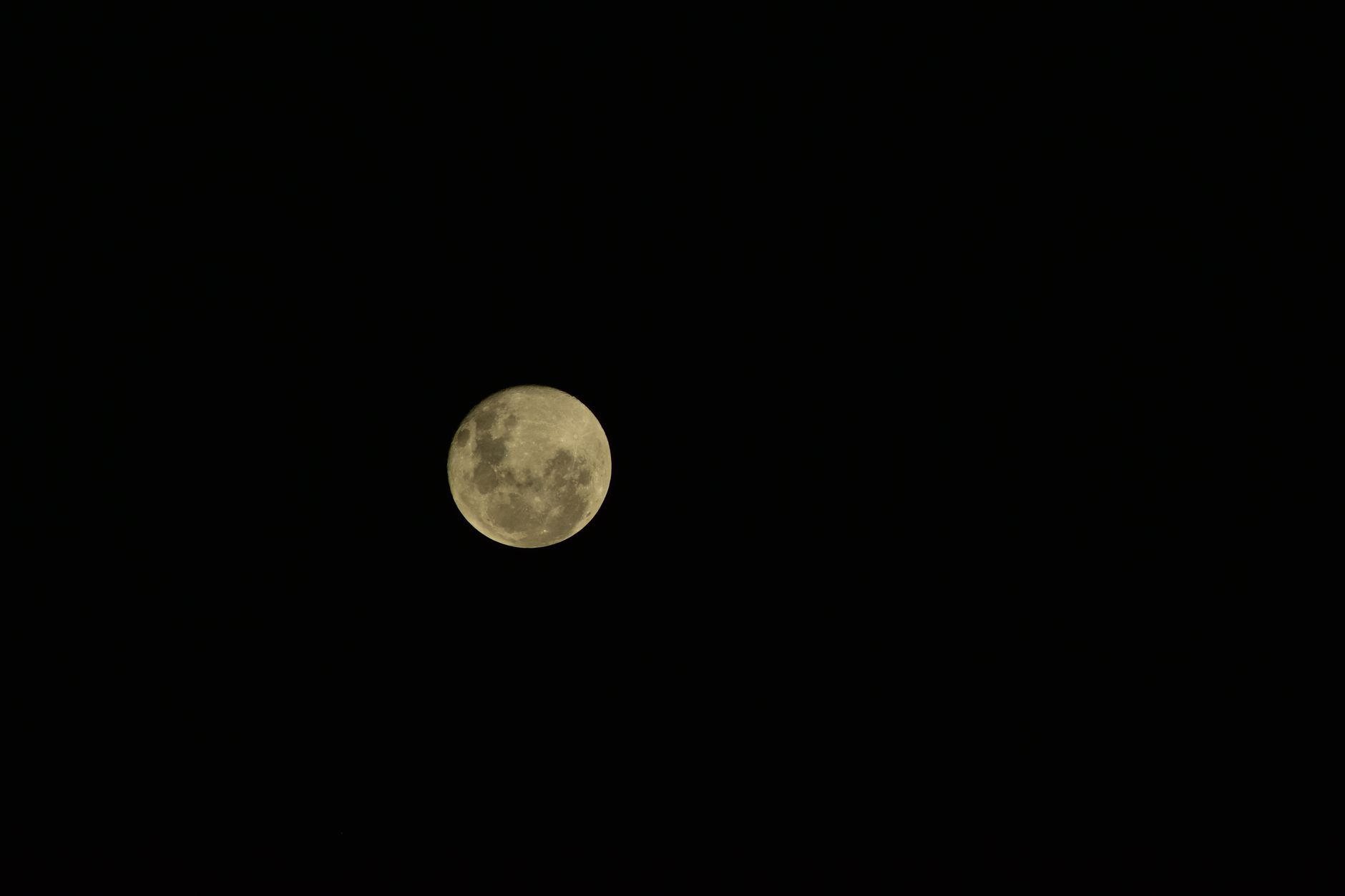
A full Moon rises on Tuesday 24 November 2026, and Royal Observatory Greenwich lists it as a supermoon, as it does the next one on 24 December. Several Moon answers given with confidence in quizzes are wrong or only half right. This guide takes six common beliefs and checks each against NASA’s Moon pages and the Royal Observatory Greenwich pages published by Royal Museums Greenwich (RMG), all read on 18 November 2026.
Myth: the far side of the Moon is always dark
NASA says the Moon rotates at the same rate that it revolves around Earth, so the same hemisphere faces Earth all the time. It adds that some people call the far side, the hemisphere never seen from Earth, the “dark side”, but that this is misleading. RMG makes the same point in plainer terms: the far side cannot be seen from Earth, but it is not true that one side is always dark, because, as on Earth, all parts of the Moon receive sunlight at some point during the lunar day.
NASA’s explanation of the phases makes the trap clear. At a full Moon, the hemisphere visible from Earth is fully lit by the Sun. At a new Moon, NASA says, the far side has full sunlight and the side facing Earth is having its night. So the “dark side” is in full sunshine at every new Moon.
A bonus fact for a tiebreak: NASA says humans did not see the lunar far side until a Soviet spacecraft flew past in 1959.
Myth: the Moon does not spin
Because the same face is always turned towards Earth, it is easy to assume the Moon does not rotate. NASA says the opposite: the Moon does rotate, but it takes exactly as long to spin once on its axis as it does to complete its monthly orbit, so it never turns its back on Earth. NASA calls this synchronous tidal locking and says all the solar system’s large moons are tidally locked with their planets.
The correct quiz answer to “does the Moon rotate?” is therefore yes, once per orbit.
Myth: one orbit takes one lunar month
There are two different periods here, and quiz answers often mix them up. RMG says it takes the Moon about 29.5 days to go through all of its phases, and that this is not the same as the time it takes to orbit Earth, which is 27.3 days. NASA explains the gap: the Moon orbits in about 27 days, but because Earth is moving as well, the Moon appears to orbit every 29 days from Earth’s point of view.
Myth: a blue moon is simply the second full Moon in a month
This is the answer most quiz books expect, but RMG says it is one of two definitions, and the newer one. The traditional definition is the third full Moon in an astronomical season that contains four full Moons, where the seasons run between the solstices and equinoxes. The calendar-month version, RMG says, started as a mistake made in the 1940s and was spread by radio shows and the Trivial Pursuit board game through the 1980s. Readers who enjoy that connection can read how Trivial Pursuit began.
RMG gives future dates under each definition: a seasonal blue moon on 20 May 2027 and a monthly one on 31 December 2028. It says the last blue moon was on 31 May 2026, the second full Moon in that month.
Myth: blue moons are rare, and blue
RMG says blue moons are fairly common in astronomical terms. Twelve cycles of phases take about 354 days, short of a calendar year, so roughly every two and a half years a 13th full Moon appears, and RMG says blue moons normally occur about every two or three years. In 2018 there were two in one year, and RMG says the next year with two will be 2037.
As for the colour, RMG says a blue moon is the same colour as any other full Moon except in two rare cases: it can look red during a lunar eclipse, and in very rare circumstances it can look blue when seen through a haze of dust, perhaps from a volcanic eruption.
Myth: a supermoon looks twice the size
RMG defines a supermoon as a full Moon that happens when the Moon is at or near its closest point to Earth, called perigee. It says the term began in astrology and has since been adopted by some astronomers, and that one strict definition counts a full Moon within 10 per cent of the Moon’s closest distance. The size change is real but modest: RMG says a supermoon can appear up to 14% bigger and 30% brighter than when the Moon is furthest away.
RMG’s table lists supermoons on Tuesday 24 November 2026, Thursday 24 December 2026 and Friday 22 January 2027. Its calendar gives the December full Moon as 1.28am on 24 December, London time, under the popular name Cold Moon, so the Christmas Eve Moon is a supermoon by RMG’s list.
Quick checklist for the question setter
- Say “far side”, not “dark side”, unless the question is about the myth.
- Accept that the Moon rotates, once for each orbit.
- State which period is meant: 27.3 days to orbit or about 29.5 days for the phases.
- Name the definition of a blue moon, seasonal or monthly, in the question.
For more space questions, see the solar system facts that trip up quiz players and the quiz traps on why there are seasons.
The bottom line
The far side of the Moon is not permanently dark, since every part of the Moon receives sunlight during the lunar day; the Moon does rotate, once per orbit; an orbit (27.3 days) is shorter than the cycle of phases (about 29.5 days); and a blue moon has two definitions, with the calendar-month one dating from a 1940s mistake. Royal Observatory Greenwich lists the full Moons of 24 November and 24 December 2026 as supermoons, up to 14% bigger and 30% brighter than a Moon at its furthest.
Sources
- Earth’s Moon: facts, NASA Science (science.nasa.gov), page undated, read 18 November 2026
- Tidal locking, NASA Science (science.nasa.gov), page undated, read 18 November 2026
- What is a blue moon and how often does it occur?, Royal Museums Greenwich (rmg.co.uk), page undated, read 18 November 2026
- Full Moon calendar 2026 and 2027, Royal Museums Greenwich (rmg.co.uk), page undated, read 18 November 2026
- What is a supermoon?, Royal Museums Greenwich (rmg.co.uk), page undated, read 18 November 2026
- What are the names of the full Moons throughout the year?, Royal Museums Greenwich (rmg.co.uk), page undated, read 18 November 2026
Leave a Reply