
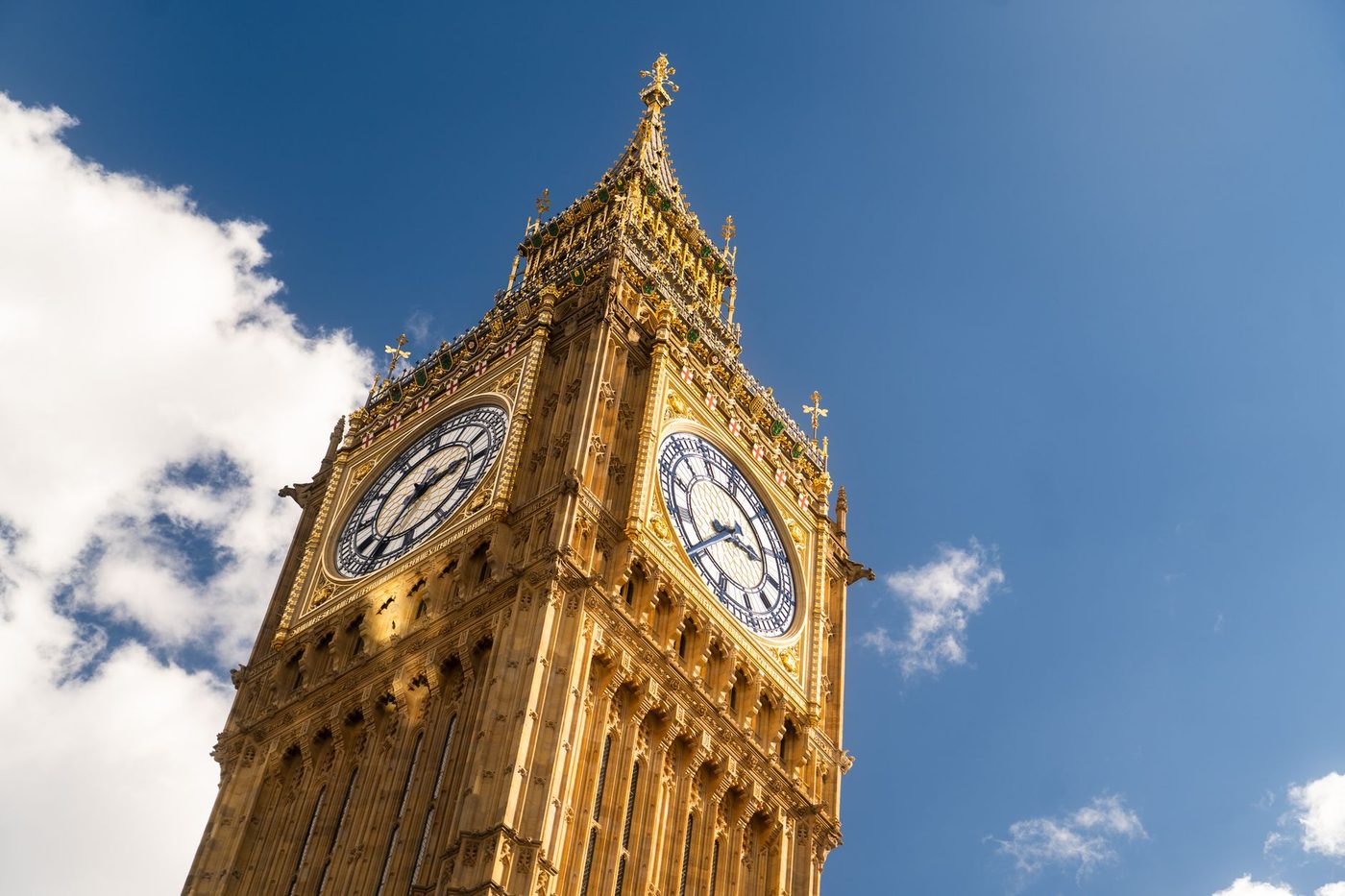
“What is Big Ben?” has a one-word answer in UK Parliament’s own history pages: the bell. This guide takes the Parliament pages on the Elizabeth Tower and works through details that could trip up a quiz player, including the places where two of those pages give different figures. None of the pages shows a publication date, so each is quoted as read on 3 November 2026.
Tower, clock or bell?
Parliament’s page on how the clock tower has changed says that since it was built the official name of the tower has been the Clock Tower, though to people around the world it is known affectionately as Big Ben after the Great Bell. MPs from across the House backed a campaign to rename it the Elizabeth Tower to honour Queen Elizabeth II’s Diamond Jubilee, and on 25 June 2012 the House of Commons Commission decided to make it so. The same page says the other main tower, at the southern end of the Palace, is the Victoria Tower.
The Great Clock is a third thing. The facts and figures page describes the Elizabeth Tower as 11 floors and 96 metres, with 281 steps to the clock faces and 334 steps to the Belfry where Big Ben, the Great Bell, hangs. It gives four clock dials, each 7 metres across.
On the name itself, the page about constructing the clock says it is believed the Great Bell was probably named after Sir Benjamin Hall, the First Commissioner of Works, in fun because he was a tall man. The brief history page adds that the bell was originally to be called ‘Royal Victoria’.
Dates that are easy to swap
- 28 September 1843: the foundation stone for the clock tower was laid. From that day it took sixteen years before the bells rang out, according to the page on building the tower.
- 1856: the first ‘Big Ben’ was cast near Stockton-on-Tees. In 1857 it developed a 1.2 metre crack during testing.
- April 1858: the second bell was cast at the Whitechapel Bell Foundry. The construction page gives the date as 10 April 1858.
- 31 May 1859: the Great Clock started ticking. The bell’s first strikes were on 11 July 1859.
- Later in 1859: the new bell cracked as well. It stayed silent for four years, according to the construction page, with the largest quarter bell striking the hour meanwhile.
- 1863: according to the brief history page, Big Ben was turned 90 degrees and a lighter hammer fitted so it could strike the hours again.
The bell that hangs there today is therefore the second one cast, not the 1856 original. The construction page says the first bell was removed and melted down to create its replacement.
Two pages, two weights
The facts and figures page says Big Ben weighs 13.7 tonnes and its hammer 200 kilograms. The page on constructing the clock says the replacement bell, cast in 1858, weighed 13.5 tonne and was 2.5 tonne lighter than the first. Both are Parliament pages and both are quoted as published.
The pages also differ on the 16 white horses. The page on constructing the clock places them with the first bell, pulled across Westminster Bridge after being moved by rail and sea. The brief history page places them with the second bell, carrying it to New Palace Yard on a carriage.
The quarter bells are less disputed. The facts page says there are four other bells in the Belfry, with notes G, F-sharp, E and B, and weights of 1.1, 1.3, 1.7 and 4 tonnes for the first to fourth bells. E is Big Ben’s note as well as the third quarter bell’s. The building page refers to a bell-frame for the five bells.
How accurate is the clock?
Sir George Airy, the Astronomer Royal, specified that the Great Clock should be accurate to within one second when striking the hour. The facts page says each pendulum beat lasts 2 seconds and that the clock is adjusted with pre-decimal pennies, one penny causing it to gain two-fifths of a second in 24 hours. The pendulum is 4.4 metres long and weighs 310 kilograms.
The page on how the tower has changed quotes a 1930 exchange in Parliament. Asked about accuracy, the First Commissioner of Works said the clock was checked daily by Greenwich Observatory and that during the past 290 days the error had exceeded one second on eight days only. Told that Big Ben was three minutes slow compared with every other clock in the country, he replied that he should say all the others were wrong.
Silences, blackout and broadcasts
- The brief history page says BBC Radio first broadcast the chimes to the United Kingdom on New Year’s Eve 1923.
- From 1939 until April 1945 the clock dials stayed dark under wartime blackout rules, according to the brief history page. The page on how the tower has changed says a small bomb broke the glass in the south dial, the clock and bells were undamaged and the chimes were broadcast as usual.
- On 5 August 1976, the brief history page says, a mechanical failure damaged the Great Clock and Big Ben was silent for nearly nine months.
- In 2007, the same page says, Big Ben and the quarter bells were silenced from 11 August to 1 October for maintenance.
- The page on how the tower has changed says the hour bell was tolled slowly to mark the deaths of four sovereigns, and for Sir Winston Churchill’s funeral the bells were silent as a mark of respect.
The bottom line
On UK Parliament’s own pages, Big Ben is the Great Bell in the Belfry of the tower named the Clock Tower until the House of Commons Commission renamed it the Elizabeth Tower on 25 June 2012. The pages agree on the 1857 and 1859 cracks and the 1859 start dates, but they differ on the bell’s weight (13.7 tonnes on one page, 13.5 tonne on another) and on which bell the 16 white horses pulled.
Sources
- Facts and figures: Big Ben and Elizabeth Tower, UK Parliament, page undated, read 3 November 2026 (parliament.uk)
- Constructing the most accurate clock in the world, UK Parliament, page undated, read 3 November 2026 (parliament.uk)
- A brief history of Big Ben and Elizabeth Tower, UK Parliament, page undated, read 3 November 2026 (parliament.uk)
- How the clock tower has changed over the decades, UK Parliament, page undated, read 3 November 2026 (parliament.uk)
- Building Elizabeth Tower, UK Parliament, page undated, read 3 November 2026 (parliament.uk)
Leave a Reply