
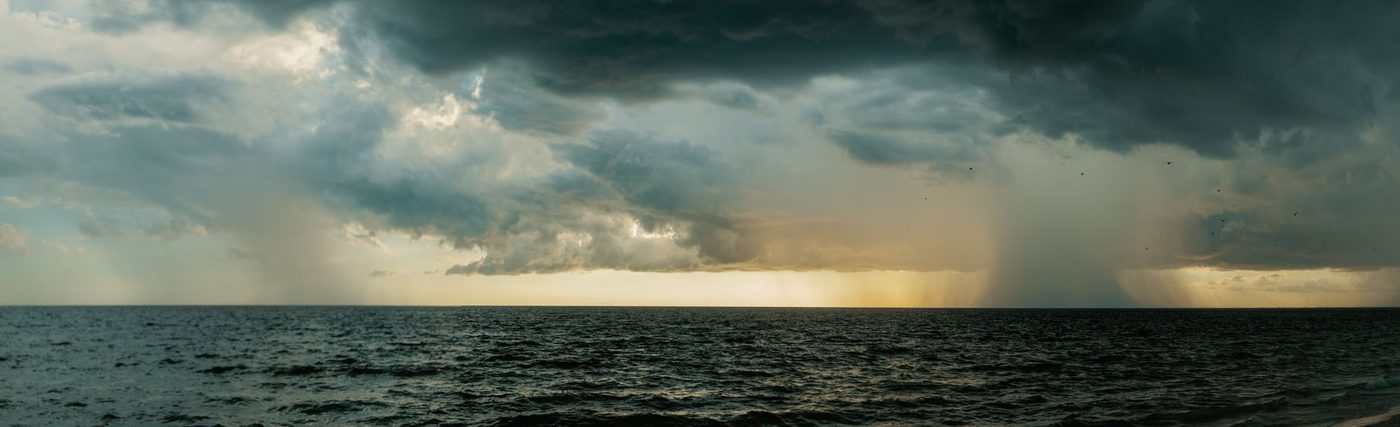
A quiz asks which is stronger, a hurricane or a typhoon. NOAA’s National Ocean Service answers on one line: the only difference is the location where the storm occurs. That sentence settles the question, but the terms around it, from “tropical storm” to “super typhoon” to the Saffir-Simpson scale, are where most quiz traps sit. The pages used here are from NOAA’s National Ocean Service (each shows “Last updated: 09/23/26”, which in US date order is 23 September 2026) and the National Hurricane Center (pages with no date).
Four Terms Quiz Setters Mix Up
NOAA’s pages define the terms in an order, from the generic to the specific:
- Tropical cyclone is the generic term meteorologists use for a rotating, organized system of clouds and thunderstorms that originates over tropical or subtropical waters and has closed, low-level circulation.
- Tropical depression is the name for the weakest tropical cyclones.
- Tropical storm is what a depression becomes when its maximum sustained winds reach 39 miles per hour.
- Hurricane, typhoon or tropical cyclone is the name once maximum sustained winds reach 74 miles per hour or higher, depending on where the storm originates.
Which Name Applies Where
NOAA says the term hurricane is used in the North Atlantic, the central North Pacific and the eastern North Pacific. The same type of disturbance in the Northwest Pacific is called a typhoon. In the South Pacific and Indian Ocean, the generic term tropical cyclone is used, regardless of the strength of the wind. A trap answer that makes a typhoon a bigger or weaker storm than a hurricane therefore has no support in the National Ocean Service page.
What the 1 to 5 Scale Measures, and What It Ignores
The National Hurricane Center describes the Saffir-Simpson Hurricane Wind Scale as a 1 to 5 rating based only on a hurricane’s maximum sustained wind speed. It says the scale does not take into account other potentially deadly hazards such as storm surge, rainfall flooding and tornadoes, and that hurricanes of all categories can produce deadly storm surge, rain-induced floods and tornadoes.
| Category | Sustained winds |
|---|---|
| 1 | 74 to 95 mph |
| 2 | 96 to 110 mph |
| 3 (major) | 111 to 129 mph |
| 4 (major) | 130 to 156 mph |
| 5 (major) | 157 mph or higher |
The same page says hurricanes rated Category 3 and higher are known as major hurricanes. It adds a footnote on a different label: in the western North Pacific, the term “super typhoon” is used for tropical cyclones with sustained winds exceeding 150 mph. That is the wording for that region, set beside the 157 mph threshold for Category 5 on a different scale; the page does not say the two are the same measure.
The Atlantic Season Is Not a Wall
For the Atlantic, the National Ocean Service says hurricane season officially runs from June 1 to November 30 and that ninety-seven percent of tropical cyclone activity occurs during this period. It also says there is nothing magical about these dates and that hurricanes can and do occur outside the six month period. A quiz answer saying none can form outside those dates has the page against it.
Who Chooses the Names
The National Hurricane Center says it does not control the naming of tropical storms: a strict procedure is run by an international committee of the World Meteorological Organization. For Atlantic hurricanes there are six lists of names, each repeated every sixth year, so the 2026 list is used again in 2032. The 2026 Atlantic list runs from Arthur to Wilfred. A name is changed only if a storm is so deadly or costly that using it for a different storm would be inappropriate, and the committee then strikes it from the list. The page lists retired names by year, with Dennis, Katrina, Rita, Stan and Wilma under 2005 and Melissa under 2025.
If more than twenty-one named tropical cyclones occur in the Atlantic basin in a season, the extra storms take names from an alternate list approved by the WMO.
A Short Naming History for the Tiebreaker
The National Hurricane Center’s history page says that for several hundred years many West Indies hurricanes were named after the saint’s day on which they occurred, and that Clement Wragge, an Australian meteorologist, began giving women’s names to tropical storms before the end of the 19th century. In 1953 the United States began using female names, and the National Ocean Service says that by 1978 both male and female names were used for Northern Pacific storms, adopted in 1979 for the Atlantic basin. The history page words the 1978 step as men’s and women’s names being included in the Eastern North Pacific lists.
The bottom line
According to NOAA, a hurricane and a typhoon are the same weather phenomenon, a tropical cyclone, named by location: the cut-off is maximum sustained winds of 74 miles per hour or higher, with tropical storm starting at 39. The National Hurricane Center says the 1 to 5 hurricane scale rates wind speed only and ignores surge, rainfall flooding and tornadoes, that Category 3 and above are major hurricanes, and that Atlantic lists repeat every six years, so the 2026 names return in 2032. The National Ocean Service says the official Atlantic season runs from June 1 to November 30 but that hurricanes can occur outside it.
Sources
- What is the difference between a hurricane and a typhoon?, NOAA National Ocean Service, last updated 09/23/26, read 10 November 2026 (noaa.gov)
- Why do we name tropical storms and hurricanes?, NOAA National Ocean Service, last updated 09/23/26, read 10 November 2026 (noaa.gov)
- Saffir-Simpson Hurricane Wind Scale, NOAA National Hurricane Center, page shows no date, read 10 November 2026 (noaa.gov)
- Tropical Cyclone Names, NOAA National Hurricane Center, page shows no date, read 10 November 2026 (noaa.gov)
- Tropical Cyclone Naming History and Retired Names, NOAA National Hurricane Center, page shows no date, read 10 November 2026 (noaa.gov)
Leave a Reply