
Author: UltimateQuiz

  • Six Apollo Missions in Six Facts From NASA: Earthrise, the First Landing, a Pinpoint Landing, Apollo 13, the Lunar Rover and the Last Footprints

    Six Apollo Missions in Six Facts From NASA: Earthrise, the First Landing, a Pinpoint Landing, Apollo 13, the Lunar Rover and the Last Footprints

    NASA’s mission pages for the Apollo Program give each flight a crew, a launch date, a splashdown date and a headline description. Six of them are set out below as they read on 31 October 2026, each with the fact that the page itself puts first. The “first”, “second”, “fourth” and “last” in these entries are NASA’s own wording.

    1. Apollo 8: the first humans to orbit the Moon
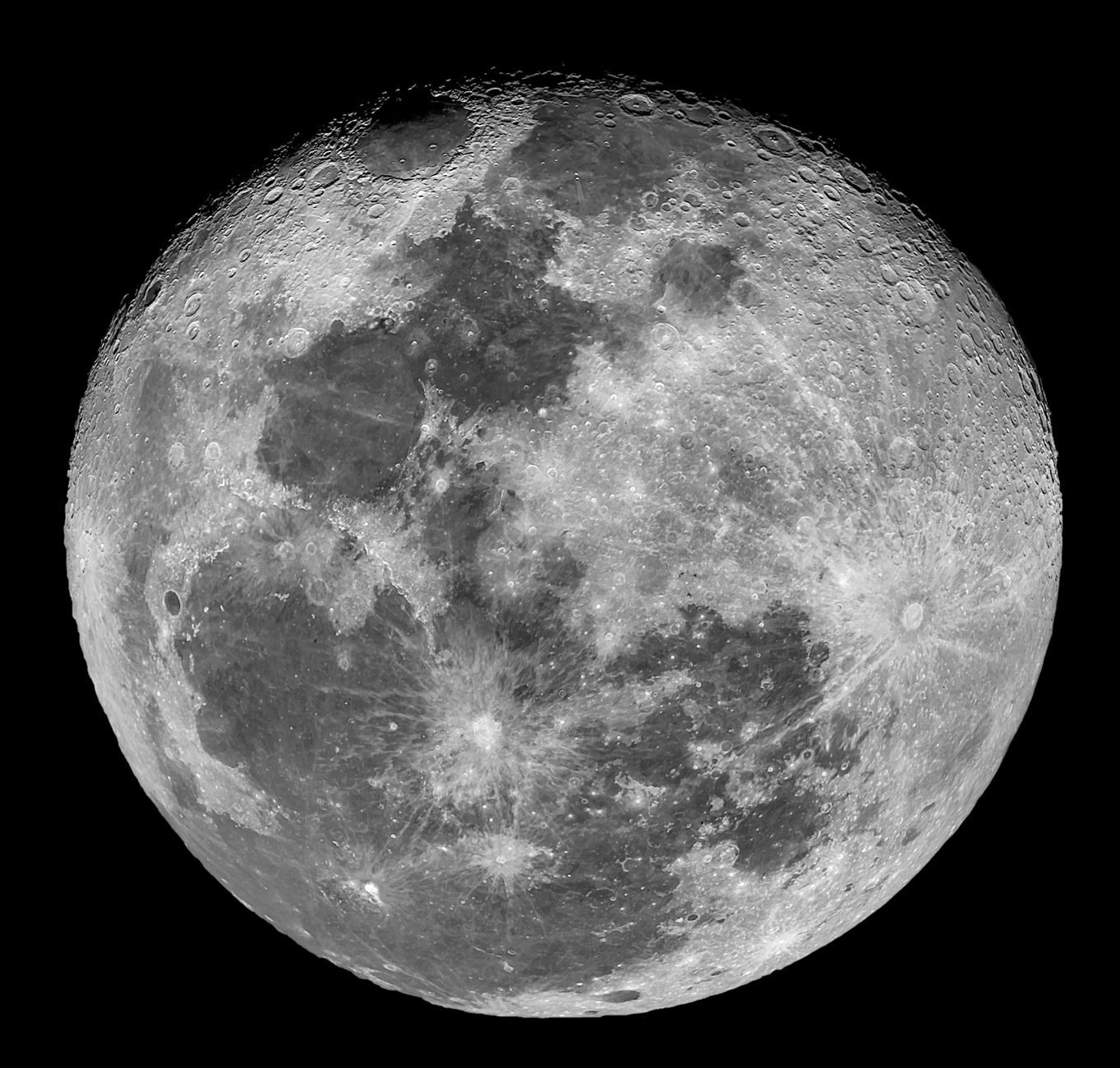
    A half Moon with the unlit side fading into black
    The Moon photographed from Earth, not an Apollo mission photograph. Credit: Rino Adamo / Pexels.

    Apollo 8 launched on 21 December 1968 and splashed down on 27 December 1968 with Frank Borman, James Lovell Jr. and William Anders aboard. NASA lists its mission type as lunar landing preparation. Its page says the flight was the first crewed launch of the Saturn V rocket, and that on Christmas Eve the three astronauts were the first humans to orbit the Moon and the first to see an Earthrise above its surface. Anders took the “Earthrise” photograph in lunar orbit on 24 December 1968. NASA’s biography of Lovell adds that he flew on four missions: Gemini VII and XII, Apollo 8 and Apollo 13.

    2. Apollo 11: the first human Moon landing
    Full Moon with visible craters against a black sky
    The Moon photographed from Earth, not an Apollo mission photograph. Credit: Sarowar Hussain / Pexels.

    NASA gives Apollo 11’s primary objective as completing a national goal set by President John F. Kennedy on 25 May 1961: perform a crewed lunar landing and return to Earth. The mission launched on 16 July 1969 and splashed down on 24 July 1969, carrying Neil Armstrong, Buzz Aldrin and Michael Collins. NASA describes Armstrong as the first human to set foot on the Moon and Aldrin as the second, and says Collins served as command module pilot. NASA’s page refers to the “first human Moon landing”, and a NASA caption places Aldrin’s walk on the surface on 20 July 1969. Collins, according to NASA, logged over 266 hours in space, and Armstrong flew on Gemini 8 in 1966 before his Apollo 11 assignment.

    3. Apollo 12: the pinpoint mission
    The Moon with one edge in shadow against a black sky
    The Moon photographed from Earth, not an Apollo mission photograph. Credit: David Kanigan / Pexels.

    NASA’s subtitle for Apollo 12 is “The Pinpoint Mission”. Charles Conrad Jr., Alan Bean and Richard Gordon Jr. flew from 14 November to 24 November 1969, and NASA describes Conrad’s role as commander of the second lunar landing. Conrad and Bean descended in the lunar module to explore the Moon while Gordon stayed with the command and service modules in lunar orbit. NASA adds that Conrad’s final mission was as commander of Skylab II, which it calls the first United States space station.

    4. Apollo 13: the intended third landing
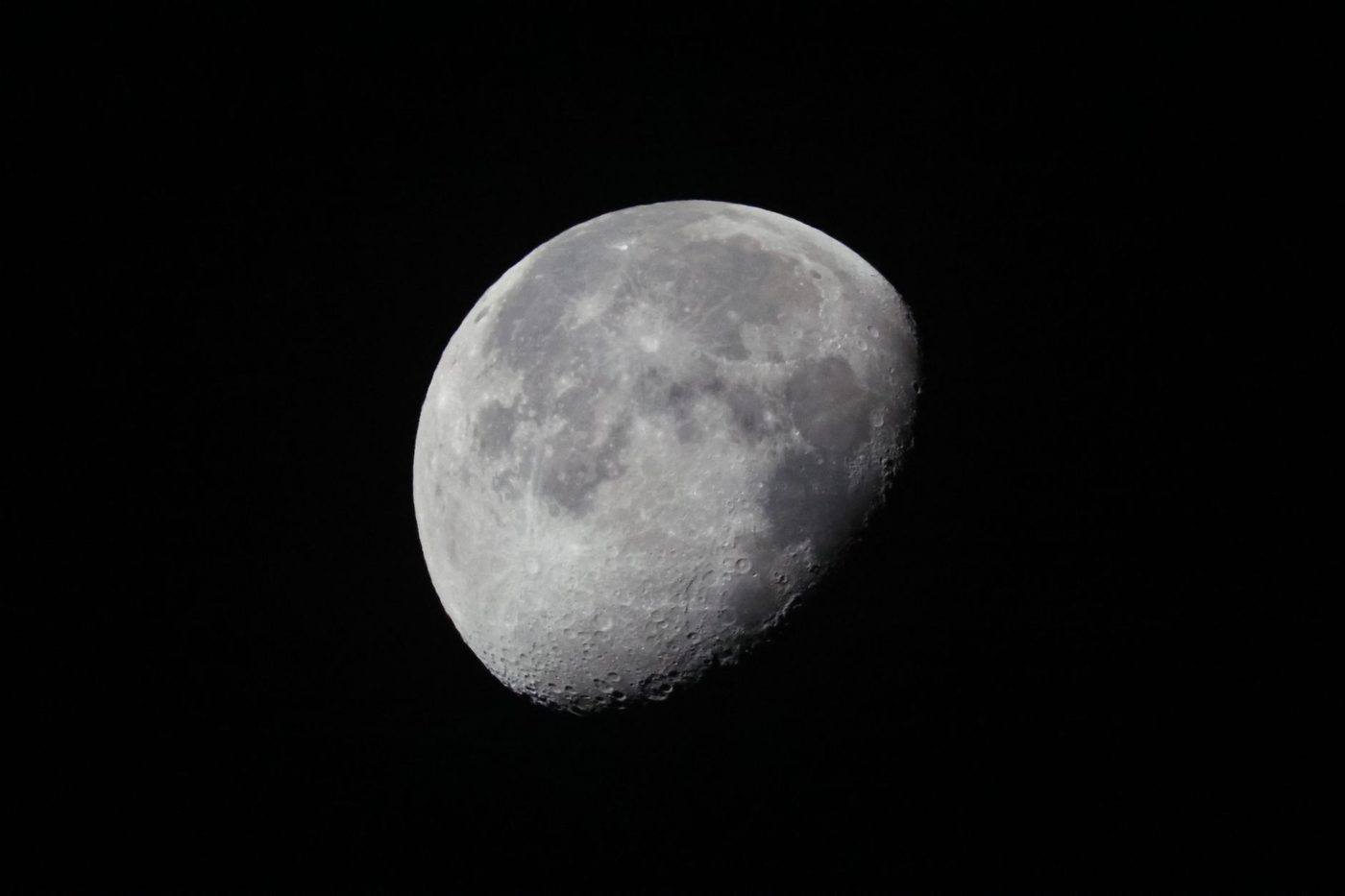
    A waning gibbous Moon against a black sky
    The Moon photographed from Earth, not an Apollo mission photograph. Credit: David Kanigan / Pexels.

    NASA says Apollo 13 launched on 11 April 1970 with James Lovell, John “Jack” Swigert and Fred Haise on what was intended to be humanity’s third lunar landing, aimed at the Fra Mauro area. The page says the mission did not go as planned, and lists its splashdown as 17 April 1970. Swigert was called on to replace prime crewman Thomas K. Mattingly as command module pilot.

    5. Apollo 15: the first mission with a lunar rover
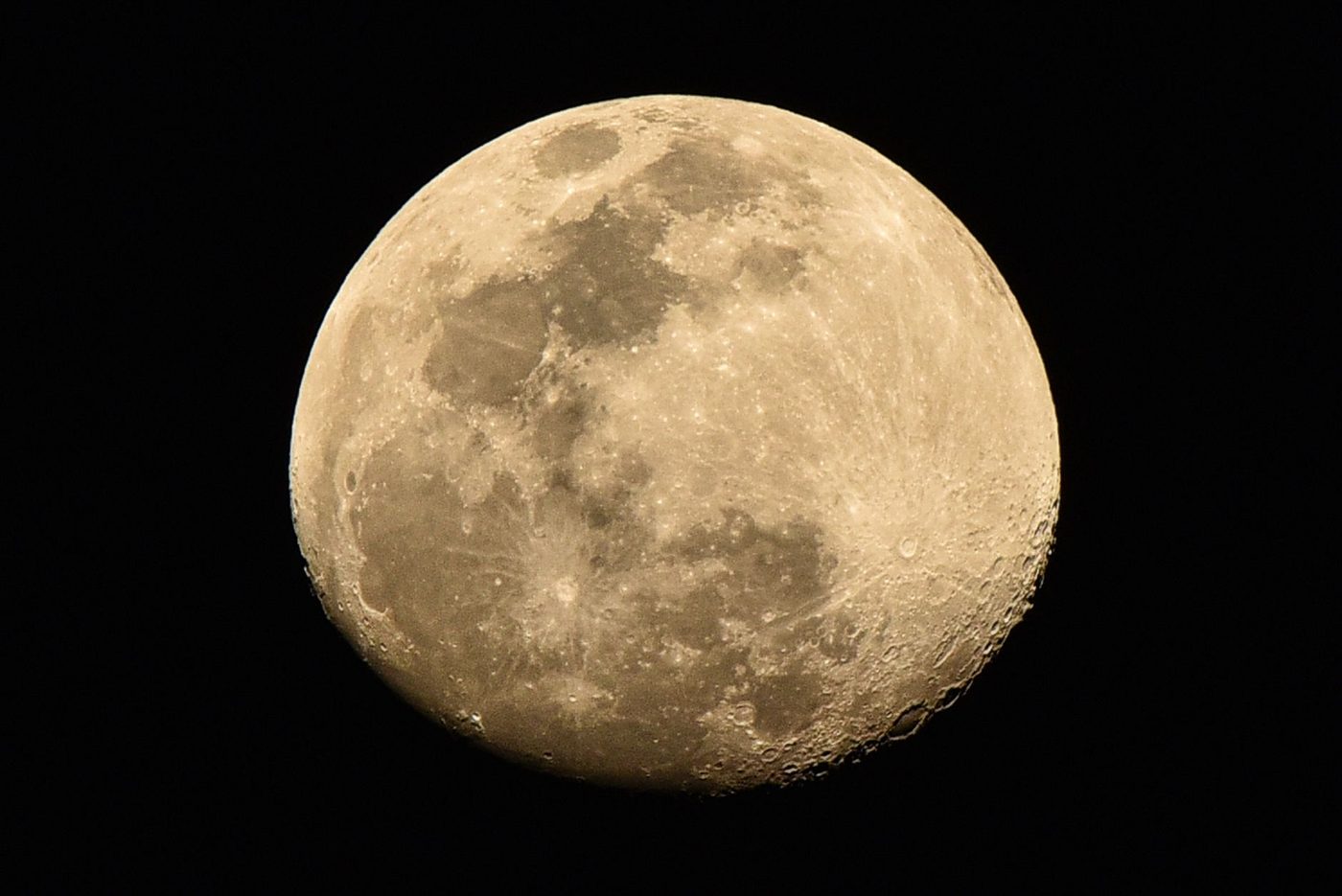
    A golden-toned full Moon against a black sky
    The Moon photographed from Earth, not an Apollo mission photograph. Credit: HS Studio By Hussnain / Pexels.

    NASA calls Apollo 15 the fourth lunar landing mission and the first to use a lunar rover. David Scott, James Irwin and Alfred Worden launched on 26 July 1971 and splashed down on 7 August 1971. NASA photo captions place Scott and Irwin’s exploration in the Hadley-Apennine region, with Worden remaining in lunar orbit in the command module. NASA’s biography of Scott says he flew on Gemini 8 and Apollo 9 before commanding Apollo 15.

    6. Apollo 17: the last landing and the twelfth moonwalker
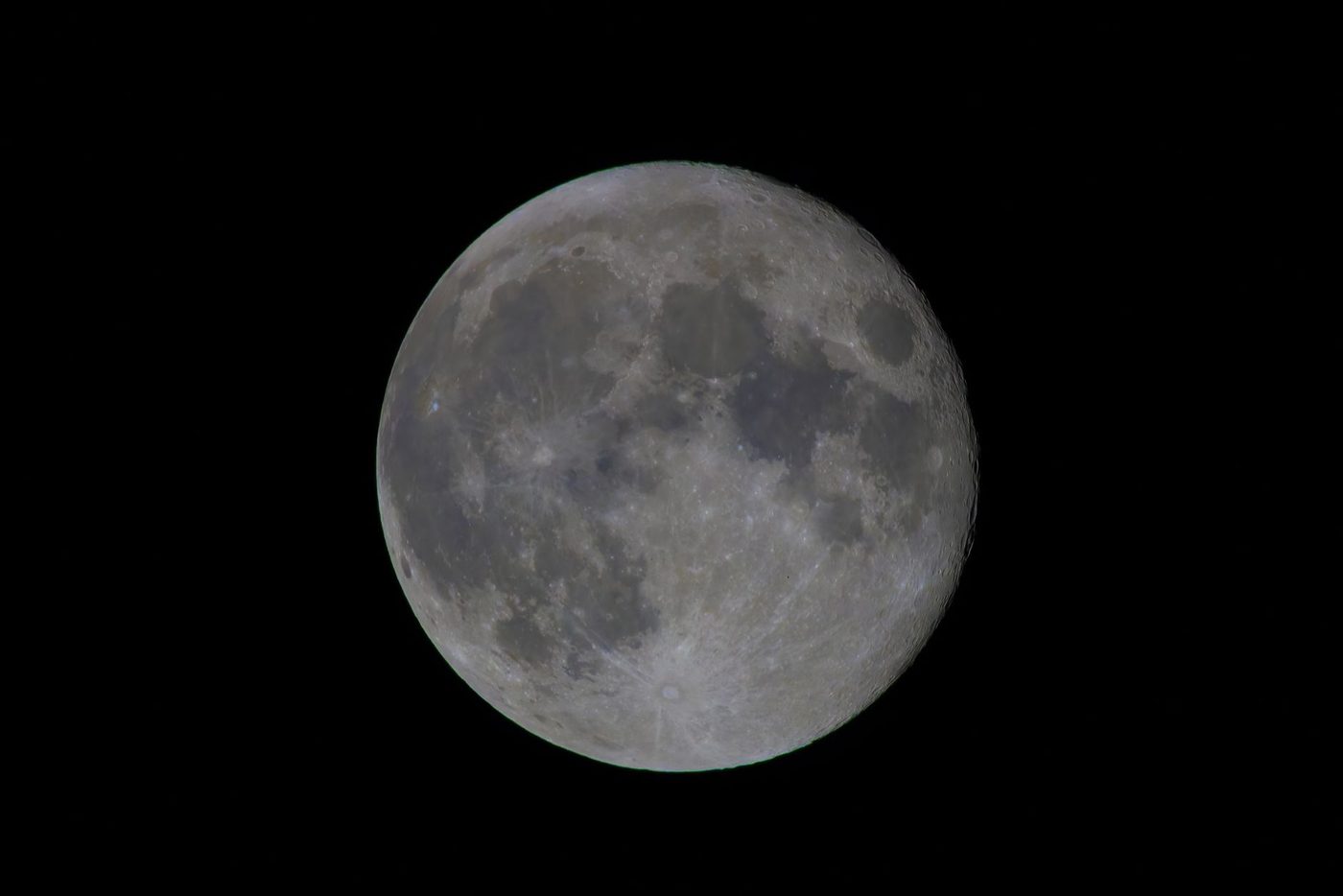
    A grey full Moon against a dark sky
    The Moon photographed from Earth, not an Apollo mission photograph. Credit: Rino Adamo / Pexels.

    NASA calls Apollo 17 the Apollo Program’s last lunar landing mission and the first to include an astronaut-scientist. It landed in the Taurus-Littrow Valley, having launched on 7 December 1972 and splashed down on 19 December 1972 with Eugene Cernan, Harrison Schmitt and Ronald Evans. NASA describes Schmitt as the first scientist and twelfth person to step on the Moon, and Cernan as the last person to leave his footprints on the lunar surface. His biography also calls him one of only two men to have flown to the Moon on two occasions and says more than 73 of his hours in space were spent on the Moon’s surface.

    Four questions these pages can answer

    • Which of the six was the first crewed flight to orbit the Moon? Apollo 8, per NASA.
    • Who was the second human to set foot on the Moon? Buzz Aldrin, per NASA’s Apollo 11 page.
    • Which astronaut appears on both the Apollo 8 and Apollo 13 crews? James Lovell.
    • Which mission is NASA’s last Apollo lunar landing? Apollo 17.

    The bottom line

    For a quiz, NASA’s pages supply a compact set of answers: Apollo 8 was the first crewed lunar orbit, Apollo 11 the first human Moon landing, Apollo 12 the second lunar landing, Apollo 15 the fourth and the first with a lunar rover, and Apollo 17 the last. Apollo 13 is the one on this list that NASA describes as an intended landing that did not go as planned. All dates and descriptions come from NASA’s own pages as read on 31 October 2026.

    Sources

    • Apollo 8, NASA, page undated, read 31 October 2026 (nasa.gov)
    • Apollo 11, NASA, page undated, read 31 October 2026 (nasa.gov)
    • Apollo 12, NASA, page undated, read 31 October 2026 (nasa.gov)

    • Apollo 13, NASA, page undated, read 31 October 2026 (nasa.gov)
    • Apollo 15, NASA, page undated, read 31 October 2026 (nasa.gov)
    • Apollo 17, NASA, page undated, read 31 October 2026 (nasa.gov)
  • The Seven SI Base Units: Which Four Changed in 2019 and the Exact Numbers Behind Them

    The Seven SI Base Units: Which Four Changed in 2019 and the Exact Numbers Behind Them

    299,792,458 is a number quiz setters love, and since 1983 it has been more than a trivia fact: it is the figure that fixes the length of the metre. The United States National Institute of Standards and Technology (NIST) publishes the exact values behind all seven base units of the International System of Units (SI), the modern metric system. The pages used here were read on 28 October 2026.

    The seven numbers that fix the seven units

    NIST says the units in the revised SI are based completely on seven unchanging quantities, or universal constants, including the speed of light, the electric charge of an electron and the Planck constant. Its definitions page gives each fixed value:

    Unit (symbol)Quantity held fixedFixed value
    Second (s)Caesium-133 hyperfine transition frequency9,192,631,770 Hz
    Metre (m)Speed of light in vacuum, c299,792,458 m/s
    Kilogram (kg)Planck constant, h6.62607015 x 10^-34 J s
    Ampere (A)Elementary charge, e1.602176634 x 10^-19 C
    Kelvin (K)Boltzmann constant, k1.380649 x 10^-23 J/K
    Mole (mol)Avogadro constant, NA6.02214076 x 10^23 per mole
    Candela (cd)Luminous efficacy at 540 x 10^12 Hz683 lm/W

    NIST spells the unit “meter” and “cesium”; the spellings above are the British forms.

    Four units changed on one date

    NIST states that on 20 May 2019 four of the seven base units, the kilogram, kelvin, ampere and mole, were redefined in terms of constants of nature, while the other three, the second, metre and candela, were already based on universal constants. A vote to adopt the change took place on 16 November 2018 at Versailles, France, at the 26th General Conference of Weights and Measures.

    The effect, in NIST’s words, was that for the first time all measurement units would be defined by natural phenomena rather than by physical artifacts. NIST adds that consumers and most industries would not notice immediate impacts, and that scientists expect the change ultimately to inspire new technologies and reduce calibration costs.

    The older changes: the second in 1967, the metre in 1983

    The second and the metre had already moved to natural definitions. NIST’s 2018 news release says the second is defined as 9,192,631,770 natural oscillations of microwave radiation released by the element caesium, and the metre as the distance travelled by light in vacuum in 1/299,792,458th of a second. It dates those revised definitions to 1967 and 1983 respectively and says they were necessary for the invention of GPS and many other modern technologies.

    Because the metre depends on the second, the chain of definitions is worth remembering for a tiebreaker. The metre rests on the speed of light and the second. The kilogram rests on the Planck constant plus the metre and the second.

    The kilogram: from a metal cylinder to a constant

    The kilogram has the most colourful backstory. According to NIST’s mass page, it was originally defined as the mass of one cubic decimetre of water at the temperature of maximum density, and was known as the Kilogram of the Archives. After the International Metric Convention of 1875 it was replaced by the International Prototype Kilogram, which became the unit of mass without reference to the water definition.

    In 2018, NIST described that artefact, known as Le Grand K, as a platinum-iridium object secured in a vault outside Paris and used to calibrate all measures of mass throughout the world. Like any alloy, NIST said, it may change over time by absorbing molecules from the air or losing them through cleaning, and even tiny changes mean it is no longer accurate enough for anticipated advanced research. Under the 2019 definition the kilogram is fixed by the Planck constant. NIST describes an instrument called a Kibble balance, named after its inventor Bryan Kibble, that uses an electric current in a coil to produce a magnetic field strong enough to balance a mass of one kilogram.

    Two further facts are standard quiz material. NIST says the kilogram is the only SI base unit whose name and symbol, for historical reasons, include a prefix: “kilo”, the SI prefix for 1,000. And it notes that the primary standard of mass for the United States is United States Prototype Kilogram 20, a platinum-iridium cylinder kept at NIST.

    Mass is not weight

    NIST’s mass page draws the distinction that trips up many answers. The mass of a body is a measure of its inertial property, or how much matter it contains. Its weight is a measure of the force exerted on it by gravity, or the force needed to support it. In science and technology, NIST adds, the SI unit of weight defined as a force is the newton (N), while the SI unit of mass is the kilogram. NIST also says that in everyday usage, “weight” is often a synonym for mass, and that the verb “to weigh” means “to determine the mass of”, but that using weight in place of mass should be phased out.

    The bottom line

    Three of the seven SI base units, the second, metre and candela, were already tied to constants before 2019; the kilogram, kelvin, ampere and mole joined them on 20 May 2019. NIST gives the exact values for all seven, and those exact values, rather than rounded textbook figures, are the safest basis for a quiz answer.

    Sources

    • Definitions of SI Base Units, NIST, page updated August 2025, read 28 October 2026 (nist.gov)
    • SI Redefinition, NIST, read 28 October 2026 (nist.gov)
    • Historic Vote Ties Kilogram and Other Units to Natural Constants, NIST news release, 16 November 2018, read 28 October 2026 (nist.gov)
    • SI Units – Mass, NIST Office of Weights and Measures, page updated December 2025, read 28 October 2026 (nist.gov)
  • Nobel Prize Myths and Facts: Declined, Posthumous, Won Twice and Years Without a Prize

    Nobel Prize Myths and Facts: Declined, Posthumous, Won Twice and Years Without a Prize

    Nobel Prize questions are a quiz staple because the popular version is full of near-truths: a prize every year, one winner per category, no refusals, no winners who have died. The Nobel Foundation’s own “Nobel Prize facts” page, read on 28 October 2026, settles each of them with a figure or a name. Its counts run from 1901 to 2026.

    Myth: a Nobel Prize is awarded every year

    The page says that between 1901 and 2026 the Nobel Prizes and the economics prize were awarded 639 times, to 1,036 people and organisations. It also says there have been 49 occasions when prizes were not awarded, most of them during the First World War (1914 to 1918) and the Second World War (1939 to 1945). Physics, for example, has no prize listed for 1916, 1931, 1934, 1940, 1941 and 1942, while the Peace Prize has 19 empty years on the page’s list.

    The page quotes the Foundation’s statutes on what happens next: if no work under consideration is of the importance indicated, the prize money is reserved until the following year, and if the prize still cannot be awarded, the amount is added to the Foundation’s restricted funds.

    Myth: there are six prizes and Alfred Nobel created them all

    Alfred Nobel signed his last will on 27 November 1895, leaving the largest share of his fortune to a series of prizes in physics, chemistry, physiology or medicine, literature and peace. The sixth prize was added later. In 1968, according to the page, Sveriges Riksbank, Sweden’s central bank, established the Sveriges Riksbank Prize in Economic Sciences in Memory of Alfred Nobel. The economics prize is therefore not one of the five named in the will. The page lists 58 economics prizes against 120 in physics.

    Myth: nobody turns the prize down

    Two laureates declined. Jean-Paul Sartre, awarded the 1964 Nobel Prize in Literature, declined because, the page says, he had consistently declined all official honours. Le Duc Tho, awarded the 1973 Peace Prize jointly with Henry Kissinger for negotiating the Vietnam peace accord, said he was not in a position to accept it, citing the situation in Vietnam.

    A separate group did not choose. The page says four laureates were forced by authorities to decline. Adolf Hitler forbade three German laureates, Richard Kuhn, Adolf Butenandt and Gerhard Domagk, from accepting; all of them could later receive the diploma and medal, but not the prize amount. Boris Pasternak, the 1958 literature laureate, initially accepted but was later coerced by the authorities of the Soviet Union to decline.

    Myth: a prize can never go to someone who has died

    The rule has a date and an exception. From 1974, the statutes stipulate that a prize cannot be awarded posthumously, unless death has occurred after the announcement. Before 1974 it happened twice: Dag Hammarskjöld (Peace, 1961) and Erik Axel Karlfeldt (Literature, 1931).

    The exception was tested in 2011. After the medicine prize was announced, it emerged that one of the laureates, Ralph Steinman, had died three days earlier. The Board of the Nobel Foundation examined the statutes and concluded he should remain a laureate, because the Nobel Assembly at Karolinska Institutet had announced the prize without knowing of his death.

    Myth: Nobel Prizes are mostly shared

    The statutes say a prize amount may not be divided between more than three persons. The page’s table shows how that plays out: of the 639 prizes, 365 went to a single laureate, 151 were shared by two and 123 by three. In literature, 115 prizes went to one laureate, four were shared by two and none by three. In all, the page counts 1,000 individuals and 28 organisations among the laureates.

    Myth: winning twice means winning twice in one field

    The page lists several multiple winners. Marie Curie received the 1903 Physics prize and the 1911 Chemistry prize. John Bardeen won Physics in 1956 and 1972, and Frederick Sanger won Chemistry in 1958 and 1980. K. Barry Sharpless won Chemistry in 2001 and 2022. Linus Pauling, the page says, is the only person to have been awarded two unshared Nobel Prizes: Chemistry in 1954 and Peace in 1962.

    Organisations count too. The page says the International Committee of the Red Cross has been honoured by a Peace Prize three times (1917, 1944 and 1963), and that its founder, Henry Dunant, was awarded the first Nobel Peace Prize in 1901. The Office of the United Nations High Commissioner for Refugees (UNHCR) is listed with Peace Prizes in 1954 and 1981.

    Age and gender: the two extremes quiz setters ask about

    The youngest laureate in any category is Malala Yousafzai, awarded the Peace Prize in 2014 at age 17. The oldest is John B. Goodenough, awarded the 2019 Chemistry prize for the development of lithium-ion batteries at age 97. Between 1901 and 2026, the page says, the prizes were awarded 70 times to women.

    Quick check before the next quiz night

    • Were prizes always awarded? No: 49 occasions without one, mostly in the two world wars.
    • How many prizes did Nobel’s will name? Five categories; economics came from the Riksbank in 1968.
    • Has anyone declined? Sartre (1964) and Le Duc Tho (1973) did; four others were forced by authorities to.
    • Posthumous winners? Two before 1974 (Hammarskjöld, Karlfeldt); from 1974 the statutes bar it unless death follows the announcement.
    • Only person with two unshared prizes? Linus Pauling.

    The bottom line

    The Nobel Foundation’s page makes the popular claims easy to test: prizes were skipped 49 times, the economics prize is a 1968 addition by Sweden’s central bank, two laureates declined, and posthumous awards ended as a rule in 1974. Counts and extremes on the page run to 2026 and can change with each new announcement, so quiz answers built on them should carry a date.

    Sources

    • Nobel Prize facts, NobelPrize.org (Nobel Prize Outreach), read 28 October 2026 (nobelprize.org)
  • How to Write Multiple-Choice Quiz Questions: Advice from the University of Waterloo and Berkeley Lab

    How to Write Multiple-Choice Quiz Questions: Advice from the University of Waterloo and Berkeley Lab

    A quiz host can read a question aloud and watch a table groan because the wording gave the answer away, or because two options looked equally right. Two training guides, one from the University of Waterloo and one from Berkeley Lab, set out how to avoid those problems when writing multiple-choice questions. Neither page is about pub quizzes: both are written for teachers and trainers who assess learners. What follows treats their advice as a checklist that a quiz writer can adapt, and says where the two pages differ.

    What are the parts of a multiple-choice question?

    Waterloo’s Centre for Teaching Excellence describes a stem that identifies the question or problem, plus a set of alternatives made up of a key, which is the best answer, and distractors, which are plausible but incorrect answers. Berkeley Lab’s training page uses the same vocabulary, calling the stem the part that poses the question and the distractors the options that are not correct. Waterloo also notes that questions of this kind are easy to mark and can even be scored by a computer, which makes them attractive for large classes.

    How much should the question say?

    Both pages push towards a stem that carries one clear problem. Waterloo suggests a test: could someone answer the question without looking at the options? It also advises putting all relevant material in the stem instead of repeating it in each option, and cutting excessive wording. Its worked example takes a stem that wanders through several kinds of book written about the university before asking for one title, and shortens it to a single direct question about the book by “Simon the Troll”.

    Berkeley Lab agrees that a stem should be meaningful by itself, should present a definite problem and should be a question rather than a sentence with a blank to complete. It says wordy items end up assessing reading ability instead of the learning objective. Its example of a weak stem is “Which of the following statements are true?”, followed by four near-identical statements.

    What makes a wrong answer worth considering?

    Waterloo’s page says distractors should be appealing and plausible, because farfetched ones let people find the key with little knowledge. It contrasts a question about the university’s counselling services whose wrong options are cooking skills and hockey refereeing with a rewrite whose options are preparing for marriage and psychotherapy research. Berkeley Lab says implausible alternatives do not work as functional distractors and calls “funny” options poor practice.

    On how many options to offer, Waterloo recommends between three and five, and says research shows three-choice items are about as effective as four or five, mainly because plausible distractors are hard to invent. Waterloo also advises making sure there is only one best answer, and suggests telling people to choose the “best answer” rather than the “correct answer”, because distractors may contain an element of truth and the wording discourages arguments.

    Which accidental clues give the answer away?

    • Grammar and form: both pages say the options should fit the stem grammatically, and Waterloo suggests reading the stem and each option aloud. Berkeley Lab adds that options should be parallel in structure and similar in length, and says the longest option is often the correct one.
    • Shared wording: Waterloo warns that a key reusing words from the stem is more likely to be picked.
    • Absolute words: Waterloo advises avoiding “always”, “never”, “all” and “none”, because few things are universally true or false.
    • Order and position: Waterloo suggests placing choices in numerical, chronological or conceptual order, with an example of four overlapping year ranges listed in sequence, and spreading correct answers across a, b, c and d.

    Which phrasings do both pages warn against?

    Negative wording is flagged on both pages. Waterloo says students often fail to notice it and that people who know the material make mistakes on negatively worded questions; if one is used, it advises emphasising the key word. Berkeley Lab gives the same advice and cites research on learners’ difficulty with negative phrasing.

    Both pages also caution against “all of the above”. Waterloo explains that someone who knows two options are correct can infer the answer, and Berkeley Lab says partial knowledge is enough to reach the right choice. Waterloo extends the warning to “none of the above”, and separately asks writers to avoid trick questions, meaning wording designed to lead people astray.

    Where the two pages disagree

    True/false is the clearest split. Berkeley Lab tells writers to change true/false questions to multiple choice or multiple correct, saying they measure a 50% chance of guessing correctly. Waterloo, by contrast, says a vague “Which of the following statements is correct?” question is better presented as true/false questions. A host can weigh both views against their own round.

    For research on what answering questions does to memory, see this site’s guide to the testing effect and where the evidence stops.

    The bottom line

    The Waterloo and Berkeley Lab pages share most of their advice: one clear problem in the stem, plausible wrong answers, no accidental clues, and caution with negatives and “all of the above”. They differ on true/false, and both were written for assessing learners instead of entertaining a room, so a quiz writer applies them with that in mind.

    Sources

    • Designing Multiple-Choice Questions, Centre for Teaching Excellence, University of Waterloo, read 27 October 2026 (uwaterloo.ca)
    • Writing multiple choice questions, Berkeley Lab Training, Instructor Resources, read 27 October 2026 (training.lbl.gov)
  • How Trivial Pursuit Began: A Timeline from a Montreal Scrabble Night to 100 Million Copies

    How Trivial Pursuit Began: A Timeline from a Montreal Scrabble Night to 100 Million Copies

    Both The Canadian Encyclopedia and the Strong National Museum of Play put sales of Trivial Pursuit above 100 million copies. The game began in 1979 with a conversation over a different board game. This timeline follows the story from those two pages and says so where their details differ; how a turn works also draws on Hasbro’s own instructions.

    15 December 1979: a Scrabble night and a one-word answer

    The Canadian Encyclopedia says the Canadian journalists Chris Haney and Scott Abbott devised the game on the afternoon and evening of 15 December 1979. According to the encyclopedia, the pair were playing Scrabble at Haney’s home in Montreal when Haney realised he had bought his sixth copy of the game, possibly because of missing pieces, and wondered aloud whether they could come up with a similarly successful game of their own. When he asked what it might be about, Abbott answered “trivia”. In a few hours they had the basic idea: a trivia board game with questions divided into six broad categories.

    The encyclopedia adds that Haney and Abbott have refuted rumours that the game was created in a bar or while drunk, and it notes that a 1988 CBC television film depicted the invention in a very different setting.

    The next two years: a toy fair, 32 investors and 6,000 questions

    The Canadian Encyclopedia reports that the pair realised they needed to learn about designing, producing and marketing board games. They went to a Montreal toy fair posing as a reporter-photographer team working on a story, and Haney recalled leaving with “$10,000 worth of information”. Chris Haney’s brother John, a former professional hockey player, and John’s friend Ed Werner, a corporate lawyer, joined to help with the business side.

    Money was not easy to find. The encyclopedia says the board game market was not especially dynamic in the late 1970s and early 1980s, with action figures dominating the toy market, and that some people thought the pair were con men because of a chain-letter scheme they had once run. They offered shares for a $1,000 investment and raised $40,000 from 32 investors. The encyclopedia says it took about two years to write the 6,000 initial questions and receive enough orders for the first production run.

    1981 to 1984: from word of mouth to 20 million copies

    The encyclopedia says the game was introduced in Canada in 1981 and made its inventors millionaires by 1982, almost entirely by word of mouth. By 1982 the Canadian production line was assembling 3,500 games a day, all sold as soon as they reached shelves, and 100,000 copies had sold in Canada by the end of that year. The United States followed in 1982, and by 1984 the encyclopedia reports 20 million copies sold.

    The Strong museum fills in the publishing side. It says the pair began producing the game under their company Horn Abbott Ltd in 1981, with an initial print run of 1,100 copies, and licensed it in 1982 to the publisher Selchow and Righter, which sold 1.3 million copies in 1983 alone. Parker Brothers licensed the game in 1988, and Hasbro bought the full rights in 2008. The encyclopedia gives the price of that 2008 sale as $80 million.

    Six colours, six categories: how a turn works

    The encyclopedia describes a game for two to six players or teams, with an estimated playing time of roughly 80 to 90 minutes. Each player moves a token with six empty triangular spaces around the board and lands on tiles in one of six colours, each linked to a category:

    • orange for sports and leisure
    • yellow for history
    • blue for geography
    • pink for entertainment
    • green for science and nature
    • brown, later purple, for arts and literature

    Hasbro’s Classic Edition instructions say that a correct answer on a coloured question space means another roll, and a wrong answer ends the turn. A coloured wedge is earned only by answering correctly on a category headquarters space. The encyclopedia gives a simpler account, and other editions may differ. The Strong museum adds that once a player has collected a wedge of each colour, they must land on the central space and answer a question in a category chosen by their opponents.

    Rumours, rivals and two lawsuits

    The encyclopedia says the game survived two lawsuits. In 1984 the author Fred L. Worth argued that he was owed money because Haney and Abbott had referred to trivia he had gathered in his own trivia books; the encyclopedia reports that the court rejected Worth’s claim. In a second case, which lasted 13 years, David Wall of Nova Scotia claimed he had given Haney the idea for the game, but a judge did not accept the claim.

    After the board: editions, game shows and a daily quiz

    The encyclopedia says at least 50 special editions had been published by 2014, along with arcade, home video and online versions, and television game shows in the United States, the United Kingdom and Spain. The Strong museum describes editions that remap the six colours onto new subjects, from a sports edition in 1983 to a Star Wars edition in 1997, and says other companies released their own question sets compatible with the game. It also mentions a game show that ran for one season in the 1990s and was revived in 2024 with host LeVar Burton, plus an online daily quiz from Hasbro.

    The recognition has come in stages. The encyclopedia says the game was named to the Games Hall of Fame in 1993, and the Strong museum’s blog describes it as one of the 2026 inductees into the National Toy Hall of Fame. The encyclopedia quotes Time magazine calling it “the biggest phenomenon in game history”.

    The bottom line

    Both pages agree on the core of the story: Haney and Abbott invented the game in 1979, it went into production in 1981, and sales passed 100 million copies. They differ in emphasis, with the encyclopedia focusing on the inventors’ path and the museum on the publishing and the game’s later editions. Sales figures and dates here are as those two institutions report them, and the lawsuit outcomes are as the encyclopedia describes them.

    Sources

    • Trivial Pursuit, The Canadian Encyclopedia, article by Taylor C. Noakes, published 19 September 2024, read 27 October 2026 (thecanadianencyclopedia.ca)
    • Nothing Trivial about It, The Strong National Museum of Play blog, by Chris Bensch, read 27 October 2026 (museumofplay.org)
    • Trivial Pursuit Classic Edition game instructions, Hasbro (copyright 1981, 2016 Hasbro; PDF copy read 27 October 2026)
  • Running a Quiz Night: Rounds, Marking and Tiebreakers According to Macmillan, Save the Children and the British Heart Foundation

    Three UK charities, Macmillan Cancer Support, Save the Children UK and the British Heart Foundation (BHF), publish step-by-step guides for people running a fundraising quiz. They are written for charity events, so their advice on donations and raffles is about fundraising, and this guide concentrates on their notes about rounds, marking and keeping the evening fair. Where the three differ, it says so rather than choosing a winner, and it follows the order in which a host meets each task.

    Weeks ahead: the date, the room and the teams

    All three advise checking the calendar. Macmillan says to avoid clashes with other major events or occasions and with other quizzes in the area; BHF mentions major sports or cultural events. Lead times differ: Macmillan says a host needs to allow a few weeks to plan, a bit less for a virtual quiz, while Save the Children says to give at least 6 to 8 weeks to promote it.

    On venues, BHF lists pubs, community centres, sports halls and church halls, and notes that some venues hire space free or at a reduced rate for charity. Save the Children also lists school or village halls and a virtual quiz run over platforms such as Zoom or Microsoft Teams. Macmillan says to note how many teams the venue can hold and to keep count as bookings come in, and suggests teams of up to, say, six people.

    Setting the questions

    The guides agree on mixing difficulty. Save the Children says to include a range of easy, medium and hard questions for a mixed crowd and to avoid anything too obscure. BHF says a mix of easy and hard lets everyone get involved, and Macmillan says not to make it too hard and to add easier questions here and there.

    The guides give different pictures of length. Save the Children suggests 6 to 8 rounds of 10 questions each, plus a tiebreaker, with each round about 10 minutes. BHF gives no round count. Macmillan links to a virtual-quiz guide that includes a set of five rounds of questions of varying difficulty. All three suggest themed rounds; BHF lists general knowledge, TV and movies, music, sport, popular culture, current affairs, history and geography, and also names picture rounds, riddles, anagrams, “name the song” and “guess the logo”. For spare ideas, see this site’s solar system facts that trip up quiz players.

    Macmillan adds two checks for the host: read through the questions and answers in advance, ideally with a volunteer who will not be playing, and double-check answers and be ready to reference sources if one is challenged.

    Running the evening, round by round

    1. Ask each team to choose a team name and note down every team at the start (Macmillan).
    2. Announce a strict ban on mobile phones during rounds; Macmillan suggests volunteers to monitor the tables.
    3. At the end of each round, ask if anyone needs a question repeated, then have teams swap papers with a neighbouring table to mark (Macmillan).
    4. Read the answers out clearly, collect the sheets and have a trusted volunteer keep a running total (Macmillan).
    5. Keep a tiebreaker ready; Save the Children suggests a question where the closest guess wins.

    Macmillan suggests allowing a 30-minute refreshment break that can be cut short if the quiz is running over, and using it to reveal the front runners. Save the Children lists optional extras such as “joker” rounds in which teams can double their points. Macmillan says to announce third, second and first place only once the scores have been counted and triple-checked.

    Licences, food and fees

    BHF and Save the Children advise checking the licences the event needs, particularly where alcohol or music is involved. These charity guides are not a licensing guide: ask the venue and the relevant licensing bodies what is already covered and what additional permission is needed, as exemptions and requirements depend on the event and the jurisdiction. On food, BHF says to label any allergens clearly and points to the Food Standards Agency for advice, and Save the Children says to label allergens clearly, especially nuts, gluten and dairy.

    The fee examples are charity-specific. Save the Children says entry fees typically range from £5 to £10 per person or £20 to £40 per team; BHF suggests an entry fee such as £5 or £10 per person; Macmillan suggests a donation per person or per team, for example £5 to £10.

    Two quick questions

    Does the host have to ask the questions?

    Macmillan says the host may read the questions or ask a friend or family member to be the compere.

    Can a quiz be held online?

    Yes: Macmillan describes hosting a quiz virtually, and Save the Children lists a virtual quiz among its options, naming Zoom and Microsoft Teams.

    The bottom line

    The three guides share two points: a date that avoids clashes and themed rounds with a mix of easy and hard questions. Macmillan adds the phone ban, papers swapped between neighbouring tables and a trusted scorer, and Save the Children adds a ready tiebreaker. They differ on timings, round counts and fees, which they present as examples for their own charity events.

    Sources

    • Organise a charity quiz night (macmillan.org.uk)
    • Guide to Organising a Charity Fundraising Quiz (savethechildren.org.uk)
    • How to organise a charity quiz night (bhf.org.uk)
  • Do Quizzes Help You Remember? What Five Research Abstracts Say About the Testing Effect, Retrieval Practice and Where the Evidence Stops

    A quiz is often thought of as a way of finding out what you already know. Memory researchers have asked a different question: does answering questions from memory also change what you remember afterwards? The finding they call the testing effect says it can. This guide summarises what five published research abstracts say about it, and where those abstracts stop. They describe studies of students and study materials, not pub quizzes or trivia apps, so the guide makes no claim about any particular quiz format.

    The five sources at a glance

    • Roediger and Karpicke (2006): two experiments with students and prose passages.
    • Roediger and Butler (2011): a review of research on retrieval practice.
    • Karpicke and Blunt (2011): retrieval practice compared with elaborative studying using concept mapping.
    • Rowland (2014): a meta-analysis of testing versus restudy.
    • Dunlosky and colleagues (2013): an evaluation of 10 learning techniques, including practice testing.

    What is the testing effect?

    Roediger and Karpicke wrote in 2006 that taking a memory test not only assesses what one knows but also enhances later retention, a phenomenon known as the testing effect. Their paper asked whether a test helps only because it gives a second look at the material.

    What did the 2006 experiments find?

    In two experiments, students studied prose passages. Some then took one or three immediate free-recall tests without feedback, while others restudied the material the same number of times. A final test came 5 minutes, 2 days or 1 week later.

    • After 5 minutes: repeated studying improved recall relative to repeated testing.
    • After 2 days or 1 week: prior testing produced substantially greater retention than studying.
    • Confidence: repeated studying increased students’ confidence in their ability to remember the material, even though the delayed results favoured testing.

    The authors concluded that testing is a powerful means of improving learning, not just assessing it.

    Does it work only for isolated facts?

    A 2011 review by Roediger and Butler in Trends in Cognitive Sciences reported that retrieval practice, meaning retrieving information on a test, often produced large gains in long-term retention relative to repeated studying. It also said retrieval practice promotes knowledge that can be flexibly retrieved and transferred to different contexts.

    A separate 2011 paper in Science by Karpicke and Blunt compared retrieval practice with elaborative studying using concept mapping. They reported that retrieval practice produced greater gains in meaningful learning, including on test questions that assessed comprehension and required inferences, using texts that the authors describe as identical to those commonly found in science education.

    Is feedback needed?

    The 2011 review said retrieval practice is often effective even without feedback, meaning without being given the correct answer, but that feedback enhances the benefits of testing. The 2006 experiments described above gave no feedback, and still found the delayed advantage.

    Does the type of question matter?

    A 2014 meta-analysis by Rowland in Psychological Bulletin pooled studies comparing testing with restudying. Its abstract says the key results support the role of effortful processing as a contributor, with initial recall tests yielding larger testing benefits than recognition tests. It also says existing theories have not yet provided a cohesive account of testing phenomena. The abstract does not say how a given quiz round would fare.

    Where does practice testing sit among study methods?

    In 2013 Dunlosky and colleagues reviewed 10 learning techniques in Psychological Science in the Public Interest. They rated practice testing and distributed practice as high utility because they benefit learners of different ages and abilities and have been shown to boost performance across many criterion tasks and in educational contexts. They rated rereading and highlighting low, noting that most students report using them although they do not consistently boost performance, and suggested practice testing instead of rereading.

    What these abstracts do not show

    • The studies named above involve students, prose passages, science texts and educational settings. A group quiz night is a different situation, and the abstracts do not describe one.
    • At the shortest delay in the 2006 experiments, 5 minutes, restudying did better than testing. The result depends on when the final test happens.
    • This guide drew on published abstracts, not full papers. The abstracts report no effect sizes, so details such as exact methods and the size of any advantage sit outside it.

    Common questions

    Is rereading notes pointless, then?

    Dunlosky and colleagues rated rereading as low utility, saying it does not consistently boost students’ performance. They did not say it never helps.

    Does a quiz teach more than studying right away?

    Not according to the 2006 five-minute result. Restudying did better at that delay, and the testing advantage appeared on later tests.

    The bottom line

    The abstracts reviewed here report that answering questions from memory can improve later retention compared with restudying, particularly on delayed tests, and that practice testing earned a high utility rating in a review of 10 study techniques. They also report a short-delay exception, a link between effortful recall and bigger benefits, and the fact that the research concerns students and learning materials. Whether a particular quiz night produces the same gains is not something these sources address.

    Sources

    • Test-enhanced learning: taking memory tests improves long-term retention (Roediger and Karpicke, Psychological Science, 2006; abstract via Europe PMC, PMID 16507066)
    • The critical role of retrieval practice in long-term retention (Roediger and Butler, Trends in Cognitive Sciences, 2011; abstract via Europe PMC, PMID 20951630)
    • Retrieval practice produces more learning than elaborative studying with concept mapping (Karpicke and Blunt, Science, 2011; abstract via Europe PMC, PMID 21252317)
    • The effect of testing versus restudy on retention: a meta-analytic review of the testing effect (Rowland, Psychological Bulletin, 2014; abstract via Europe PMC, PMID 25150680)
    • Improving students’ learning with effective learning techniques (Dunlosky, Rawson, Marsh, Nathan and Willingham, Psychological Science in the Public Interest, 2013; abstract via Europe PMC, PMID 26173288)
  • Five Science and Technology Milestones of the 1990s: Hubble, the Web, Dolly, Pathfinder and the ISS

    The 1990s produced some of the most memorable quiz questions of recent decades, and science and technology supply a large share of them. This guide covers five milestones, each documented by the institution responsible: NASA, CERN and the Roslin Institute at the University of Edinburgh. Dates matter in a decade round, so each section gives the date the institution itself records.

    1990: the Hubble Space Telescope launches

    NASA lists the launch of the Hubble Space Telescope as 24 April 1990, with the telescope placed in low Earth orbit. NASA says that since its launch Hubble has changed humanity’s fundamental understanding of the universe, from determining the atmospheric composition of planets around other stars to discovering dark energy. Its design, technology and serviceability have made it one of NASA’s most transformative observatories.

    1989 to 1993: the World Wide Web takes shape

    Quiz writers often disagree about when the Web began, so it helps to know the CERN timeline. CERN states that Tim Berners-Lee, a British scientist, invented the World Wide Web in 1989 while working at CERN, and wrote the first proposal in March 1989. It was formalised with the Belgian systems engineer Robert Cailliau as a management proposal in November 1990. By the end of 1990 the first Web server and browser were running at CERN.

    The 1990s then brought the key public steps, according to CERN:

    • March 1991: the software became available to colleagues using CERN computers.
    • August 1991: Berners-Lee announced the software on Internet newsgroups, and interest spread around the world.
    • December 1991: the first Web server in the US came online at the Stanford Linear Accelerator Center.
    • 30 April 1993: CERN made the source code available on a royalty-free basis, making it free software.
    • 1994: described by CERN as the “Year of the Web”, with the first International World Wide Web conference held at CERN in May.

    CERN records that by the end of 1994 the Web had 10,000 servers, 2,000 of them commercial, and 10 million users.

    1996: Dolly the sheep is born

    The Roslin Institute states that Dolly, the first mammal cloned from an adult cell, was born on 5 July 1996 at the Institute. She was cloned from a cell taken from the mammary gland of a six-year-old Finn Dorset sheep and an egg cell from a Scottish Blackface sheep, and was born to a Scottish Blackface surrogate mother. Her white face was one of the first signs that she was a clone.

    The Institute is careful about one detail that catches out quiz players: Dolly was not the first ever cloned mammal. That honour belongs to a sheep cloned from an embryo cell and born in 1984 in Cambridge, UK. What made Dolly special was that she had been made from an adult cell. She was announced to the world on 22 February 1997, timed to coincide with the publication of the scientific paper describing the experiments. After her death, Dolly’s body was donated to the National Museum of Scotland in Edinburgh, where she is one of the museum’s most popular exhibits.

    1997: Mars Pathfinder lands

    NASA’s mission page says Mars Pathfinder launched on 4 December 1996 and landed on 4 July 1997 at Ares Vallis on Mars. It demonstrated a new way to land safely on the Red Planet and delivered the first-ever robotic rover, Sojourner, to the Martian surface. The mission ended on 27 September 1997. Pathfinder was designed originally as a technology demonstration, which makes it a neat example of a small mission with a lasting legacy.

    1998: the first module of the International Space Station

    NASA calls the Zarya module the first component launched for the International Space Station. It was launched on 20 November 1998 on a Proton-K vehicle. Zarya, which means “Sunrise” in English, was built by the Khrunichev State Research and Production Space Center in Moscow under a subcontract to Boeing for NASA. On 4 December 1998 the Unity module followed, and on 6 December the crew of space shuttle Endeavour on mission STS-88 captured Zarya with the shuttle’s robotic arm and mated it to Unity.

    Using the milestones in a 1990s round

    When a question asks for a date, look for the institution’s own record. The Web has several “birthdays” (the 1989 proposal, the 1991 release and the 1993 royalty-free decision), and Dolly has two dates (her birth in 1996 and her announcement in 1997). Knowing which event a question means is half the battle.

    To test your knowledge of the decade, try one of the site’s tiers:

    The bottom line

    The 1990s put a telescope into orbit, opened the Web to the world, cloned a mammal from an adult cell, landed a rover on Mars and began building a space station. Each of those milestones has a precise date in its institution’s records, and those precise dates are what separate a good guess from a correct quiz answer.

    Sources

    • Hubble Space Telescope (science.nasa.gov)
    • A short history of the Web (home.cern)
    • Dolly (vet.ed.ac.uk)
    • The Life of Dolly (vet.ed.ac.uk)
    • Mars Pathfinder (science.nasa.gov)
    • Zarya Module (nasa.gov)
    • 25 Years Ago: NASA, Partners Begin Space Station Assembly (nasa.gov)
  • World Food Traditions Recognised by UNESCO: Pizza, Kimchi, Lavash and More

    Food questions are some of the most popular in any quiz, and the best ones are about more than ingredients: they ask where a tradition comes from and what it means to the people who keep it alive. UNESCO’s Representative List of the Intangible Cultural Heritage of Humanity includes several food and drink traditions, each with an official description. This guide draws on those descriptions for seven well-known examples.

    One note on scope: UNESCO’s list recognises living practices, skills and customs rather than ruling on who invented a dish. The facts below are therefore the ones UNESCO itself states.

    The art of the Neapolitan pizzaiuolo (Italy, 2017)

    UNESCO inscribed this tradition in 2017 and describes it as a culinary practice comprising four phases relating to the preparation of the dough and its baking in a wood-fired oven, involving a rotatory movement by the baker. The element originates in Naples, the capital of the Campania Region, where UNESCO says about 3,000 pizzaiuoli live and perform. Knowledge and skills are primarily transmitted in the bottega, where young apprentices observe masters at work.

    Washoku (Japan, 2013)

    Inscribed in 2013, Washoku is described by UNESCO as a social practice based on skills, knowledge, practice and traditions related to the production, processing, preparation and consumption of food. It is associated with a spirit of respect for nature and is typically seen during New Year celebrations, when the Japanese pound rice cakes and prepare special meals using fresh ingredients, each with a symbolic meaning. UNESCO notes that the practice favours natural, locally sourced ingredients such as rice, fish, vegetables and edible wild plants.

    The gastronomic meal of the French (France, 2010)

    UNESCO inscribed this tradition in 2010 and describes it as a customary social practice for celebrating important moments such as births, weddings and anniversaries. The entry says the meal should respect a fixed structure: it starts with an aperitif, ends with liqueurs, and contains in between at least four successive courses, namely a starter, fish and/or meat with vegetables, cheese and dessert. Other important elements include choosing good, preferably local products, pairing food with wine and setting a beautiful table.

    The Mediterranean diet (inscribed 2013)

    UNESCO’s entry, which lists the inscription as 2013, describes the Mediterranean diet as a set of skills, knowledge, rituals, symbols and traditions concerning crops, harvesting, fishing, animal husbandry, conservation, processing, cooking and, particularly, the sharing and consumption of food. Eating together is called the foundation of the cultural identity and continuity of communities throughout the Mediterranean basin. The entry also points to the role of markets as spaces for cultivating and transmitting the tradition.

    Kimjang: making and sharing kimchi (Republic of Korea, 2013)

    UNESCO defines kimchi as preserved vegetables seasoned with spices and fermented seafood, an essential part of Korean meals that transcends class and regional differences. Preparation follows a yearly cycle: seafood is procured in spring, sea salt for the brine in summer and red chilli peppers are dried and ground in late summer. Late autumn is Kimjang season, when communities collectively make and share large quantities of kimchi so that every household has enough to last through the long, harsh winter. UNESCO adds that the specific methods and ingredients are considered an important family heritage.

    Turkish coffee culture and tradition (Turkey, 2013)

    According to UNESCO, freshly roasted beans are ground to a fine powder, then added with cold water and sugar to a coffee pot and brewed slowly on a stove to produce the desired foam. The drink is served in small cups, accompanied by a glass of water, and is mainly drunk in coffee-houses where people meet to converse, share news and read books. UNESCO calls the tradition a symbol of hospitality, friendship, refinement and entertainment, and notes that the grounds left in the empty cup are often used to tell a person’s fortune.

    Lavash (Armenia, 2014)

    UNESCO describes lavash as a traditional thin bread that forms an integral part of Armenian cuisine. A simple dough of wheat flour and water is kneaded, rolled into thin layers and stretched over an oval cushion, which is slapped against the wall of a traditional conical clay oven. The baked bread comes off the oven wall after thirty seconds to a minute, can be preserved for up to six months and is commonly served rolled around local cheeses, greens or meats. At weddings, it is placed on the shoulders of newlyweds to bring fertility and prosperity.

    Turning food facts into quiz points

    Food rounds reward people who connect a dish to its place and its ritual. Pizza links to Naples and the wood-fired oven, kimchi to the late-autumn Kimjang season, lavash to the clay oven and the wedding tradition, and Turkish coffee to slow brewing and hospitality. Anchoring each food to a country and a custom makes answers much easier to recall under pressure.

    To try your knowledge, choose a tier from the site’s world food quizzes:

    The bottom line

    UNESCO’s official descriptions show that many of the world’s best-loved foods are tied to community rituals as much as recipes, from a four-phase pizza craft in Naples to a communal kimchi season in Korea. Sticking to what an authority states, rather than the popular myth, is the surest way to get a food question right.

    Sources

    • Art of Neapolitan ‘Pizzaiuolo’ (ich.unesco.org)
    • Washoku, traditional dietary cultures of the Japanese, notably for the celebration of New Year (ich.unesco.org)
    • Gastronomic meal of the French (ich.unesco.org)
    • Mediterranean diet (ich.unesco.org)
    • Kimjang, making and sharing kimchi in the Republic of Korea (ich.unesco.org)
    • Turkish coffee culture and tradition (ich.unesco.org)
    • Lavash, the preparation, meaning and appearance of traditional bread as an expression of culture in Armenia (ich.unesco.org)
  • Famous Landmarks and UNESCO World Heritage: Eight Sites and the Facts That Define Them

    Landmark rounds are a staple of any quiz night, and the questions tend to come down to the same details: who built it, when, where and why it matters. UNESCO’s World Heritage Centre publishes official descriptions and inscription dates for every site on the World Heritage List, making it one of the most reliable places to check. This guide pulls together eight famous landmarks and the facts UNESCO records about them.

    How the World Heritage List works

    UNESCO explains that the World Heritage idea is embodied in an international treaty, the Convention concerning the Protection of the World Cultural and Natural Heritage, adopted by UNESCO in 1972. The aim is to identify, protect and preserve cultural and natural heritage considered to be of outstanding value to humanity. UNESCO describes the concept as exceptional because of its universal application: sites belong to all the peoples of the world, irrespective of the territory on which they are located.

    At the time of writing in October 2026, the World Heritage List on UNESCO’s website shows 1,273 properties: 991 cultural, 240 natural and 42 mixed. These totals change as new sites are added, so a quiz answer should always specify a date.

    The Pyramids of Giza and Memphis

    UNESCO lists the site as “Memphis and its Necropolis, the Pyramid Fields from Giza to Dahshur”, inscribed in 1979. It describes Memphis as the capital of the Old Kingdom of Egypt, with extraordinary funerary monuments including rock tombs, ornate mastabas, temples and pyramids. UNESCO adds that in ancient times the site was considered one of the Seven Wonders of the World.

    Machu Picchu, Peru

    The Historic Sanctuary of Machu Picchu was inscribed in 1983. UNESCO says it stands 2,430 metres above sea level in the middle of a tropical mountain forest and was probably the most amazing urban creation of the Inca Empire at its height. Its giant walls, terraces and ramps seem as if they have been cut naturally from the continuous rock escarpments on the eastern slopes of the Andes.

    The Taj Mahal, India

    Also inscribed in 1983, the Taj Mahal stands on the right bank of the Yamuna River in the Agra District of Uttar Pradesh. UNESCO notes that Mughal Emperor Shah Jahan built it in memory of his wife Mumtaz Mahal, with construction starting in 1632 and completed in 1648. The mosque, guest house and main gateway were added subsequently, finishing in 1653. UNESCO names Ustad-Ahmad Lahori as the main architect.

    Stonehenge, Avebury and Associated Sites, England

    Inscribed in 1986, this World Heritage property in southern Britain is described by UNESCO as internationally important for its complexes of prehistoric monuments. UNESCO states that Stonehenge is the most architecturally sophisticated prehistoric stone circle in the world, while Avebury is the largest. The monuments demonstrate Neolithic and Bronze Age ceremonial and mortuary practices resulting from around 2,000 years of continuous use and monument building between about 3700 and 1600 BC.

    The Statue of Liberty, United States

    The Statue of Liberty was inscribed in 1984. According to UNESCO, it is a hollow colossus of thinly pounded copper sheets over a steel framework, standing on an island at the entrance to New York Harbor. It was designed by the sculptor Frederic Bartholdi in collaboration with the engineer Gustave Eiffel, and was a gift from France on the centenary of American independence in 1876. The pedestal was designed by the American architect Richard Morris Hunt, and the statue was dedicated in 1886.

    Angkor, Cambodia

    Inscribed in 1992, Angkor lies in Cambodia’s northern province of Siem Reap and extends over approximately 400 square kilometres. UNESCO says it consists of scores of temples, hydraulic structures and communication routes, and that for several centuries it was the centre of the Khmer Kingdom. Angkor Wat, the Bayon, Preah Khan and Ta Prohm are named as exemplars of Khmer architecture.

    The Acropolis of Athens, Greece

    Inscribed in 1987, the Acropolis is called by UNESCO the most striking and complete ancient Greek monumental complex still existing. It sits on a hill of average height (156 metres) in the basin of Athens, with overall dimensions of approximately 170 by 350 metres. UNESCO notes that fortification walls have surrounded the summit for more than 3,300 years, with the first wall built in the 13th century BC.

    The Great Wall, China

    Also inscribed in 1987, the Great Wall was, in UNESCO’s description, continuously built from the 3rd century BC to the 17th century AD on the northern border of China by successive empires, with a total length of more than 20,000 kilometres. It begins in the east at Shanhaiguan in Hebei province and ends at Jiayuguan in Gansu province to the west.

    Putting landmark facts to work

    A reliable approach for landmark questions is to anchor each site to three details: the country, the builder or civilisation, and the century. The facts above give that anchor for eight of the world’s best-known sites. For the full test, try the site’s landmark quizzes at three levels:

    The bottom line

    UNESCO’s World Heritage List gives quiz players a dependable, dated record for the world’s great landmarks. Knowing the inscription year, the builders and the defining detail of each site turns a vague hunch into a confident answer, and checking figures such as the total number of listed properties against the issuing body keeps those answers accurate.

    Sources

    • About World Heritage (whc.unesco.org)
    • World Heritage List (whc.unesco.org)
    • Memphis and its Necropolis, the Pyramid Fields from Giza to Dahshur (whc.unesco.org)
    • Historic Sanctuary of Machu Picchu (whc.unesco.org)
    • Taj Mahal (whc.unesco.org)
    • Stonehenge, Avebury and Associated Sites (whc.unesco.org)
    • Statue of Liberty (whc.unesco.org)
    • Angkor (whc.unesco.org)
    • Acropolis, Athens (whc.unesco.org)
    • The Great Wall (whc.unesco.org)