Author: UltimateQuiz

  • Hurricane, Typhoon or Cyclone? Quiz Traps From NOAA: One Weather System With Regional Names, the 39 and 74 mph Thresholds, a 1 to 5 Wind Scale That Ignores Storm Surge and Atlantic Names Reused Every Six Years

    Hurricane, Typhoon or Cyclone? Quiz Traps From NOAA: One Weather System With Regional Names, the 39 and 74 mph Thresholds, a 1 to 5 Wind Scale That Ignores Storm Surge and Atlantic Names Reused Every Six Years

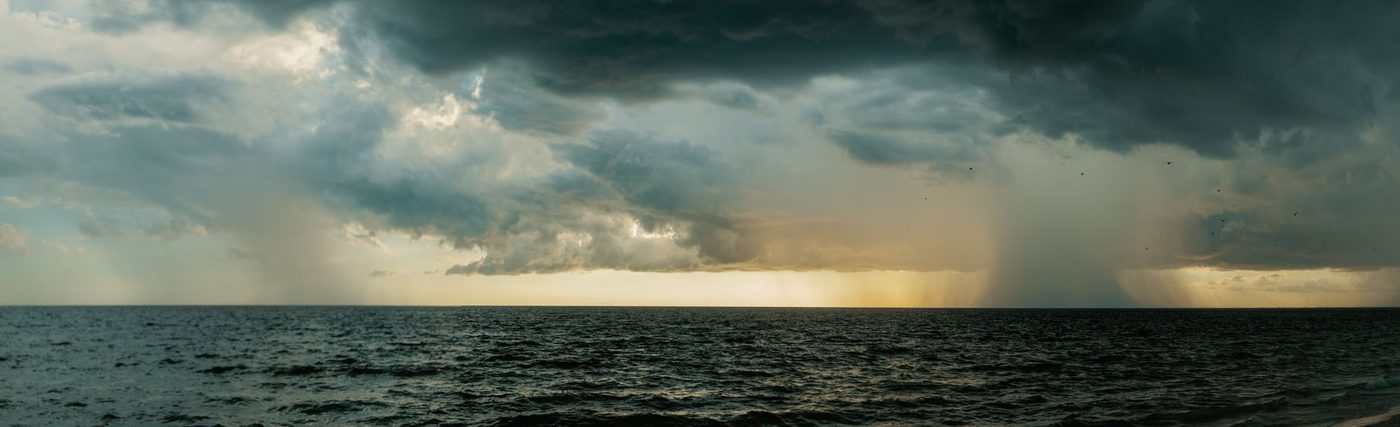
    A quiz asks which is stronger, a hurricane or a typhoon. NOAA’s National Ocean Service answers on one line: the only difference is the location where the storm occurs. That sentence settles the question, but the terms around it, from “tropical storm” to “super typhoon” to the Saffir-Simpson scale, are where most quiz traps sit. The pages used here are from NOAA’s National Ocean Service (each shows “Last updated: 09/23/26”, which in US date order is 23 September 2026) and the National Hurricane Center (pages with no date).

    Four Terms Quiz Setters Mix Up

    NOAA’s pages define the terms in an order, from the generic to the specific:

    • Tropical cyclone is the generic term meteorologists use for a rotating, organized system of clouds and thunderstorms that originates over tropical or subtropical waters and has closed, low-level circulation.
    • Tropical depression is the name for the weakest tropical cyclones.
    • Tropical storm is what a depression becomes when its maximum sustained winds reach 39 miles per hour.
    • Hurricane, typhoon or tropical cyclone is the name once maximum sustained winds reach 74 miles per hour or higher, depending on where the storm originates.

    Which Name Applies Where

    NOAA says the term hurricane is used in the North Atlantic, the central North Pacific and the eastern North Pacific. The same type of disturbance in the Northwest Pacific is called a typhoon. In the South Pacific and Indian Ocean, the generic term tropical cyclone is used, regardless of the strength of the wind. A trap answer that makes a typhoon a bigger or weaker storm than a hurricane therefore has no support in the National Ocean Service page.

    What the 1 to 5 Scale Measures, and What It Ignores

    The National Hurricane Center describes the Saffir-Simpson Hurricane Wind Scale as a 1 to 5 rating based only on a hurricane’s maximum sustained wind speed. It says the scale does not take into account other potentially deadly hazards such as storm surge, rainfall flooding and tornadoes, and that hurricanes of all categories can produce deadly storm surge, rain-induced floods and tornadoes.

    Category Sustained winds
    1 74 to 95 mph
    2 96 to 110 mph
    3 (major) 111 to 129 mph
    4 (major) 130 to 156 mph
    5 (major) 157 mph or higher

    The same page says hurricanes rated Category 3 and higher are known as major hurricanes. It adds a footnote on a different label: in the western North Pacific, the term “super typhoon” is used for tropical cyclones with sustained winds exceeding 150 mph. That is the wording for that region, set beside the 157 mph threshold for Category 5 on a different scale; the page does not say the two are the same measure.

    The Atlantic Season Is Not a Wall

    For the Atlantic, the National Ocean Service says hurricane season officially runs from June 1 to November 30 and that ninety-seven percent of tropical cyclone activity occurs during this period. It also says there is nothing magical about these dates and that hurricanes can and do occur outside the six month period. A quiz answer saying none can form outside those dates has the page against it.

    Who Chooses the Names

    The National Hurricane Center says it does not control the naming of tropical storms: a strict procedure is run by an international committee of the World Meteorological Organization. For Atlantic hurricanes there are six lists of names, each repeated every sixth year, so the 2026 list is used again in 2032. The 2026 Atlantic list runs from Arthur to Wilfred. A name is changed only if a storm is so deadly or costly that using it for a different storm would be inappropriate, and the committee then strikes it from the list. The page lists retired names by year, with Dennis, Katrina, Rita, Stan and Wilma under 2005 and Melissa under 2025.

    If more than twenty-one named tropical cyclones occur in the Atlantic basin in a season, the extra storms take names from an alternate list approved by the WMO.

    A Short Naming History for the Tiebreaker

    The National Hurricane Center’s history page says that for several hundred years many West Indies hurricanes were named after the saint’s day on which they occurred, and that Clement Wragge, an Australian meteorologist, began giving women’s names to tropical storms before the end of the 19th century. In 1953 the United States began using female names, and the National Ocean Service says that by 1978 both male and female names were used for Northern Pacific storms, adopted in 1979 for the Atlantic basin. The history page words the 1978 step as men’s and women’s names being included in the Eastern North Pacific lists.

    The bottom line

    According to NOAA, a hurricane and a typhoon are the same weather phenomenon, a tropical cyclone, named by location: the cut-off is maximum sustained winds of 74 miles per hour or higher, with tropical storm starting at 39. The National Hurricane Center says the 1 to 5 hurricane scale rates wind speed only and ignores surge, rainfall flooding and tornadoes, that Category 3 and above are major hurricanes, and that Atlantic lists repeat every six years, so the 2026 names return in 2032. The National Ocean Service says the official Atlantic season runs from June 1 to November 30 but that hurricanes can occur outside it.

    Sources

    • What is the difference between a hurricane and a typhoon?, NOAA National Ocean Service, last updated 09/23/26, read 10 November 2026 (noaa.gov)
    • Why do we name tropical storms and hurricanes?, NOAA National Ocean Service, last updated 09/23/26, read 10 November 2026 (noaa.gov)
    • Saffir-Simpson Hurricane Wind Scale, NOAA National Hurricane Center, page shows no date, read 10 November 2026 (noaa.gov)
    • Tropical Cyclone Names, NOAA National Hurricane Center, page shows no date, read 10 November 2026 (noaa.gov)
    • Tropical Cyclone Naming History and Retired Names, NOAA National Hurricane Center, page shows no date, read 10 November 2026 (noaa.gov)
  • Which Mountain Is the Tallest? Quiz Traps From NOAA and NASA: Everest at 8,848 Metres, Mauna Kea From Base to Peak, Chimborazo From the Earth’s Centre and the Peak Once Thought the Highest

    Which Mountain Is the Tallest? Quiz Traps From NOAA and NASA: Everest at 8,848 Metres, Mauna Kea From Base to Peak, Chimborazo From the Earth’s Centre and the Peak Once Thought the Highest

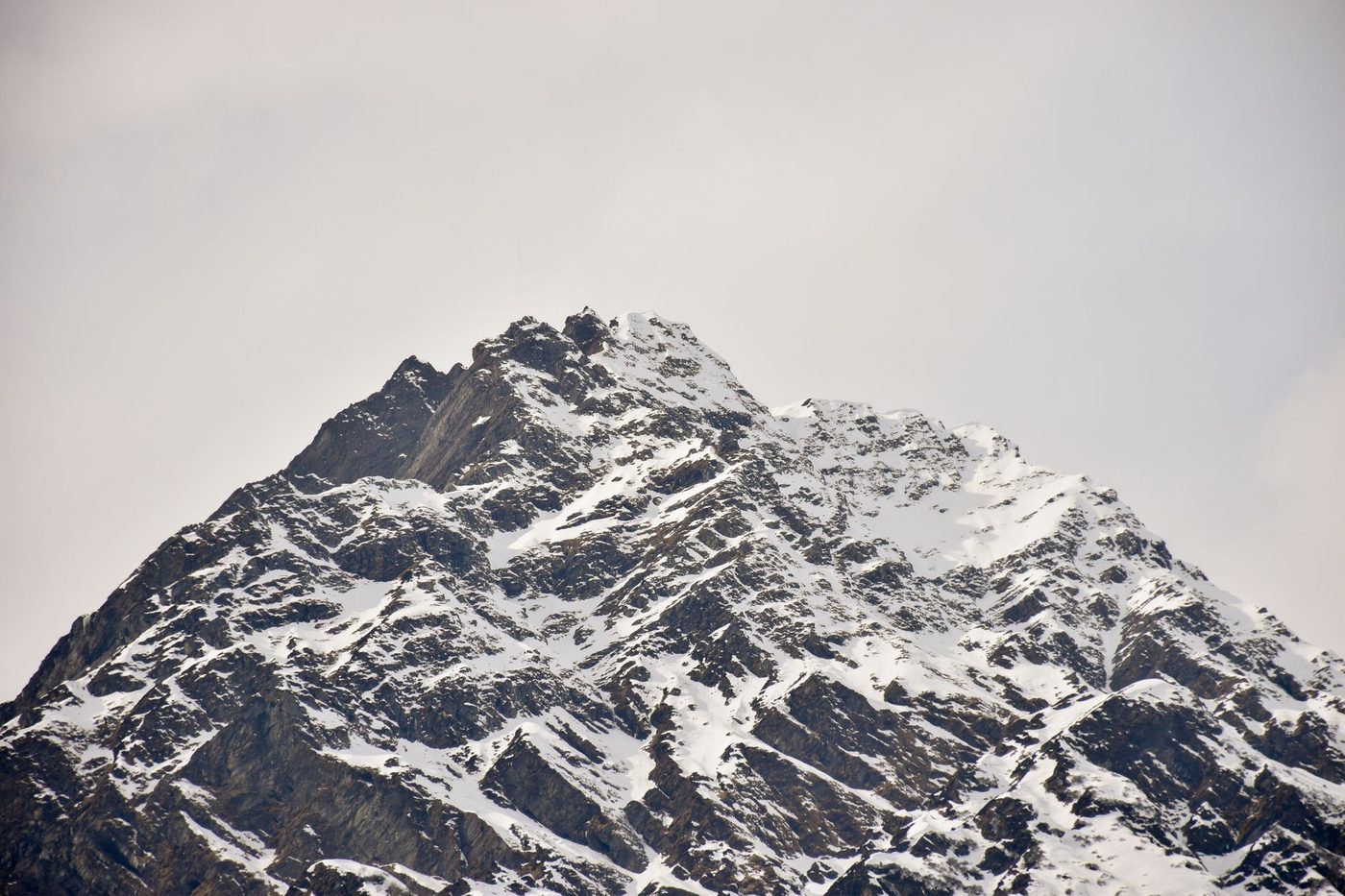
    Which mountain is the tallest on Earth? The National Oceanic and Atmospheric Administration (NOAA) opens its infographic on the question with “The answer is debatable.” NOAA’s National Ocean Service pages (each showing a 09/23/26 update) and three NASA pages, from 2005, 2014 and 2016, show why: the answer depends on what “tallest” measures.

    One question, three measures

    NOAA separates the answers by measure:

    • Highest above sea level: Mount Everest, which NOAA says reaches 8,848 metres (29,029 feet) at its summit, above global mean sea level. It describes Everest as located in Nepal and Tibet.
    • Farthest from the Earth’s centre: Mount Chimborazo in Ecuador, whose summit NOAA puts at 6,268 metres above sea level yet over 2,072 metres farther from the centre of the Earth than Everest’s peak.
    • Tallest from base to peak: Mauna Kea, a volcano on the Big Island of Hawaii, which NOAA says rises more than 10,210 metres from base to peak.

    The words matter too. NOAA says Everest is “usually said to be the highest mountain” but is not the tallest, a title it gives to Mauna Kea. NASA’s Earth Observatory page of 2014 is titled “The World’s Tallest Mountain” and calls Everest the standard to which other mountains are compared. A question that says “highest above sea level” has Everest as its answer on NOAA’s pages and in NASA’s 2016 picture caption, and a question that says “tallest” needs its measure stated.

    Why the planet’s shape changes the answer

    NOAA says the Earth is closer to an ellipsoid than a sphere, with its diameter bulging at the equator because of the centrifugal force of constant rotation. Chimborazo sits just one degree south of the equator, where NOAA says the bulge is greatest. NASA’s Earth Observatory gives the same reasoning in 2005: because of the bulge, the summit of a peak lying along the equator would be farther from the Earth’s centre than the summit of an equally high peak at a higher latitude. NOAA adds that this makes Chimborazo the closest point on Earth to the stars.

    What “sea level” means in the Everest figure

    NOAA describes the geoid as a model of global mean sea level that is used to measure precise surface elevations, and says it defines zero elevation. It also says sea level itself is irregular: slight variations in gravity cause permanent hills and valleys in the ocean’s surface of over 300 feet. For Everest, NOAA gives the reference as global mean sea level, which it describes as the average level of the ocean surface from which elevations are measured.

    The same three facts in NASA’s figures

    NASA’s Astronomy Picture of the Day of 25 February 2016 reports the same three facts, with its own figures. It gives Everest at 8,848 metres (29,029 feet), Chimborazo at 6,268 metres above sea level and more than 2,000 metres farther from the centre of the Earth than Everest, and Mauna Kea at over 10,000 metres from base to summit. It also gives Mauna Kea’s summit as 4,168 metres above sea level. The caption describes the same three measures as NOAA, and a quiz that quotes a number should name the source and the measure.

    The mountain once thought to be the highest

    NASA’s Earth Observatory page of 11 December 2005 says that in 1802 Chimborazo was thought to be the world’s tallest mountain, and that the German naturalist Alexander von Humboldt set out to climb it. He did not reach the summit, but reached nearly 6,100 metres (20,000 feet), a record for European mountaineers at the time. The page says no one reached the peak until 1880, when Edward Whymper and Louis and Jean-Antoine Carrel climbed it. The page’s own wording is that Humboldt did not reach the summit.

    Everest facts that quizzes reuse

    The same NASA series, in its 2014 Everest page, says fourteen peaks on Earth stand taller than 8,000 metres (26,247 feet) and that Everest is the tallest of these “eight-thousanders”. It gives the Nepalese name as Sagarmatha, “mother of the universe”. It says Edmund Hillary and Tenzing Norgay followed the southeastern ridge in May 1953 when they became the first climbers to reach the summit and return safely.

    For George Mallory and Andrew Irvine in 1924, the page says they used the northern ridge, that what is known for certain is that they were spotted pushing toward the peak before a storm, and that whether they reached the summit remains a topic of controversy. It adds that Mallory’s body was found near the northeast ridge at 8,160 metres (26,772 feet) in 1999. The wording “first to reach the summit and return safely” is the page’s own and is narrower than “first to reach the summit”.

    A wording check for question writers

    NOAA’s infographic calls the question debatable, and the NASA pages use “tallest” for Everest. A question can name Everest for height above sea level, Mauna Kea for base to peak, or Chimborazo for distance from the Earth’s centre, and each answer is attributed above.

    The bottom line

    Everest is the highest mountain above mean sea level at 8,848 metres, according to NOAA and NASA. NOAA gives the tallest from base to peak to Mauna Kea and the farthest from the Earth’s centre to Chimborazo. NASA’s 2014 page titles Everest “The World’s Tallest Mountain”, while NOAA reserves “tallest” for Mauna Kea, so the question should name its measure. The 1802 Humboldt climb did not reach Chimborazo’s summit, and the first summit climb the NASA page records was in 1880.

    Sources

    • What is the highest point on Earth as measured from Earth’s center?, National Ocean Service, NOAA, page shows 09/23/26, read 9 November 2026 (oceanservice.noaa.gov)
    • Is the Earth round?, National Ocean Service, NOAA, page shows 09/23/26, read 9 November 2026 (oceanservice.noaa.gov)
    • What is the geoid?, National Ocean Service, NOAA, page shows 09/23/26, read 9 November 2026 (oceanservice.noaa.gov)
    • The World’s Tallest Mountain, NASA Earth Observatory, Image of the Day for 2 January 2014, read 9 November 2026 (science.nasa.gov)
    • Chimborazo and Tungurahua, Ecuador, NASA Earth Observatory, Image of the Day for 11 December 2005, read 9 November 2026 (science.nasa.gov)
    • Highest, Tallest, and Closest to the Stars, NASA Astronomy Picture of the Day, 25 February 2016, read 9 November 2026 (apod.nasa.gov)
  • The Four Elements Named in 2016: IUPAC’s Timeline From the 30 December 2015 Verification to the 28 November 2016 Approval, and the Quiz Traps in Nihonium, Moscovium, Tennessine and Oganesson

    The Four Elements Named in 2016: IUPAC’s Timeline From the 30 December 2015 Verification to the 28 November 2016 Approval, and the Quiz Traps in Nihonium, Moscovium, Tennessine and Oganesson

    The last four names added to the periodic table arrived in a short sequence of announcements from IUPAC, the International Union of Pure and Applied Chemistry, between December 2015 and November 2016. The details are easy to blur: which were named after places, which after a person, who was allowed to suggest names and how the table is laid out. The IUPAC pages below were read on 8 November 2026 and are the only sources used.

    30 December 2015: the seventh row is complete

    IUPAC announced on 30 December 2015 that a joint working party of IUPAC and the International Union of Pure and Applied Physics had determined that the discovery claims for elements 113, 115, 117 and 118 had been fulfilled. The announcement said these elements complete the seventh row of the periodic table and that discoverers from Japan, Russia and the USA would be invited to suggest permanent names and symbols.

    Until then the four carried temporary names: ununtrium (Uut), ununpentium (Uup), ununseptium (Uus) and ununoctium (Uuo). The announcement credited the RIKEN collaboration in Japan with element 113. For 115 and 117 it named the collaboration between the Joint Institute for Nuclear Research in Dubna, Russia, Lawrence Livermore National Laboratory and Oak Ridge National Laboratory, and for 118 the Dubna and Livermore collaboration.

    8 June 2016: four names go to public review

    IUPAC’s release of 8 June 2016 set out the proposed names: nihonium (Nh) for element 113, moscovium (Mc) for 115, tennessine (Ts) for 117 and oganesson (Og) for 118. It listed the traditions that new names can follow: a mythological concept or character, a mineral or similar substance, a place or geographical region, a property of the element, or a scientist. A five-month public review was set, expiring on 8 November 2016, before formal approval by the IUPAC Council.

    The release described element 113 as the first element to have been discovered in an Asian country.

    28 November 2016: the names are approved

    A later IUPAC release reports that on 28 November 2016 the names and symbols were approved by the IUPAC Bureau. The two releases word the approving body differently, the June one naming the Council and the November one the Bureau, and both are reported here as written. IUPAC says comments from the public were many, some suggesting other names and some backed by petitions, but could not be accepted because under the current guidelines only the discoverers have the right to propose names and symbols.

    Quiz traps in the four names

    Three honour places, but only one is a country. IUPAC says nihonium comes from Nihon, one of the two ways to say Japan in Japanese, and its release says the name was proposed to make a direct connection to the nation where the element was discovered. Moscovium is in recognition of the Moscow region, and tennessine of the Tennessee region of the United States, including Oak Ridge National Laboratory, Vanderbilt University and the University of Tennessee at Knoxville.

    One honours a person. Oganesson recognises Professor Yuri Oganessian, shown in IUPAC’s releases as born in 1933, for his contributions to transactinoid elements research. The releases do not say he is living, so a question that does should be checked elsewhere.

    The endings follow a rule. IUPAC gives “-ium” for elements of groups 1 to 16, “-ine” for group 17 and “-on” for group 18, which is why 117 ends in “-ine” and 118 in “-on”.

    The symbol Ts has another meaning. Members of the chemistry community raised that Ts is also a common abbreviation for the tosyl group. IUPAC concluded that, as many two-letter abbreviations have multiple meanings, the context makes the meaning unambiguous.

    The table itself: what IUPAC does and does not say

    IUPAC’s periodic table page says its latest release of the table is dated 4 May 2022 and that it has no recommendation for a specific form of the table, whether 18-column or 32-column; the version shown is the conventional long form. The page says that since 1988 IUPAC has recommended that groups be numbered 1 to 18, and that the collective names lanthanoids and actinoids are recommended, with lanthanoids preferred over lanthanide. It describes the question of which elements belong in group 3 as one that has been debated from time to time.

    On the question of what comes after the seventh row, the November 2016 release says scientists were searching for elements beyond it, and that IUPAC and IUPAP were establishing a new joint working group to examine the criteria used to verify claims.

    The bottom line

    IUPAC’s own pages put the verification of elements 113, 115, 117 and 118 on 30 December 2015, the proposed names on 8 June 2016 and the approval on 28 November 2016. Three names honour places or regions (Japan, the Moscow region, the Tennessee region) and one honours a scientist, and only the discoverers could propose them. IUPAC does not recommend an 18-column or 32-column layout. The pages describe their own dates and wording, and later changes should be checked on IUPAC’s site.

    Sources

    • Discovery and Assignment of Elements with Atomic Numbers 113, 115, 117 and 118, IUPAC press release, 30 December 2015, read 8 November 2026 (iupac.org)
    • IUPAC is naming the four new elements nihonium, moscovium, tennessine, and oganesson, IUPAC, release dated 8 June 2016 on IUPAC’s periodic table page, read 8 November 2026 (iupac.org)
    • Elements 113, 115, 117, and 118 are now formally named nihonium (Nh), moscovium (Mc), tennessine (Ts), and oganesson (Og), IUPAC, reports approval on 28 November 2016, read 8 November 2026 (iupac.org)
    • Periodic Table of Elements, IUPAC, page shows a latest release dated 4 May 2022, read 8 November 2026 (iupac.org)
  • How Many Countries Are There? Quiz Traps From the UN’s 193 Member States, Two Observer States, the US State Department’s 197 Independent States, the Original 51 and Names That Differ Between Lists

    How Many Countries Are There? Quiz Traps From the UN’s 193 Member States, Two Observer States, the US State Department’s 197 Independent States, the Original 51 and Names That Differ Between Lists

    193 is the number on the end of the United Nations’ own membership history: the page headed “Growth in United Nations membership” ends with “193 Members (2011)”, the year South Sudan was added. That answers one version of the question “how many countries are there?”. This guide takes the numbers in turn, with the page dates and definitions each source gives.

    193: the UN’s member states

    The UN’s list of member states gives each state a date of admission, and counting its entries gives 193. The United Kingdom appears as a single entry, “United Kingdom of Great Britain and Northern Ireland”, admitted on 24 October 1945. The UN pages are undated and were read on 7 November 2026.

    The newest entries on that list are Switzerland, admitted on 10 September 2002, Timor-Leste on 27 September 2002, Montenegro on 28 June 2006 and South Sudan on 14 July 2011.

    2: the observer states

    The UN has a separate page for non-member states that have received a standing invitation to take part as observers in the General Assembly, and it lists two: the Holy See and the State of Palestine. For Palestine the page says that General Assembly resolution A/RES/67/19 of 29 November 2012 accorded non-member observer state status. The UN’s page calls both non-member states, so neither is among the 193.

    197: the US State Department’s count

    The US Department of State’s fact sheet “Independent States in the World”, dated 11 August 2026, gives a total count of independent states of 197. It uses its own definition: a people politically organized into a sovereign state with a definite territory recognized as independent by the US.

    The fact sheet marks which entries are members of the United Nations. Counted from the page, 193 entries carry that marker and four do not: Cook Islands, Holy See, Kosovo and Niue. Taiwan is listed separately under “Other”, with notes saying it is claimed by both the Government of the People’s Republic of China and the authorities on Taiwan, and administered by the authorities on Taiwan.

    The 193 and 197 figures measure different things, one being UN membership and the other recognition by the United States, so neither corrects the other. A quiz answer should say which list it uses.

    51: the founders, and the members that changed shape

    The UN’s growth page lists 51 original members in 1945, including Egypt, Syria, Poland, the United Kingdom and the United States. The 1945 list includes the names Czechoslovakia, the Union of Soviet Socialist Republics and Yugoslavia, and membership stood at 82 in 1958 and 99 in 1960. The page also records several changes that catch out quiz players:

    • Syria merged with Egypt on 22 February 1958 to become the United Arab Republic, and resumed its separate membership on 13 October 1961.
    • Indonesia temporarily withdrew from the United Nations on 20 January 1965 and rejoined on 28 September 1966.
    • The Federal Republic of Germany and the German Democratic Republic were both added in 1973. On 3 October 1990 the latter acceded to the former, resulting in the reunification of Germany; the member list gives Germany one admission date, 18 September 1973.
    • The People’s Democratic Republic of Yemen (a member since 1967) was united with the Yemen Arab Republic (a member since 1947) on 22 May 1990, forming the Republic of Yemen.
    • Czechoslovakia was an original member. The Czech and Slovak Federal Republic ceased to exist on 31 December 1992, and on 19 January 1993 the Czech Republic and the Slovak Republic were both admitted separately.
    • The Federal Republic of Yugoslavia, which was part of the Socialist Federal Republic of Yugoslavia, an original member, was removed from the official roster of UN members in 2000 following its dissolution.

    One state, more than one name

    The two lists do not always use the same short name. The UN’s member list has Myanmar, while the State Department’s list has Burma, with the long form “Union of Burma”. The UN list has TΓΌrkiye; the State Department’s short form is Turkey, and its Note 5 says the conventional names remain “Republic of Turkey” and “Turkey” while “Republic of TΓΌrkiye” should be used in formal and diplomatic contexts. The UN’s list gives the Netherlands as “Netherlands (Kingdom of the)”, admitted on 10 December 1945, while the State Department’s list pairs the short form Netherlands with the long form “Kingdom of the Netherlands”. A question about a name is a question about whose list is meant.

    The bottom line

    The UN’s own pages support 193 member states (the count ends with South Sudan in 2011) plus two observer states, the Holy See and the State of Palestine. The US State Department’s fact sheet of 11 August 2026 gives 197 independent states under its own definition, with four entries that carry no UN marker. A quiz answer can name the list, the body and the date: “193 UN member states” or “197 independent states per the US State Department, 11 August 2026”, rather than just “countries”.

    Sources

    • Member States, United Nations, page undated, read 7 November 2026 (un.org)
    • Growth in United Nations membership, United Nations, page undated, read 7 November 2026 (un.org)
    • Non-Member-States, United Nations, page undated, read 7 November 2026 (un.org)
    • Independent States in the World, Bureau of Intelligence and Research, US Department of State, 11 August 2026, read 7 November 2026 (state.gov)
  • Leap Year and Calendar Quiz Traps: Why 1900 Was Not a Leap Year, What Followed 4 October 1582, Which Days Britain Skipped in 1752 and Why There Is No Year Zero, According to NASA and Royal Museums Greenwich

    Leap Year and Calendar Quiz Traps: Why 1900 Was Not a Leap Year, What Followed 4 October 1582, Which Days Britain Skipped in 1752 and Why There Is No Year Zero, According to NASA and Royal Museums Greenwich

    Calendar questions are a quiz staple, and most of the traps come down to a handful of numbers: 4, 100, 400, 1582 and 1752. This guide takes the common beliefs one at a time and answers each from two sources: a chapter on calendars reprinted on NASA’s Eclipse Web Site (last revised 14 October 2012) and an essay by Alan Longstaff on calendars from around the world, published by Royal Museums Greenwich (copyright National Maritime Museum, 2005).

    Belief: every fourth year is a leap year

    Almost, but not always. The NASA chapter gives the rule for civil use: every year exactly divisible by 4 is a leap year, except for years exactly divisible by 100, and those centurial years are leap years only if they are exactly divisible by 400. It spells out the result: 2000 is a leap year, whereas 1900 and 2100 are not. The Royal Museums Greenwich (RMG) essay states the same rule and lists the century leap years in the Common Era as 400, 800, 1200, 1600, 2000, 2400 and so on.

    The quiz trap is a question about 1900 or 2100. Both are divisible by 4, so a quick answer says yes, but neither is divisible by 400.

    Belief: the Gregorian year is 365.25 days

    That figure belongs to the older Julian calendar. RMG says the Julian calendar was instituted by Julius Caesar in 46 BCE with a year of 365.25 days, the extra quarter day being handled by a leap year every four years. The Gregorian century rule changes the average. Both sources divide the 400-year cycle of 146,097 days by 400 and give 365.2425 days per calendar year. They also say 146,097 is exactly divisible by 7, so the Gregorian calendar repeats exactly every 400 years.

    The same arithmetic gives a second trap. The NASA chapter says the Gregorian calendar accumulates an error of one day in about 2,500 years, so it is not perfect either.

    Belief: nobody ever lost days from the calendar

    Two reforms did. The NASA chapter says the recommendations of Pope Gregory XIII’s calendar commission were instituted by a papal bull signed on 24 February 1582. Ten days were deleted from the calendar, so that 4 October 1582 was followed by 15 October 1582. RMG adds that the reform was devised by the physician Aloysius Lilius and that the aim of removing ten days was to return the vernal equinox to 21 March, its supposed date at the council of Nicea in 325 CE.

    Belief: Britain changed at the same time as the Pope

    It did not. The NASA chapter says Protestant states initially rejected the new calendar but gradually accepted it over the coming centuries. RMG says reform was implemented slowly, facing resistance by Protestant countries, and that Britain was one of the last to adopt the Gregorian calendar, finally doing so in 1752. In RMG’s account, eleven days in total, 3 to 13 September, were expunged, the extra day arising because 1700 had not been a leap year under the century rule.

    This is the usual shape of a 1752 question. The answer is eleven days, not ten, and RMG ties the extra day to 1700 not being a leap year.

    Belief: the calendar counts from year zero

    Not in the traditional count. The NASA chapter says the Anno Domini epoch was established by the sixth-century scholar Dionysius Exiguus, and that Bede, the eighth-century English historian, began counting years backward from A.D. 1. In that system, A.D. 1 is preceded by 1 B.C., without an intervening year 0. Astronomers use +1 for A.D. 1, which is naturally preceded by year 0. NASA dates that astronomical system to the eighteenth century, when it was introduced by the astronomer Jacques Cassini, and RMG likewise says astronomers introduced the year zero in the 18th century.

    A related trap concerns the birth of Christ. The NASA chapter says what Dionysius did not do is establish an accurate date for it, and that the historical evidence is too sketchy to allow a definitive dating. RMG says it was probably about 4 BCE. The two sources differ in how firmly they put it, so a quiz that asks for a year should be treated with care.

    A quick checklist before you answer

    • Leap years: divisible by 4, but a century year only if also divisible by 400 (so 2000 yes, 1900 and 2100 no).
    • Julian year: 365.25 days. Gregorian average: 365.2425 days.
    • 1582: 4 October was followed by 15 October (NASA chapter).
    • 1752: Britain, eleven days, 3 to 13 September removed (RMG essay).
    • Year numbering: 1 BC is followed by AD 1 in the traditional count, with no year 0.

    The bottom line

    The NASA chapter and the RMG essay agree on the leap year rule, on the 365.2425-day average and on the ten days removed in the 1582 reform. RMG adds that Britain waited until 1752 and lost eleven days, 3 to 13 September. For a quiz, remember that 1900 and 2100 are not leap years while 2000 is, that Britain’s change came in 1752 and removed eleven days, and that the traditional year count has no year zero. On the date of Christ’s birth the two sources are not equally definite, so quote the one a question names.

    Sources

    • Calendars and their History (Calendars, by L. E. Doggett, reprinted from the Explanatory Supplement to the Astronomical Almanac), NASA Eclipse Web Site, last revised 14 October 2012, read 6 November 2026 (eclipse.gsfc.nasa.gov)
    • Calendars from around the world, by Alan Longstaff, Royal Museums Greenwich, copyright National Maritime Museum 2005, read 6 November 2026 (rmg.co.uk)
  • Greenwich Time Quiz Traps: 1675, 1847, 1880, 1884 and 1972, and How GMT, UTC and BST Differ, According to Royal Museums Greenwich and GOV.UK

    Greenwich Time Quiz Traps: 1675, 1847, 1880, 1884 and 1972, and How GMT, UTC and BST Differ, According to Royal Museums Greenwich and GOV.UK

    Five dates anchor the story of Greenwich time: 1675, 1847, 1880, 1884 and 1972. Royal Museums Greenwich dates the Royal Observatory to 1675, the railways’ adoption of Greenwich time across Great Britain to December 1847, its legal status to 1880, the vote for the world’s prime meridian to 1884 and the end of Greenwich Mean Time’s run as the international standard to 1972. This guide walks through those dates, then three easily confused terms: GMT, UTC and BST.

    1675 to 1880: from observatory time to legal time

    Royal Museums Greenwich (RMG) says the Royal Observatory was founded by Charles II in 1675 to find a way to measure longitude at sea. It defines Greenwich Mean Time as the yearly average of the time each day when the Sun crosses the Prime Meridian at the Royal Observatory, and says that today GMT is reckoned from one midnight to the next.

    RMG says that until the mid-19th century almost every town kept its own local time. It gives Bristol Mean Time as 10 minutes behind GMT and Cardiff Mean Time as 13 minutes behind. GMT was adopted across Great Britain by the Railway Clearing House in December 1847 and became known as “Railway Time”. By the mid-1850s almost all public clocks in Britain were set to it, and it became Britain’s legal standard time in 1880.

    1884: the vote in Washington

    RMG says that in 1884 representatives of different nations gathered in Washington D.C. to choose a single meridian, and that after weeks of discussion delegates voted for the Greenwich Meridian. The cross-hairs of the Airy Transit Circle’s eyepiece defined zero degrees longitude. The delegates also recommended a global time zone system based on GMT.

    RMG gives its reasons in two ways on two pages. One page says the United States had already chosen Greenwich as the basis of its time zones and that 72% of the world’s commerce depended on sea-charts using Greenwich as the Prime Meridian. Another says Greenwich offered the least disruption because nearly two-thirds of the world’s ships were already using charts based on it. The two are worded differently, one about commerce and one about ships, and are reported here as worded.

    GMT, UTC and BST: three labels, three jobs

    RMG says GMT was the international standard of civil time from 1884 until 1972 and has since been replaced by Coordinated Universal Time (UTC). It also says GMT is still the legal time in Britain in the winter. A separate RMG page says that civil time in the UK is Coordinated Universal Time (UTC), described as the modern equivalent of Greenwich Mean Time (GMT) and never more than half a second different from it, and that in summer clocks move to British Summer Time (BST), one hour in advance of GMT.

    GOV.UK gives the clock changes: forward 1 hour at 1am on the last Sunday in March, back 1 hour at 2am on the last Sunday in October. The period when clocks are 1 hour ahead is BST, and when the clocks go back the UK is on GMT. Its page, last updated 24 November 2025, lists these dates:

    YearClocks go forwardClocks go back
    202629 March25 October
    202728 March31 October
    202826 March29 October

    The traps follow from the wording. GMT is not a synonym for UK clock time all year, because GOV.UK says the UK is on GMT when the clocks go back. RMG says GMT was the international standard until 1972 and has since been replaced by UTC.

    Is the Greenwich line still the Prime Meridian?

    RMG says the historic line is no longer the internationally agreed one. Between 1984 and 1988 new coordinate systems based on satellite data and other measurements were adopted, requiring a prime meridian that defines a plane passing through the centre of the Earth. The current agreed meridian, the IERS Reference Meridian, passes 102.5 m east of the historic Prime Meridian, which is why, RMG says, a phone standing on the historic line will not show exactly zero degrees longitude.

    RMG also gives numbers for the line itself: 20,000 km from pole to pole, passing through eight countries (the UK, France, Spain, Algeria, Mali, Burkina Faso, Togo and Ghana), crossing three continents, with Antarctica the only landmass it crosses in the southern hemisphere. For nearly two thirds of its length it passes over the sea. At night a laser beam marks it at the Observatory.

    The clock that ignores summer time

    The Shepherd Gate clock at the Observatory gates is described by RMG as the first clock ever to show Greenwich Mean Time directly to the public. Its dial has 24 hours, so at noon the hour hand points straight down. RMG says it originally showed astronomical time, counting the day from noon, was later changed to count from midnight, and continues to show GMT without adjustment for BST.

    The bottom line

    On the RMG and GOV.UK pages read, the safe dates are 1675 for the Observatory, December 1847 for the Railway Clearing House, 1880 for legal standard time in Britain, 1884 for the Washington vote and 1972 as the end of GMT’s run as the international standard. For the UK, RMG says GMT is the legal winter time and UTC is its modern equivalent within half a second, while GOV.UK says the UK is on GMT after the clocks go back and on BST while they are an hour ahead. RMG’s two pages word the 1884 reasons differently, so the figures should not be merged, and RMG says the agreed prime meridian is now the IERS Reference Meridian, 102.5 m east of the historic line.

    Sources

    • What is Greenwich Mean Time (GMT) – and why does it matter?, Royal Museums Greenwich, page undated, read 5 November 2026 (rmg.co.uk)
    • What is the Prime Meridian, and why is it in Greenwich?, Royal Museums Greenwich, page undated, read 5 November 2026 (rmg.co.uk)
    • Which time is it?, Royal Museums Greenwich, page undated, read 5 November 2026 (rmg.co.uk)
    • When do the clocks change?, GOV.UK, last updated 24 November 2025, read 5 November 2026 (gov.uk)
  • Commonwealth Quiz Traps: 56 Members, Who Has Left and Returned, Four Members With No British Empire Ties and Why the Monarch Is Not Automatically Head, From the Commonwealth’s Own Pages

    Commonwealth Quiz Traps: 56 Members, Who Has Left and Returned, Four Members With No British Empire Ties and Why the Monarch Is Not Automatically Head, From the Commonwealth’s Own Pages

    Questions about the Commonwealth can turn on small details: is it the old British Empire, does the monarch run it, and which countries have left and returned? This article takes those questions in turn, using the Commonwealth’s own website. Its pages are undated, and the site’s banner on 4 November 2026 announced the 2026 Commonwealth Heads of Government Meeting (CHOGM), 1 to 4 November in St John’s, Antigua and Barbuda.

    How many countries are in it?

    The Commonwealth’s member countries page says 56 independent countries make up the Commonwealth in Africa, Asia, the Americas, Europe and the Pacific, with 2.7 billion people in Commonwealth countries. It also says 33 of the world’s 42 small states are members, and that all members have an equal say regardless of size or wealth.

    The About us page describes it as a voluntary association of 56 independent and equal countries, and says the last two to join were Gabon and Togo in 2022. The history timeline numbers them: Gabon “the 55th country to join” and Togo “the 56th”. The same timeline also calls Rwanda, which joined in 2009, the 55th. The page does not explain the overlap, so a quiz setter who wants a “which number was it” question should avoid 55.

    Is it just the old empire?

    The history page says the Commonwealth’s roots go back to the British Empire, and that the 1926 Imperial Conference, attended by leaders including those of the Irish Free State and Newfoundland, agreed the countries were equal members of a community within the British Empire. That community was called the British Commonwealth of Nations. The modern Commonwealth dates, in the page’s account, from a London meeting of Prime Ministers in 1949 whose London Declaration said republics and other countries could be part of it, prompted by India’s wish to become a republic and stay in.

    The timeline names eight countries that came together in 1949: Australia, Canada, India, New Zealand, Pakistan, South Africa, Sri Lanka and the United Kingdom. The page says that since 1949 independent countries from Africa, the Americas, Asia, Europe and the Pacific have joined, and that membership today is based on free and equal voluntary co-operation.

    Which members had no British ties?

    According to the history page, the last four countries to join, Mozambique, Rwanda, Gabon and Togo, have no historical ties to the British Empire. The timeline dates their joining as 13 November 1995 (Mozambique, called the 54th), 29 November 2009 (Rwanda) and June 2022 (Gabon and Togo, both approved at the CHOGM in Kigali, Rwanda). The About us page adds that any country can join.

    Who has left, and who came back?

    The same timeline records several exits and returns, which suit a matching question:

    • South Africa withdrew in 1961, after pressure from member states against its apartheid policies, and rejoined in 1994.
    • Pakistan withdrew in 1972 and rejoined in 1989 “after an absence of 17 years”.
    • Fiji’s membership lapsed in 1987 after it declared itself a republic following a military coup, and Fiji rejoined in 1997.
    • The Gambia withdrew in 2013 and rejoined on 8 February 2018.
    • Maldives withdrew in 2016 and rejoined in 2020.

    Suspension is a different thing from withdrawal. The timeline lists, for example, Nigeria suspended in 1995 and Pakistan suspended from the councils of the Commonwealth in 1999 and again in 2007, with the suspensions later lifted. It also records Zimbabwe’s withdrawal in 2003 and says Swaziland, which joined on 6 September 1968, is now the Kingdom of Eswatini.

    Does the monarch automatically lead it?

    No, on the Commonwealth’s account. Its history page says King George VI was the first Head of the Commonwealth and Queen Elizabeth II became Head when he died, “But the British king or queen is not automatically Head of the Commonwealth”, because member countries choose who becomes Head. The About us page says King Charles III is Head of the Commonwealth, that the role is symbolic, has no maximum fixed term and is not hereditary, and that future Heads will be chosen by Commonwealth leaders.

    Who runs it day to day?

    The About us page names three intergovernmental organisations at its heart: the Commonwealth Secretariat, the Commonwealth Foundation and the Commonwealth of Learning. The international headquarters of the Secretariat and the Foundation are at Marlborough House on Pall Mall in London. The Secretary-General is nominated by Commonwealth leaders and can serve a maximum of two terms of four years each; the page lists Shirley Botchwey as current. The About us page says leaders meet at CHOGM every two years, and the history page says the Secretariat was created in 1965.

    The bottom line

    On the Commonwealth’s own pages as read on 4 November 2026, the number to remember is 56, the head is a symbolic role chosen by member countries rather than an automatic one, and the last four members have no British Empire ties. Withdrawals, lapses and suspensions are separate events, and the timeline’s own numbering of the 55th member is inconsistent, so avoid it in questions. The pages are undated and membership can change, so a quiz that depends on the current list should be checked against the member countries page on the day.

    Sources

    • Member countries, Commonwealth Secretariat (thecommonwealth.org), page undated, read 4 November 2026 (thecommonwealth.org)
    • About us, Commonwealth Secretariat (thecommonwealth.org), page undated, read 4 November 2026 (thecommonwealth.org)
    • Our history, Commonwealth Secretariat (thecommonwealth.org), page undated, read 4 November 2026 (thecommonwealth.org)
  • Big Ben Is the Bell, Not the Tower: Quiz Traps From UK Parliament on the Elizabeth Tower, the Two Cracked Bells, Two Different Weights and a Clock Checked Against Greenwich

    Big Ben Is the Bell, Not the Tower: Quiz Traps From UK Parliament on the Elizabeth Tower, the Two Cracked Bells, Two Different Weights and a Clock Checked Against Greenwich

    “What is Big Ben?” has a one-word answer in UK Parliament’s own history pages: the bell. This guide takes the Parliament pages on the Elizabeth Tower and works through details that could trip up a quiz player, including the places where two of those pages give different figures. None of the pages shows a publication date, so each is quoted as read on 3 November 2026.

    Tower, clock or bell?

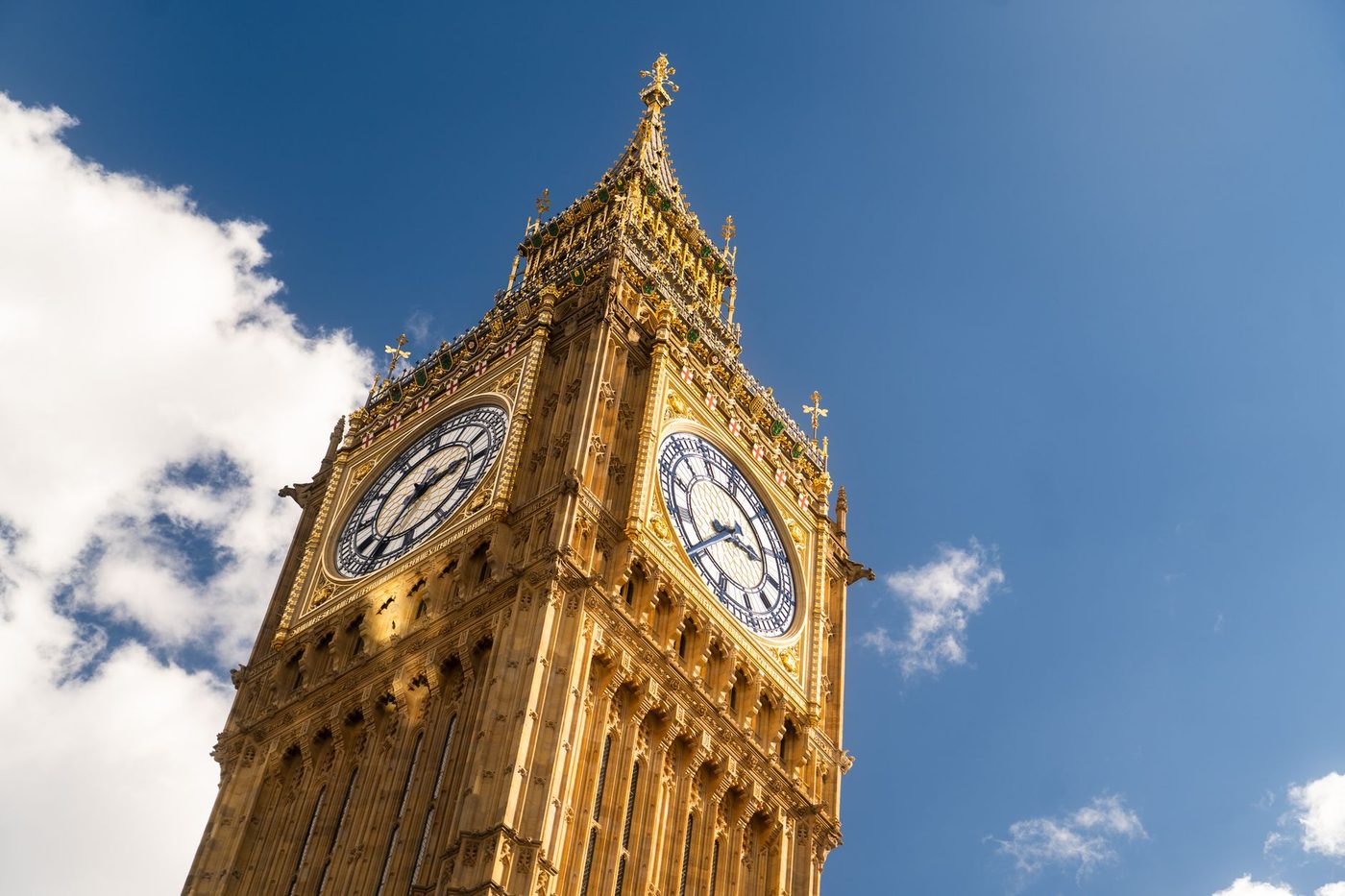
    Parliament’s page on how the clock tower has changed says that since it was built the official name of the tower has been the Clock Tower, though to people around the world it is known affectionately as Big Ben after the Great Bell. MPs from across the House backed a campaign to rename it the Elizabeth Tower to honour Queen Elizabeth II’s Diamond Jubilee, and on 25 June 2012 the House of Commons Commission decided to make it so. The same page says the other main tower, at the southern end of the Palace, is the Victoria Tower.

    The Great Clock is a third thing. The facts and figures page describes the Elizabeth Tower as 11 floors and 96 metres, with 281 steps to the clock faces and 334 steps to the Belfry where Big Ben, the Great Bell, hangs. It gives four clock dials, each 7 metres across.

    On the name itself, the page about constructing the clock says it is believed the Great Bell was probably named after Sir Benjamin Hall, the First Commissioner of Works, in fun because he was a tall man. The brief history page adds that the bell was originally to be called ‘Royal Victoria’.

    Dates that are easy to swap

    • 28 September 1843: the foundation stone for the clock tower was laid. From that day it took sixteen years before the bells rang out, according to the page on building the tower.
    • 1856: the first ‘Big Ben’ was cast near Stockton-on-Tees. In 1857 it developed a 1.2 metre crack during testing.
    • April 1858: the second bell was cast at the Whitechapel Bell Foundry. The construction page gives the date as 10 April 1858.
    • 31 May 1859: the Great Clock started ticking. The bell’s first strikes were on 11 July 1859.
    • Later in 1859: the new bell cracked as well. It stayed silent for four years, according to the construction page, with the largest quarter bell striking the hour meanwhile.
    • 1863: according to the brief history page, Big Ben was turned 90 degrees and a lighter hammer fitted so it could strike the hours again.

    The bell that hangs there today is therefore the second one cast, not the 1856 original. The construction page says the first bell was removed and melted down to create its replacement.

    Two pages, two weights

    The facts and figures page says Big Ben weighs 13.7 tonnes and its hammer 200 kilograms. The page on constructing the clock says the replacement bell, cast in 1858, weighed 13.5 tonne and was 2.5 tonne lighter than the first. Both are Parliament pages and both are quoted as published.

    The pages also differ on the 16 white horses. The page on constructing the clock places them with the first bell, pulled across Westminster Bridge after being moved by rail and sea. The brief history page places them with the second bell, carrying it to New Palace Yard on a carriage.

    The quarter bells are less disputed. The facts page says there are four other bells in the Belfry, with notes G, F-sharp, E and B, and weights of 1.1, 1.3, 1.7 and 4 tonnes for the first to fourth bells. E is Big Ben’s note as well as the third quarter bell’s. The building page refers to a bell-frame for the five bells.

    How accurate is the clock?

    Sir George Airy, the Astronomer Royal, specified that the Great Clock should be accurate to within one second when striking the hour. The facts page says each pendulum beat lasts 2 seconds and that the clock is adjusted with pre-decimal pennies, one penny causing it to gain two-fifths of a second in 24 hours. The pendulum is 4.4 metres long and weighs 310 kilograms.

    The page on how the tower has changed quotes a 1930 exchange in Parliament. Asked about accuracy, the First Commissioner of Works said the clock was checked daily by Greenwich Observatory and that during the past 290 days the error had exceeded one second on eight days only. Told that Big Ben was three minutes slow compared with every other clock in the country, he replied that he should say all the others were wrong.

    Silences, blackout and broadcasts

    • The brief history page says BBC Radio first broadcast the chimes to the United Kingdom on New Year’s Eve 1923.
    • From 1939 until April 1945 the clock dials stayed dark under wartime blackout rules, according to the brief history page. The page on how the tower has changed says a small bomb broke the glass in the south dial, the clock and bells were undamaged and the chimes were broadcast as usual.
    • On 5 August 1976, the brief history page says, a mechanical failure damaged the Great Clock and Big Ben was silent for nearly nine months.
    • In 2007, the same page says, Big Ben and the quarter bells were silenced from 11 August to 1 October for maintenance.
    • The page on how the tower has changed says the hour bell was tolled slowly to mark the deaths of four sovereigns, and for Sir Winston Churchill’s funeral the bells were silent as a mark of respect.

    The bottom line

    On UK Parliament’s own pages, Big Ben is the Great Bell in the Belfry of the tower named the Clock Tower until the House of Commons Commission renamed it the Elizabeth Tower on 25 June 2012. The pages agree on the 1857 and 1859 cracks and the 1859 start dates, but they differ on the bell’s weight (13.7 tonnes on one page, 13.5 tonne on another) and on which bell the 16 white horses pulled.

    Sources

    • Facts and figures: Big Ben and Elizabeth Tower, UK Parliament, page undated, read 3 November 2026 (parliament.uk)
    • Constructing the most accurate clock in the world, UK Parliament, page undated, read 3 November 2026 (parliament.uk)
    • A brief history of Big Ben and Elizabeth Tower, UK Parliament, page undated, read 3 November 2026 (parliament.uk)
    • How the clock tower has changed over the decades, UK Parliament, page undated, read 3 November 2026 (parliament.uk)
    • Building Elizabeth Tower, UK Parliament, page undated, read 3 November 2026 (parliament.uk)
  • One Ocean or Five? NOAA’s Answers on Ocean Counts, Seas, the Seven Seas, Size, Depth, Salt, Tides and a Waterfall, and the Quiz Traps They Settle

    One Ocean or Five? NOAA’s Answers on Ocean Counts, Seas, the Seven Seas, Size, Depth, Salt, Tides and a Waterfall, and the Quiz Traps They Settle

    This guide collects ocean answers from the “Ocean Facts” pages of the US National Oceanic and Atmospheric Administration (NOAA), for use in writing quiz questions. Each page quoted here shows “Last updated: 09/23/26” (US date format) except the Atlantic page, which shows 1/04/21. The figures below are NOAA’s own, in the units it gives.

    Trap one: how many oceans are there?

    NOAA’s answer starts with “There is only one global ocean.” It explains that this water, covering 71 percent of the Earth, is geographically divided into named regions. Historically there are four named oceans: the Atlantic, Pacific, Indian and Arctic. NOAA says most countries, including the United States, now recognise the Southern (Antarctic) as the fifth.

    The Southern Ocean is described as the newest. The US Board on Geographic Names recognises it as the water from the coast of Antarctica to 60 degrees South. NOAA says its boundaries were proposed to the International Hydrographic Organization in 2000, but not all countries agree on them, so the proposal has yet to be ratified by members of that body.

    Trap two: oceans, seas and the “Seven Seas”

    In geography, NOAA says, seas are smaller than oceans and usually located where land and ocean meet, typically partially enclosed by land. The Sargasso Sea is the exception it names, because it is defined only by ocean currents.

    The “Seven Seas” have no single list. NOAA says the exact origin of the phrase is uncertain. In Greek literature the seven were the Aegean, Adriatic, Mediterranean, Black, Red and Caspian seas, with the Persian Gulf thrown in. Medieval European writing used the North Sea, Baltic, Atlantic, Mediterranean, Black, Red and Arabian seas. NOAA says the modern Seven Seas could be given as the Arctic, North Atlantic, South Atlantic, North Pacific, South Pacific, Indian and Southern oceans, though the ocean is more commonly divided into five.

    Biggest, second biggest, smallest

    NOAA says the Pacific is the largest and deepest of the world ocean basins, containing more than half of the free water on Earth. Its order is Pacific, then Atlantic, then Indian, then Southern, and finally the Arctic. Two NOAA pages give the Pacific’s area differently: one says approximately 63 million square miles, another approximately 155 million square kilometres (59 million square miles). A question asking for an exact area therefore needs to say which source it follows.

    On the Atlantic, NOAA gives approximately 106,460,000 square kilometres (41,105,000 square miles), about 20 percent of the Earth’s surface, and calls it only slightly larger than half the size of the Pacific. The Arctic is the smallest at about 6.1 million square miles, which NOAA says is about 1.5 times as big as the United States.

    The Pacific’s name has a date attached. NOAA says Ferdinand Magellan, whose fleet entered the ocean in November 1520, called it “pacific” because of the calmness of the water at the time. The Atlantic, it adds, takes its name from the Greek god Atlas.

    Depth, water and salt

    NOAA gives the average ocean depth as about 3,682 metres (12,080 feet). The deepest part is the Challenger Deep, at the southern end of the Mariana Trench beneath the western Pacific, approximately 10,935 metres (35,876 feet) deep. It is named after HMS Challenger, whose crew first sounded the depths of the trench in 1875.

    On volume, NOAA says about 97 percent of Earth’s water is in the ocean, and less than one percent of all water on Earth is fresh. Ocean salt, it says, comes primarily from rocks on land and openings in the seafloor. Average salinity is about 35 parts per thousand, or about 3.5 percent of the weight of seawater, and chloride and sodium make up around 85 percent of the dissolved ions.

    Tides and a hidden waterfall

    NOAA says the highest tides in the world are in Canada, in the Bay of Fundy, at Burntcoat Head in Nova Scotia. It also calls it a misconception that the range of the tide increases with latitude, and says that idea is incorrect. It says the higher ranges seen in Alaska, Canada and northern Europe are created by the positions and configurations of the continents in the northern hemisphere.

    The world’s largest waterfall, NOAA says, is in the ocean beneath the Denmark Strait, which separates Iceland and Greenland. Its cataracts begin 2,000 feet under the surface of the strait and plunge to a depth of 10,000 feet at the southern tip of Greenland, nearly a two-mile drop.

    Quick answers for the quiz bag

    • Oceans: one global ocean with named regions, four historically and five as now recognised by most countries including the United States.
    • Largest: the Pacific. Smallest: the Arctic.
    • Deepest point: Challenger Deep, about 10,935 metres.
    • Highest tides: the Bay of Fundy, Canada.
    • Largest waterfall: beneath the Denmark Strait.

    The bottom line

    NOAA’s pages let a quiz writer take ocean answers from one issuing body, and they show where an answer depends on definition or source: the number of oceans, the list of Seven Seas, and the Pacific’s area, which two NOAA pages give differently. The largest ocean, the Challenger Deep and the Bay of Fundy each have one answer stated on a NOAA page.

    Sources

    • How many oceans are there?, NOAA National Ocean Service, last updated 09/23/26, read 2 November 2026 (oceanservice.noaa.gov)
    • What’s the difference between an ocean and a sea?, NOAA National Ocean Service, last updated 09/23/26, read 2 November 2026 (oceanservice.noaa.gov)
    • What are the Seven Seas?, NOAA National Ocean Service, last updated 09/23/26, read 2 November 2026 (oceanservice.noaa.gov)
    • What is the largest ocean basin on Earth? and What is the world’s smallest ocean?, NOAA National Ocean Service, last updated 09/23/26, read 2 November 2026 (oceanservice.noaa.gov)
    • How did the Pacific Ocean get its name?, NOAA National Ocean Service, last updated 09/23/26, read 2 November 2026 (oceanservice.noaa.gov)
    • How big is the Atlantic Ocean?, NOAA National Ocean Service, last updated 1/04/21 as shown, read 2 November 2026 (oceanservice.noaa.gov)
    • How deep is the ocean?, How much water is in the ocean? and Why is the ocean salty?, NOAA National Ocean Service, last updated 09/23/26, read 2 November 2026 (oceanservice.noaa.gov)
    • Where is the highest tide? and Where is Earth’s largest waterfall?, NOAA National Ocean Service, last updated 09/23/26, read 2 November 2026 (oceanservice.noaa.gov)
  • Churchill, Austen, Turner and Turing: Bank of England Banknote Facts and the Quiz Traps Around Them

    Churchill, Austen, Turner and Turing: Bank of England Banknote Facts and the Quiz Traps Around Them

    The Bank of England says there are four denominations of its banknotes in circulation, the £5, £10, £20 and £50, and that each features the portrait of either King Charles III or the late Queen Elizabeth II (Current banknotes page, updated 5 January 2026). The Bank’s own note pages give dates, quotations, artworks and even single letters in foil patches. This article collects those facts, and the details a quiz question could hinge on.

    Four notes, four faces, four dates

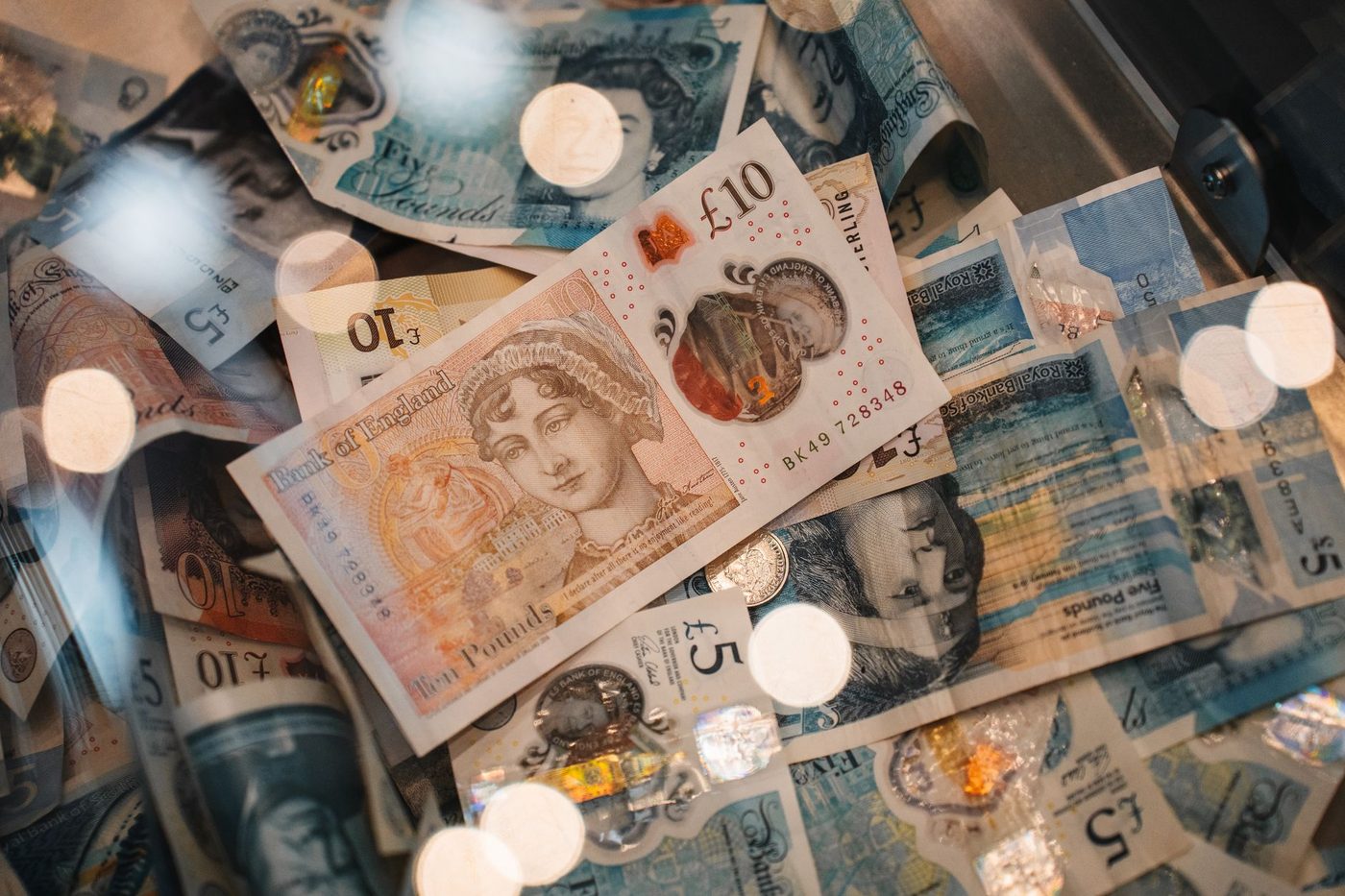
    The Bank describes the current £5 as featuring the politician Sir Winston Churchill, the £10 the author Jane Austen, the £20 the artist JMW Turner and the £50 the scientist Alan Turing. Its note pages give the sequence of each announcement and first issue:

    NoteFaceAnnouncedCurrent note issuedApproximate size
    £5Sir Winston Churchill26 April 201313 September 2016125mm x 65mm
    £10Jane Austen24 July 201314 September 2017132mm x 69mm
    £20JMW Turner22 April 201620 February 2020139mm x 73mm
    £50Alan Turing15 July 201923 June 2021146mm x 77mm

    Each page says the higher the value of a note, the larger it is, which the sizes above reflect. The announcement date and the date the current note was issued differ for every note.

    The King’s portrait and the Queen’s notes

    The Bank began issuing notes with King Charles III’s portrait on 5 June 2024, placing the portrait on the existing designs of all four notes with no other changes. Notes with Queen Elizabeth II’s portrait, it says, remain legal tender and circulate alongside the new ones, and there is no need to exchange them. New King Charles III notes are printed only to replace worn notes and to meet any overall increase in demand, in line with guidance from the Royal Household (King Charles III banknotes page, updated 2 February 2026).

    Quotations, artworks and foil letters

    The Bank’s feature descriptions are rich in quiz material. The £5 note carries a quotation from Churchill’s first speech as Prime Minister, “I have nothing to offer but blood, toil, tears and sweat”, and a view of Westminster and the Elizabeth Tower alongside an image of the Nobel Prize medal. Its portrait is from a photograph taken in 1941 by Yousuf Karsh, and a circular green foil patch contains the letters spelling BLENHEIM.

    On the £10, the Bank says Jane Austen’s portrait was commissioned by her nephew in 1870. The artwork is an illustration of Elizabeth Bennet from Pride and Prejudice with Godmersham Park House, and the quotation, about there being no enjoyment like reading, was said by Miss Bingley in that novel. A book-shaped copper foil patch contains the letters JA.

    The £20 uses a self-portrait painted circa 1799 and now on display at Tate Britain, with The Fighting Temeraire as the artwork. Its quotation, “Light is therefore colour”, is from a lecture Turner gave in 1818, and his signature is taken from the will in which he left many of his paintings to the nation. A round purple foil patch contains the letter T.

    On the £50, the portrait is based on a photograph owned by the National Portrait Gallery. The quotation is from an interview Turing gave to The Times on 11 June 1949, and the signature comes from the visitors’ book on display at Bletchley Park Trust. A red foil patch contains the letters AT. The Bank also says the £10, £20 and £50 notes carry two, three and four clusters of raised dots respectively to help blind and partially sighted people identify the value; the £5 page does not mention raised dots.

    Not every UK banknote comes from the Bank of England

    The Bank says only it issues banknotes in England and Wales, but six banks in Scotland and Northern Ireland can also do so. Three are authorised in Scotland: Bank of Scotland plc, Clydesdale Bank Limited and The Royal Bank of Scotland plc. Three are authorised in Northern Ireland: Bank of Ireland (UK) plc, Northern Bank Limited (which trades as Danske Bank) and National Westminster Bank plc (which trades as Ulster Bank in Northern Ireland). The Bank adds that coins are issued by the Royal Mint, and that AIB Group (UK) plc ceased issuing banknotes on 30 June 2020 (Scottish and Northern Ireland banknotes page, updated 1 October 2026).

    The same page says the six banks’ backing assets can include Bank of England banknotes, and that some of those banknotes are of very high value, including £1 million banknotes known as Giants and £100 million banknotes known as Titans.

    Retired notes and their last day

    The Bank’s list of withdrawn banknotes (updated 1 July 2025) gives dates when notes ceased to be legal tender. The £20 Series F and £50 Series F both ceased on 30 September 2022. The £5 Series E variant ceased on 5 May 2017 and the £10 Series E variant on 1 March 2018.

    The bottom line

    On the Bank of England’s own pages, Churchill is on the £5, Austen on the £10, Turner on the £20 and Turing on the £50. Announcement and issue dates differ for each, the King’s portrait was added to the existing designs from 5 June 2024 while Queen Elizabeth II notes remain legal tender, and six banks in Scotland and Northern Ireland can issue notes of their own.

    Sources

    • Current banknotes, Bank of England, page last updated 5 January 2026, read 1 November 2026 (bankofengland.co.uk)
    • £5 note, £10 note, £20 note and £50 note, Bank of England, pages last updated 4 August 2025, read 1 November 2026 (bankofengland.co.uk)
    • King Charles III banknotes, Bank of England, page last updated 2 February 2026, read 1 November 2026 (bankofengland.co.uk)
    • Scottish and Northern Ireland banknotes, Bank of England, page last updated 1 October 2026, read 1 November 2026 (bankofengland.co.uk)
    • Withdrawn banknotes, Bank of England, page last updated 1 July 2025, read 1 November 2026 (bankofengland.co.uk)