Browse the full collection

Explore by category

Category: Science

  • Hurricane, Typhoon or Cyclone? Quiz Traps From NOAA: One Weather System With Regional Names, the 39 and 74 mph Thresholds, a 1 to 5 Wind Scale That Ignores Storm Surge and Atlantic Names Reused Every Six Years

    Hurricane, Typhoon or Cyclone? Quiz Traps From NOAA: One Weather System With Regional Names, the 39 and 74 mph Thresholds, a 1 to 5 Wind Scale That Ignores Storm Surge and Atlantic Names Reused Every Six Years

    A quiz asks which is stronger, a hurricane or a typhoon. NOAA’s National Ocean Service answers on one line: the only difference is the location where the storm occurs. That sentence settles the question, but the terms around it, from “tropical storm” to “super typhoon” to the Saffir-Simpson scale, are where most quiz traps sit. The pages used here are from NOAA’s National Ocean Service (each shows “Last updated: 09/23/26”, which in US date order is 23 September 2026) and the National Hurricane Center (pages with no date).

    Four Terms Quiz Setters Mix Up

    NOAA’s pages define the terms in an order, from the generic to the specific:

    • Tropical cyclone is the generic term meteorologists use for a rotating, organized system of clouds and thunderstorms that originates over tropical or subtropical waters and has closed, low-level circulation.
    • Tropical depression is the name for the weakest tropical cyclones.
    • Tropical storm is what a depression becomes when its maximum sustained winds reach 39 miles per hour.
    • Hurricane, typhoon or tropical cyclone is the name once maximum sustained winds reach 74 miles per hour or higher, depending on where the storm originates.

    Which Name Applies Where

    NOAA says the term hurricane is used in the North Atlantic, the central North Pacific and the eastern North Pacific. The same type of disturbance in the Northwest Pacific is called a typhoon. In the South Pacific and Indian Ocean, the generic term tropical cyclone is used, regardless of the strength of the wind. A trap answer that makes a typhoon a bigger or weaker storm than a hurricane therefore has no support in the National Ocean Service page.

    What the 1 to 5 Scale Measures, and What It Ignores

    The National Hurricane Center describes the Saffir-Simpson Hurricane Wind Scale as a 1 to 5 rating based only on a hurricane’s maximum sustained wind speed. It says the scale does not take into account other potentially deadly hazards such as storm surge, rainfall flooding and tornadoes, and that hurricanes of all categories can produce deadly storm surge, rain-induced floods and tornadoes.

    Category Sustained winds
    1 74 to 95 mph
    2 96 to 110 mph
    3 (major) 111 to 129 mph
    4 (major) 130 to 156 mph
    5 (major) 157 mph or higher

    The same page says hurricanes rated Category 3 and higher are known as major hurricanes. It adds a footnote on a different label: in the western North Pacific, the term “super typhoon” is used for tropical cyclones with sustained winds exceeding 150 mph. That is the wording for that region, set beside the 157 mph threshold for Category 5 on a different scale; the page does not say the two are the same measure.

    The Atlantic Season Is Not a Wall

    For the Atlantic, the National Ocean Service says hurricane season officially runs from June 1 to November 30 and that ninety-seven percent of tropical cyclone activity occurs during this period. It also says there is nothing magical about these dates and that hurricanes can and do occur outside the six month period. A quiz answer saying none can form outside those dates has the page against it.

    Who Chooses the Names

    The National Hurricane Center says it does not control the naming of tropical storms: a strict procedure is run by an international committee of the World Meteorological Organization. For Atlantic hurricanes there are six lists of names, each repeated every sixth year, so the 2026 list is used again in 2032. The 2026 Atlantic list runs from Arthur to Wilfred. A name is changed only if a storm is so deadly or costly that using it for a different storm would be inappropriate, and the committee then strikes it from the list. The page lists retired names by year, with Dennis, Katrina, Rita, Stan and Wilma under 2005 and Melissa under 2025.

    If more than twenty-one named tropical cyclones occur in the Atlantic basin in a season, the extra storms take names from an alternate list approved by the WMO.

    A Short Naming History for the Tiebreaker

    The National Hurricane Center’s history page says that for several hundred years many West Indies hurricanes were named after the saint’s day on which they occurred, and that Clement Wragge, an Australian meteorologist, began giving women’s names to tropical storms before the end of the 19th century. In 1953 the United States began using female names, and the National Ocean Service says that by 1978 both male and female names were used for Northern Pacific storms, adopted in 1979 for the Atlantic basin. The history page words the 1978 step as men’s and women’s names being included in the Eastern North Pacific lists.

    The bottom line

    According to NOAA, a hurricane and a typhoon are the same weather phenomenon, a tropical cyclone, named by location: the cut-off is maximum sustained winds of 74 miles per hour or higher, with tropical storm starting at 39. The National Hurricane Center says the 1 to 5 hurricane scale rates wind speed only and ignores surge, rainfall flooding and tornadoes, that Category 3 and above are major hurricanes, and that Atlantic lists repeat every six years, so the 2026 names return in 2032. The National Ocean Service says the official Atlantic season runs from June 1 to November 30 but that hurricanes can occur outside it.

    Sources

    • What is the difference between a hurricane and a typhoon?, NOAA National Ocean Service, last updated 09/23/26, read 10 November 2026 (noaa.gov)
    • Why do we name tropical storms and hurricanes?, NOAA National Ocean Service, last updated 09/23/26, read 10 November 2026 (noaa.gov)
    • Saffir-Simpson Hurricane Wind Scale, NOAA National Hurricane Center, page shows no date, read 10 November 2026 (noaa.gov)
    • Tropical Cyclone Names, NOAA National Hurricane Center, page shows no date, read 10 November 2026 (noaa.gov)
    • Tropical Cyclone Naming History and Retired Names, NOAA National Hurricane Center, page shows no date, read 10 November 2026 (noaa.gov)
  • The Four Elements Named in 2016: IUPAC’s Timeline From the 30 December 2015 Verification to the 28 November 2016 Approval, and the Quiz Traps in Nihonium, Moscovium, Tennessine and Oganesson

    The Four Elements Named in 2016: IUPAC’s Timeline From the 30 December 2015 Verification to the 28 November 2016 Approval, and the Quiz Traps in Nihonium, Moscovium, Tennessine and Oganesson

    The last four names added to the periodic table arrived in a short sequence of announcements from IUPAC, the International Union of Pure and Applied Chemistry, between December 2015 and November 2016. The details are easy to blur: which were named after places, which after a person, who was allowed to suggest names and how the table is laid out. The IUPAC pages below were read on 8 November 2026 and are the only sources used.

    30 December 2015: the seventh row is complete

    IUPAC announced on 30 December 2015 that a joint working party of IUPAC and the International Union of Pure and Applied Physics had determined that the discovery claims for elements 113, 115, 117 and 118 had been fulfilled. The announcement said these elements complete the seventh row of the periodic table and that discoverers from Japan, Russia and the USA would be invited to suggest permanent names and symbols.

    Until then the four carried temporary names: ununtrium (Uut), ununpentium (Uup), ununseptium (Uus) and ununoctium (Uuo). The announcement credited the RIKEN collaboration in Japan with element 113. For 115 and 117 it named the collaboration between the Joint Institute for Nuclear Research in Dubna, Russia, Lawrence Livermore National Laboratory and Oak Ridge National Laboratory, and for 118 the Dubna and Livermore collaboration.

    8 June 2016: four names go to public review

    IUPAC’s release of 8 June 2016 set out the proposed names: nihonium (Nh) for element 113, moscovium (Mc) for 115, tennessine (Ts) for 117 and oganesson (Og) for 118. It listed the traditions that new names can follow: a mythological concept or character, a mineral or similar substance, a place or geographical region, a property of the element, or a scientist. A five-month public review was set, expiring on 8 November 2016, before formal approval by the IUPAC Council.

    The release described element 113 as the first element to have been discovered in an Asian country.

    28 November 2016: the names are approved

    A later IUPAC release reports that on 28 November 2016 the names and symbols were approved by the IUPAC Bureau. The two releases word the approving body differently, the June one naming the Council and the November one the Bureau, and both are reported here as written. IUPAC says comments from the public were many, some suggesting other names and some backed by petitions, but could not be accepted because under the current guidelines only the discoverers have the right to propose names and symbols.

    Quiz traps in the four names

    Three honour places, but only one is a country. IUPAC says nihonium comes from Nihon, one of the two ways to say Japan in Japanese, and its release says the name was proposed to make a direct connection to the nation where the element was discovered. Moscovium is in recognition of the Moscow region, and tennessine of the Tennessee region of the United States, including Oak Ridge National Laboratory, Vanderbilt University and the University of Tennessee at Knoxville.

    One honours a person. Oganesson recognises Professor Yuri Oganessian, shown in IUPAC’s releases as born in 1933, for his contributions to transactinoid elements research. The releases do not say he is living, so a question that does should be checked elsewhere.

    The endings follow a rule. IUPAC gives “-ium” for elements of groups 1 to 16, “-ine” for group 17 and “-on” for group 18, which is why 117 ends in “-ine” and 118 in “-on”.

    The symbol Ts has another meaning. Members of the chemistry community raised that Ts is also a common abbreviation for the tosyl group. IUPAC concluded that, as many two-letter abbreviations have multiple meanings, the context makes the meaning unambiguous.

    The table itself: what IUPAC does and does not say

    IUPAC’s periodic table page says its latest release of the table is dated 4 May 2022 and that it has no recommendation for a specific form of the table, whether 18-column or 32-column; the version shown is the conventional long form. The page says that since 1988 IUPAC has recommended that groups be numbered 1 to 18, and that the collective names lanthanoids and actinoids are recommended, with lanthanoids preferred over lanthanide. It describes the question of which elements belong in group 3 as one that has been debated from time to time.

    On the question of what comes after the seventh row, the November 2016 release says scientists were searching for elements beyond it, and that IUPAC and IUPAP were establishing a new joint working group to examine the criteria used to verify claims.

    The bottom line

    IUPAC’s own pages put the verification of elements 113, 115, 117 and 118 on 30 December 2015, the proposed names on 8 June 2016 and the approval on 28 November 2016. Three names honour places or regions (Japan, the Moscow region, the Tennessee region) and one honours a scientist, and only the discoverers could propose them. IUPAC does not recommend an 18-column or 32-column layout. The pages describe their own dates and wording, and later changes should be checked on IUPAC’s site.

    Sources

    • Discovery and Assignment of Elements with Atomic Numbers 113, 115, 117 and 118, IUPAC press release, 30 December 2015, read 8 November 2026 (iupac.org)
    • IUPAC is naming the four new elements nihonium, moscovium, tennessine, and oganesson, IUPAC, release dated 8 June 2016 on IUPAC’s periodic table page, read 8 November 2026 (iupac.org)
    • Elements 113, 115, 117, and 118 are now formally named nihonium (Nh), moscovium (Mc), tennessine (Ts), and oganesson (Og), IUPAC, reports approval on 28 November 2016, read 8 November 2026 (iupac.org)
    • Periodic Table of Elements, IUPAC, page shows a latest release dated 4 May 2022, read 8 November 2026 (iupac.org)
  • Leap Year and Calendar Quiz Traps: Why 1900 Was Not a Leap Year, What Followed 4 October 1582, Which Days Britain Skipped in 1752 and Why There Is No Year Zero, According to NASA and Royal Museums Greenwich

    Leap Year and Calendar Quiz Traps: Why 1900 Was Not a Leap Year, What Followed 4 October 1582, Which Days Britain Skipped in 1752 and Why There Is No Year Zero, According to NASA and Royal Museums Greenwich

    Calendar questions are a quiz staple, and most of the traps come down to a handful of numbers: 4, 100, 400, 1582 and 1752. This guide takes the common beliefs one at a time and answers each from two sources: a chapter on calendars reprinted on NASA’s Eclipse Web Site (last revised 14 October 2012) and an essay by Alan Longstaff on calendars from around the world, published by Royal Museums Greenwich (copyright National Maritime Museum, 2005).

    Belief: every fourth year is a leap year

    Almost, but not always. The NASA chapter gives the rule for civil use: every year exactly divisible by 4 is a leap year, except for years exactly divisible by 100, and those centurial years are leap years only if they are exactly divisible by 400. It spells out the result: 2000 is a leap year, whereas 1900 and 2100 are not. The Royal Museums Greenwich (RMG) essay states the same rule and lists the century leap years in the Common Era as 400, 800, 1200, 1600, 2000, 2400 and so on.

    The quiz trap is a question about 1900 or 2100. Both are divisible by 4, so a quick answer says yes, but neither is divisible by 400.

    Belief: the Gregorian year is 365.25 days

    That figure belongs to the older Julian calendar. RMG says the Julian calendar was instituted by Julius Caesar in 46 BCE with a year of 365.25 days, the extra quarter day being handled by a leap year every four years. The Gregorian century rule changes the average. Both sources divide the 400-year cycle of 146,097 days by 400 and give 365.2425 days per calendar year. They also say 146,097 is exactly divisible by 7, so the Gregorian calendar repeats exactly every 400 years.

    The same arithmetic gives a second trap. The NASA chapter says the Gregorian calendar accumulates an error of one day in about 2,500 years, so it is not perfect either.

    Belief: nobody ever lost days from the calendar

    Two reforms did. The NASA chapter says the recommendations of Pope Gregory XIII’s calendar commission were instituted by a papal bull signed on 24 February 1582. Ten days were deleted from the calendar, so that 4 October 1582 was followed by 15 October 1582. RMG adds that the reform was devised by the physician Aloysius Lilius and that the aim of removing ten days was to return the vernal equinox to 21 March, its supposed date at the council of Nicea in 325 CE.

    Belief: Britain changed at the same time as the Pope

    It did not. The NASA chapter says Protestant states initially rejected the new calendar but gradually accepted it over the coming centuries. RMG says reform was implemented slowly, facing resistance by Protestant countries, and that Britain was one of the last to adopt the Gregorian calendar, finally doing so in 1752. In RMG’s account, eleven days in total, 3 to 13 September, were expunged, the extra day arising because 1700 had not been a leap year under the century rule.

    This is the usual shape of a 1752 question. The answer is eleven days, not ten, and RMG ties the extra day to 1700 not being a leap year.

    Belief: the calendar counts from year zero

    Not in the traditional count. The NASA chapter says the Anno Domini epoch was established by the sixth-century scholar Dionysius Exiguus, and that Bede, the eighth-century English historian, began counting years backward from A.D. 1. In that system, A.D. 1 is preceded by 1 B.C., without an intervening year 0. Astronomers use +1 for A.D. 1, which is naturally preceded by year 0. NASA dates that astronomical system to the eighteenth century, when it was introduced by the astronomer Jacques Cassini, and RMG likewise says astronomers introduced the year zero in the 18th century.

    A related trap concerns the birth of Christ. The NASA chapter says what Dionysius did not do is establish an accurate date for it, and that the historical evidence is too sketchy to allow a definitive dating. RMG says it was probably about 4 BCE. The two sources differ in how firmly they put it, so a quiz that asks for a year should be treated with care.

    A quick checklist before you answer

    • Leap years: divisible by 4, but a century year only if also divisible by 400 (so 2000 yes, 1900 and 2100 no).
    • Julian year: 365.25 days. Gregorian average: 365.2425 days.
    • 1582: 4 October was followed by 15 October (NASA chapter).
    • 1752: Britain, eleven days, 3 to 13 September removed (RMG essay).
    • Year numbering: 1 BC is followed by AD 1 in the traditional count, with no year 0.

    The bottom line

    The NASA chapter and the RMG essay agree on the leap year rule, on the 365.2425-day average and on the ten days removed in the 1582 reform. RMG adds that Britain waited until 1752 and lost eleven days, 3 to 13 September. For a quiz, remember that 1900 and 2100 are not leap years while 2000 is, that Britain’s change came in 1752 and removed eleven days, and that the traditional year count has no year zero. On the date of Christ’s birth the two sources are not equally definite, so quote the one a question names.

    Sources

    • Calendars and their History (Calendars, by L. E. Doggett, reprinted from the Explanatory Supplement to the Astronomical Almanac), NASA Eclipse Web Site, last revised 14 October 2012, read 6 November 2026 (eclipse.gsfc.nasa.gov)
    • Calendars from around the world, by Alan Longstaff, Royal Museums Greenwich, copyright National Maritime Museum 2005, read 6 November 2026 (rmg.co.uk)
  • Greenwich Time Quiz Traps: 1675, 1847, 1880, 1884 and 1972, and How GMT, UTC and BST Differ, According to Royal Museums Greenwich and GOV.UK

    Greenwich Time Quiz Traps: 1675, 1847, 1880, 1884 and 1972, and How GMT, UTC and BST Differ, According to Royal Museums Greenwich and GOV.UK

    Five dates anchor the story of Greenwich time: 1675, 1847, 1880, 1884 and 1972. Royal Museums Greenwich dates the Royal Observatory to 1675, the railways’ adoption of Greenwich time across Great Britain to December 1847, its legal status to 1880, the vote for the world’s prime meridian to 1884 and the end of Greenwich Mean Time’s run as the international standard to 1972. This guide walks through those dates, then three easily confused terms: GMT, UTC and BST.

    1675 to 1880: from observatory time to legal time

    Royal Museums Greenwich (RMG) says the Royal Observatory was founded by Charles II in 1675 to find a way to measure longitude at sea. It defines Greenwich Mean Time as the yearly average of the time each day when the Sun crosses the Prime Meridian at the Royal Observatory, and says that today GMT is reckoned from one midnight to the next.

    RMG says that until the mid-19th century almost every town kept its own local time. It gives Bristol Mean Time as 10 minutes behind GMT and Cardiff Mean Time as 13 minutes behind. GMT was adopted across Great Britain by the Railway Clearing House in December 1847 and became known as “Railway Time”. By the mid-1850s almost all public clocks in Britain were set to it, and it became Britain’s legal standard time in 1880.

    1884: the vote in Washington

    RMG says that in 1884 representatives of different nations gathered in Washington D.C. to choose a single meridian, and that after weeks of discussion delegates voted for the Greenwich Meridian. The cross-hairs of the Airy Transit Circle’s eyepiece defined zero degrees longitude. The delegates also recommended a global time zone system based on GMT.

    RMG gives its reasons in two ways on two pages. One page says the United States had already chosen Greenwich as the basis of its time zones and that 72% of the world’s commerce depended on sea-charts using Greenwich as the Prime Meridian. Another says Greenwich offered the least disruption because nearly two-thirds of the world’s ships were already using charts based on it. The two are worded differently, one about commerce and one about ships, and are reported here as worded.

    GMT, UTC and BST: three labels, three jobs

    RMG says GMT was the international standard of civil time from 1884 until 1972 and has since been replaced by Coordinated Universal Time (UTC). It also says GMT is still the legal time in Britain in the winter. A separate RMG page says that civil time in the UK is Coordinated Universal Time (UTC), described as the modern equivalent of Greenwich Mean Time (GMT) and never more than half a second different from it, and that in summer clocks move to British Summer Time (BST), one hour in advance of GMT.

    GOV.UK gives the clock changes: forward 1 hour at 1am on the last Sunday in March, back 1 hour at 2am on the last Sunday in October. The period when clocks are 1 hour ahead is BST, and when the clocks go back the UK is on GMT. Its page, last updated 24 November 2025, lists these dates:

    YearClocks go forwardClocks go back
    202629 March25 October
    202728 March31 October
    202826 March29 October

    The traps follow from the wording. GMT is not a synonym for UK clock time all year, because GOV.UK says the UK is on GMT when the clocks go back. RMG says GMT was the international standard until 1972 and has since been replaced by UTC.

    Is the Greenwich line still the Prime Meridian?

    RMG says the historic line is no longer the internationally agreed one. Between 1984 and 1988 new coordinate systems based on satellite data and other measurements were adopted, requiring a prime meridian that defines a plane passing through the centre of the Earth. The current agreed meridian, the IERS Reference Meridian, passes 102.5 m east of the historic Prime Meridian, which is why, RMG says, a phone standing on the historic line will not show exactly zero degrees longitude.

    RMG also gives numbers for the line itself: 20,000 km from pole to pole, passing through eight countries (the UK, France, Spain, Algeria, Mali, Burkina Faso, Togo and Ghana), crossing three continents, with Antarctica the only landmass it crosses in the southern hemisphere. For nearly two thirds of its length it passes over the sea. At night a laser beam marks it at the Observatory.

    The clock that ignores summer time

    The Shepherd Gate clock at the Observatory gates is described by RMG as the first clock ever to show Greenwich Mean Time directly to the public. Its dial has 24 hours, so at noon the hour hand points straight down. RMG says it originally showed astronomical time, counting the day from noon, was later changed to count from midnight, and continues to show GMT without adjustment for BST.

    The bottom line

    On the RMG and GOV.UK pages read, the safe dates are 1675 for the Observatory, December 1847 for the Railway Clearing House, 1880 for legal standard time in Britain, 1884 for the Washington vote and 1972 as the end of GMT’s run as the international standard. For the UK, RMG says GMT is the legal winter time and UTC is its modern equivalent within half a second, while GOV.UK says the UK is on GMT after the clocks go back and on BST while they are an hour ahead. RMG’s two pages word the 1884 reasons differently, so the figures should not be merged, and RMG says the agreed prime meridian is now the IERS Reference Meridian, 102.5 m east of the historic line.

    Sources

    • What is Greenwich Mean Time (GMT) – and why does it matter?, Royal Museums Greenwich, page undated, read 5 November 2026 (rmg.co.uk)
    • What is the Prime Meridian, and why is it in Greenwich?, Royal Museums Greenwich, page undated, read 5 November 2026 (rmg.co.uk)
    • Which time is it?, Royal Museums Greenwich, page undated, read 5 November 2026 (rmg.co.uk)
    • When do the clocks change?, GOV.UK, last updated 24 November 2025, read 5 November 2026 (gov.uk)
  • One Ocean or Five? NOAA’s Answers on Ocean Counts, Seas, the Seven Seas, Size, Depth, Salt, Tides and a Waterfall, and the Quiz Traps They Settle

    One Ocean or Five? NOAA’s Answers on Ocean Counts, Seas, the Seven Seas, Size, Depth, Salt, Tides and a Waterfall, and the Quiz Traps They Settle

    This guide collects ocean answers from the “Ocean Facts” pages of the US National Oceanic and Atmospheric Administration (NOAA), for use in writing quiz questions. Each page quoted here shows “Last updated: 09/23/26” (US date format) except the Atlantic page, which shows 1/04/21. The figures below are NOAA’s own, in the units it gives.

    Trap one: how many oceans are there?

    NOAA’s answer starts with “There is only one global ocean.” It explains that this water, covering 71 percent of the Earth, is geographically divided into named regions. Historically there are four named oceans: the Atlantic, Pacific, Indian and Arctic. NOAA says most countries, including the United States, now recognise the Southern (Antarctic) as the fifth.

    The Southern Ocean is described as the newest. The US Board on Geographic Names recognises it as the water from the coast of Antarctica to 60 degrees South. NOAA says its boundaries were proposed to the International Hydrographic Organization in 2000, but not all countries agree on them, so the proposal has yet to be ratified by members of that body.

    Trap two: oceans, seas and the “Seven Seas”

    In geography, NOAA says, seas are smaller than oceans and usually located where land and ocean meet, typically partially enclosed by land. The Sargasso Sea is the exception it names, because it is defined only by ocean currents.

    The “Seven Seas” have no single list. NOAA says the exact origin of the phrase is uncertain. In Greek literature the seven were the Aegean, Adriatic, Mediterranean, Black, Red and Caspian seas, with the Persian Gulf thrown in. Medieval European writing used the North Sea, Baltic, Atlantic, Mediterranean, Black, Red and Arabian seas. NOAA says the modern Seven Seas could be given as the Arctic, North Atlantic, South Atlantic, North Pacific, South Pacific, Indian and Southern oceans, though the ocean is more commonly divided into five.

    Biggest, second biggest, smallest

    NOAA says the Pacific is the largest and deepest of the world ocean basins, containing more than half of the free water on Earth. Its order is Pacific, then Atlantic, then Indian, then Southern, and finally the Arctic. Two NOAA pages give the Pacific’s area differently: one says approximately 63 million square miles, another approximately 155 million square kilometres (59 million square miles). A question asking for an exact area therefore needs to say which source it follows.

    On the Atlantic, NOAA gives approximately 106,460,000 square kilometres (41,105,000 square miles), about 20 percent of the Earth’s surface, and calls it only slightly larger than half the size of the Pacific. The Arctic is the smallest at about 6.1 million square miles, which NOAA says is about 1.5 times as big as the United States.

    The Pacific’s name has a date attached. NOAA says Ferdinand Magellan, whose fleet entered the ocean in November 1520, called it “pacific” because of the calmness of the water at the time. The Atlantic, it adds, takes its name from the Greek god Atlas.

    Depth, water and salt

    NOAA gives the average ocean depth as about 3,682 metres (12,080 feet). The deepest part is the Challenger Deep, at the southern end of the Mariana Trench beneath the western Pacific, approximately 10,935 metres (35,876 feet) deep. It is named after HMS Challenger, whose crew first sounded the depths of the trench in 1875.

    On volume, NOAA says about 97 percent of Earth’s water is in the ocean, and less than one percent of all water on Earth is fresh. Ocean salt, it says, comes primarily from rocks on land and openings in the seafloor. Average salinity is about 35 parts per thousand, or about 3.5 percent of the weight of seawater, and chloride and sodium make up around 85 percent of the dissolved ions.

    Tides and a hidden waterfall

    NOAA says the highest tides in the world are in Canada, in the Bay of Fundy, at Burntcoat Head in Nova Scotia. It also calls it a misconception that the range of the tide increases with latitude, and says that idea is incorrect. It says the higher ranges seen in Alaska, Canada and northern Europe are created by the positions and configurations of the continents in the northern hemisphere.

    The world’s largest waterfall, NOAA says, is in the ocean beneath the Denmark Strait, which separates Iceland and Greenland. Its cataracts begin 2,000 feet under the surface of the strait and plunge to a depth of 10,000 feet at the southern tip of Greenland, nearly a two-mile drop.

    Quick answers for the quiz bag

    • Oceans: one global ocean with named regions, four historically and five as now recognised by most countries including the United States.
    • Largest: the Pacific. Smallest: the Arctic.
    • Deepest point: Challenger Deep, about 10,935 metres.
    • Highest tides: the Bay of Fundy, Canada.
    • Largest waterfall: beneath the Denmark Strait.

    The bottom line

    NOAA’s pages let a quiz writer take ocean answers from one issuing body, and they show where an answer depends on definition or source: the number of oceans, the list of Seven Seas, and the Pacific’s area, which two NOAA pages give differently. The largest ocean, the Challenger Deep and the Bay of Fundy each have one answer stated on a NOAA page.

    Sources

    • How many oceans are there?, NOAA National Ocean Service, last updated 09/23/26, read 2 November 2026 (oceanservice.noaa.gov)
    • What’s the difference between an ocean and a sea?, NOAA National Ocean Service, last updated 09/23/26, read 2 November 2026 (oceanservice.noaa.gov)
    • What are the Seven Seas?, NOAA National Ocean Service, last updated 09/23/26, read 2 November 2026 (oceanservice.noaa.gov)
    • What is the largest ocean basin on Earth? and What is the world’s smallest ocean?, NOAA National Ocean Service, last updated 09/23/26, read 2 November 2026 (oceanservice.noaa.gov)
    • How did the Pacific Ocean get its name?, NOAA National Ocean Service, last updated 09/23/26, read 2 November 2026 (oceanservice.noaa.gov)
    • How big is the Atlantic Ocean?, NOAA National Ocean Service, last updated 1/04/21 as shown, read 2 November 2026 (oceanservice.noaa.gov)
    • How deep is the ocean?, How much water is in the ocean? and Why is the ocean salty?, NOAA National Ocean Service, last updated 09/23/26, read 2 November 2026 (oceanservice.noaa.gov)
    • Where is the highest tide? and Where is Earth’s largest waterfall?, NOAA National Ocean Service, last updated 09/23/26, read 2 November 2026 (oceanservice.noaa.gov)
  • Six Apollo Missions in Six Facts From NASA: Earthrise, the First Landing, a Pinpoint Landing, Apollo 13, the Lunar Rover and the Last Footprints

    Six Apollo Missions in Six Facts From NASA: Earthrise, the First Landing, a Pinpoint Landing, Apollo 13, the Lunar Rover and the Last Footprints

    NASA’s mission pages for the Apollo Program give each flight a crew, a launch date, a splashdown date and a headline description. Six of them are set out below as they read on 31 October 2026, each with the fact that the page itself puts first. The “first”, “second”, “fourth” and “last” in these entries are NASA’s own wording.

    1. Apollo 8: the first humans to orbit the Moon

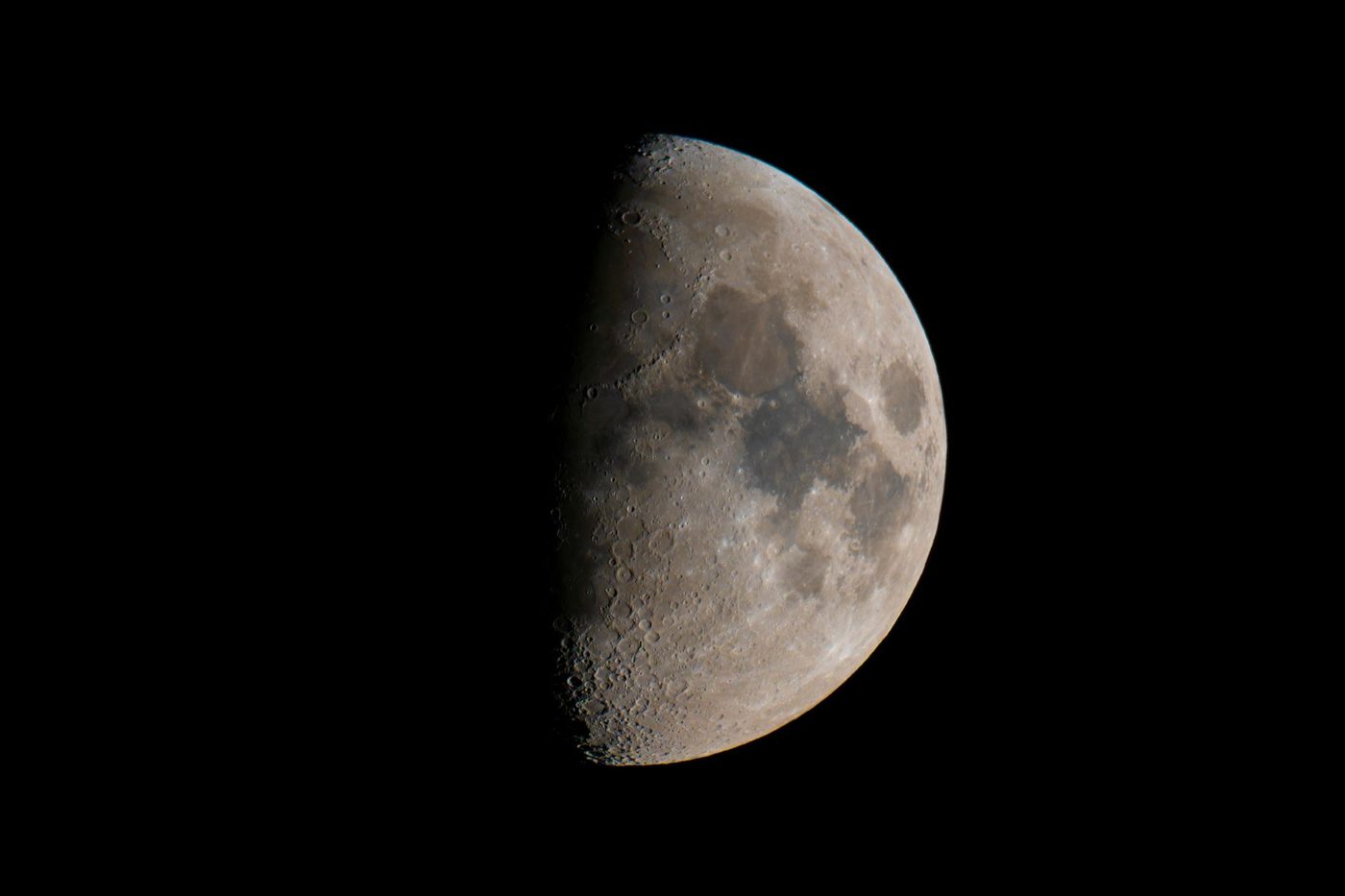
    A half Moon with the unlit side fading into black
    The Moon photographed from Earth, not an Apollo mission photograph. Credit: Rino Adamo / Pexels.

    Apollo 8 launched on 21 December 1968 and splashed down on 27 December 1968 with Frank Borman, James Lovell Jr. and William Anders aboard. NASA lists its mission type as lunar landing preparation. Its page says the flight was the first crewed launch of the Saturn V rocket, and that on Christmas Eve the three astronauts were the first humans to orbit the Moon and the first to see an Earthrise above its surface. Anders took the “Earthrise” photograph in lunar orbit on 24 December 1968. NASA’s biography of Lovell adds that he flew on four missions: Gemini VII and XII, Apollo 8 and Apollo 13.

    2. Apollo 11: the first human Moon landing

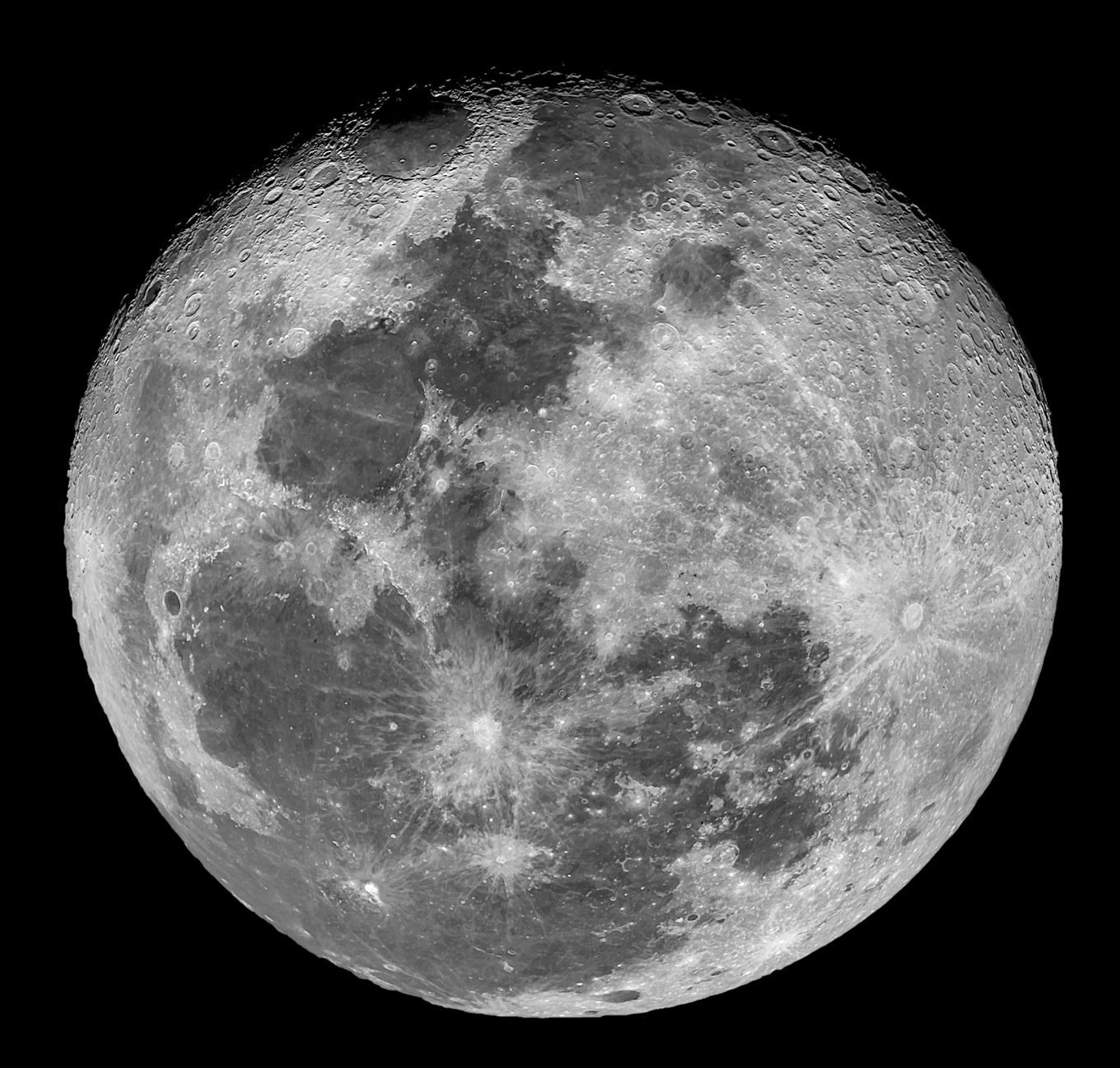
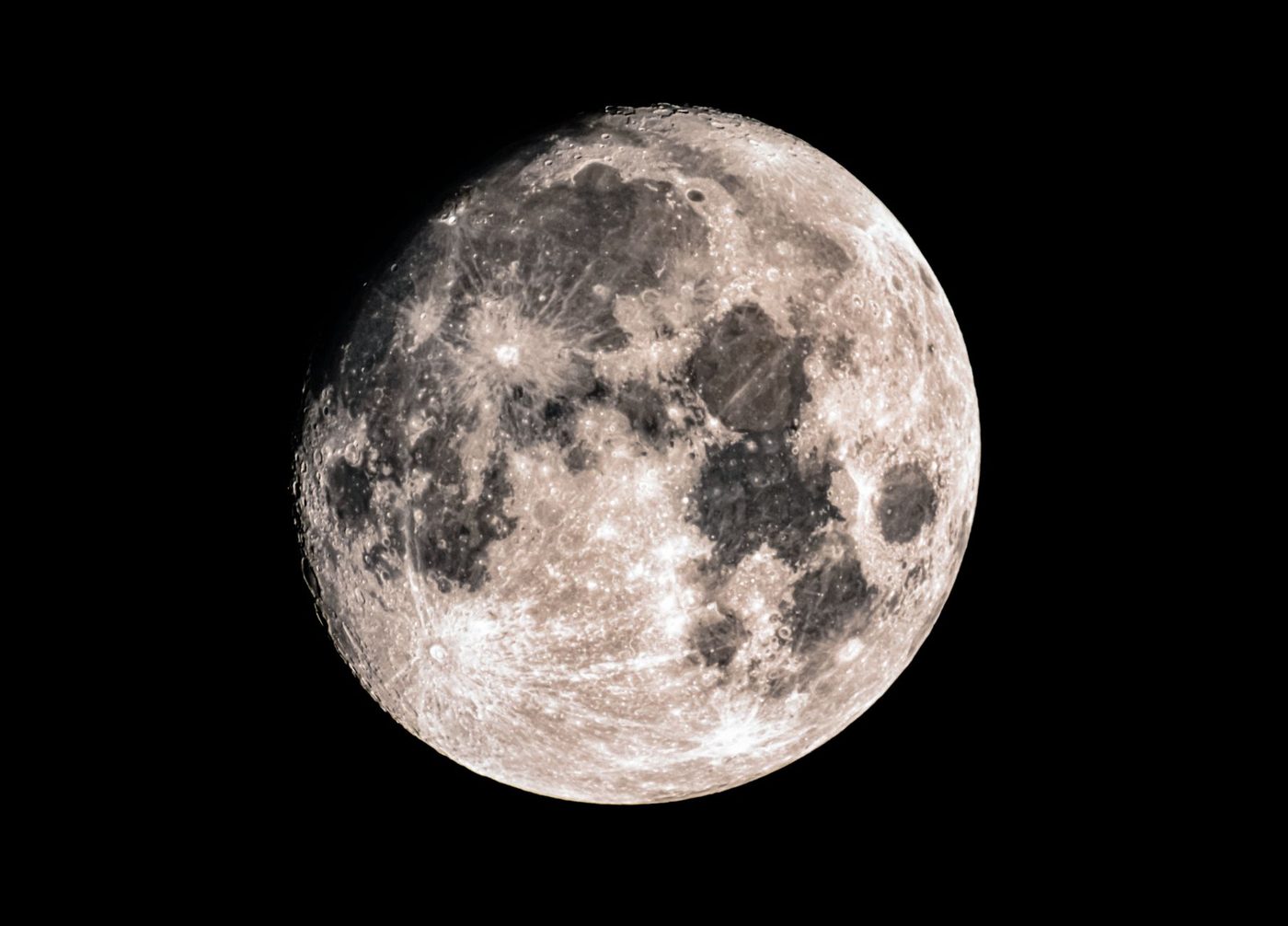
    Full Moon with visible craters against a black sky
    The Moon photographed from Earth, not an Apollo mission photograph. Credit: Sarowar Hussain / Pexels.

    NASA gives Apollo 11’s primary objective as completing a national goal set by President John F. Kennedy on 25 May 1961: perform a crewed lunar landing and return to Earth. The mission launched on 16 July 1969 and splashed down on 24 July 1969, carrying Neil Armstrong, Buzz Aldrin and Michael Collins. NASA describes Armstrong as the first human to set foot on the Moon and Aldrin as the second, and says Collins served as command module pilot. NASA’s page refers to the “first human Moon landing”, and a NASA caption places Aldrin’s walk on the surface on 20 July 1969. Collins, according to NASA, logged over 266 hours in space, and Armstrong flew on Gemini 8 in 1966 before his Apollo 11 assignment.

    3. Apollo 12: the pinpoint mission

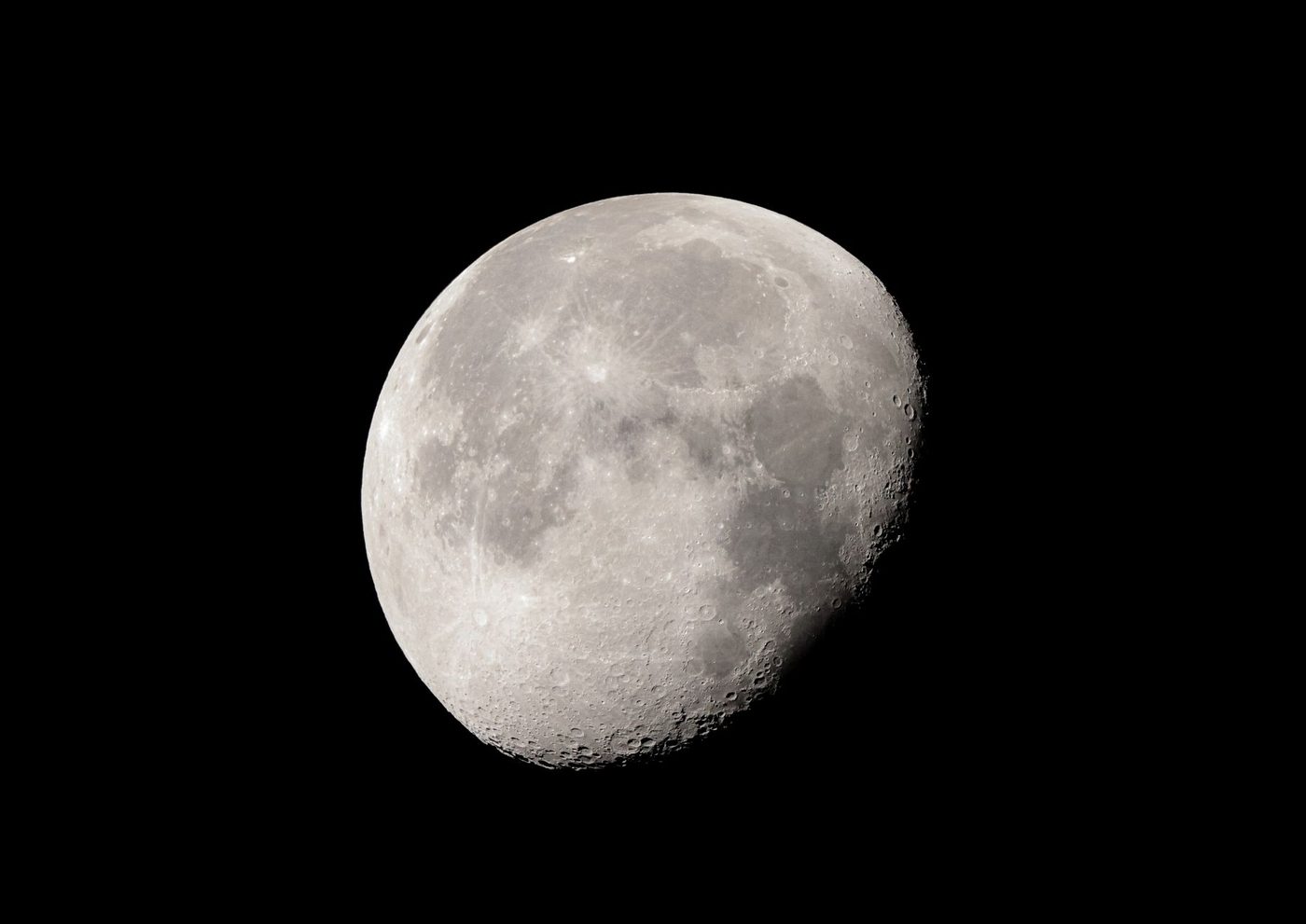
    The Moon with one edge in shadow against a black sky
    The Moon photographed from Earth, not an Apollo mission photograph. Credit: David Kanigan / Pexels.

    NASA’s subtitle for Apollo 12 is “The Pinpoint Mission”. Charles Conrad Jr., Alan Bean and Richard Gordon Jr. flew from 14 November to 24 November 1969, and NASA describes Conrad’s role as commander of the second lunar landing. Conrad and Bean descended in the lunar module to explore the Moon while Gordon stayed with the command and service modules in lunar orbit. NASA adds that Conrad’s final mission was as commander of Skylab II, which it calls the first United States space station.

    4. Apollo 13: the intended third landing

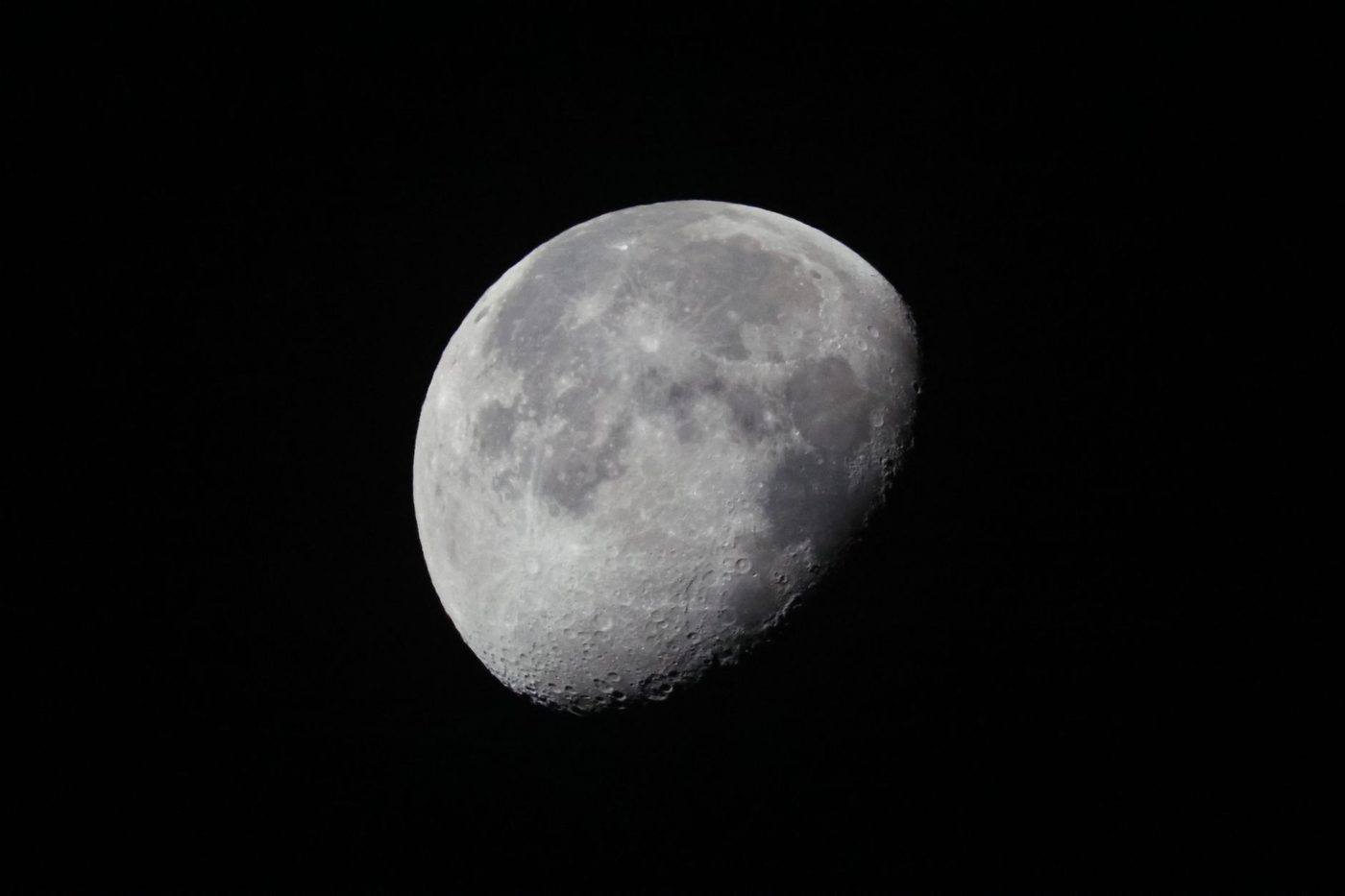
    A waning gibbous Moon against a black sky
    The Moon photographed from Earth, not an Apollo mission photograph. Credit: David Kanigan / Pexels.

    NASA says Apollo 13 launched on 11 April 1970 with James Lovell, John “Jack” Swigert and Fred Haise on what was intended to be humanity’s third lunar landing, aimed at the Fra Mauro area. The page says the mission did not go as planned, and lists its splashdown as 17 April 1970. Swigert was called on to replace prime crewman Thomas K. Mattingly as command module pilot.

    5. Apollo 15: the first mission with a lunar rover

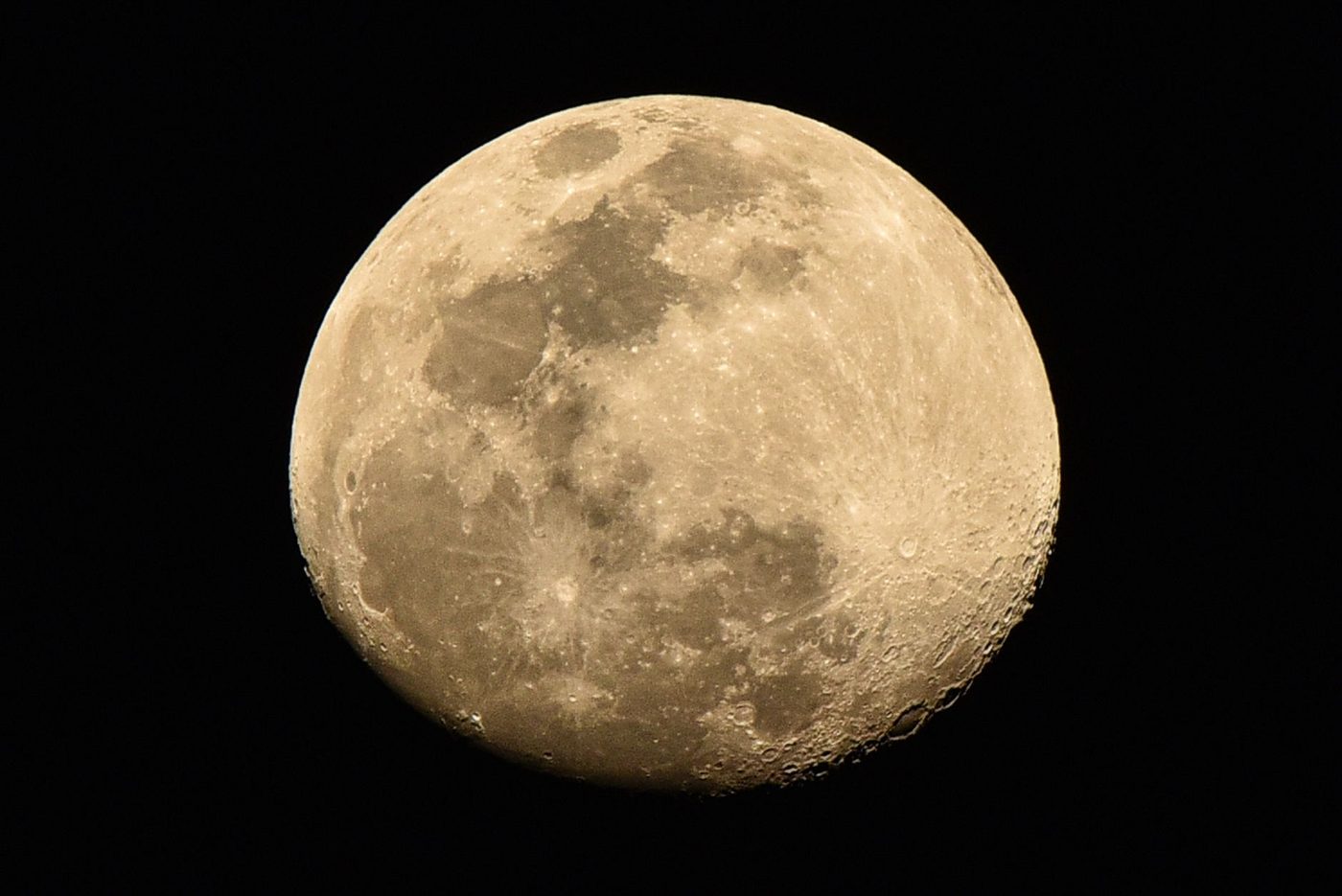
    A golden-toned full Moon against a black sky
    The Moon photographed from Earth, not an Apollo mission photograph. Credit: HS Studio By Hussnain / Pexels.

    NASA calls Apollo 15 the fourth lunar landing mission and the first to use a lunar rover. David Scott, James Irwin and Alfred Worden launched on 26 July 1971 and splashed down on 7 August 1971. NASA photo captions place Scott and Irwin’s exploration in the Hadley-Apennine region, with Worden remaining in lunar orbit in the command module. NASA’s biography of Scott says he flew on Gemini 8 and Apollo 9 before commanding Apollo 15.

    6. Apollo 17: the last landing and the twelfth moonwalker

    A grey full Moon against a dark sky
    The Moon photographed from Earth, not an Apollo mission photograph. Credit: Rino Adamo / Pexels.

    NASA calls Apollo 17 the Apollo Program’s last lunar landing mission and the first to include an astronaut-scientist. It landed in the Taurus-Littrow Valley, having launched on 7 December 1972 and splashed down on 19 December 1972 with Eugene Cernan, Harrison Schmitt and Ronald Evans. NASA describes Schmitt as the first scientist and twelfth person to step on the Moon, and Cernan as the last person to leave his footprints on the lunar surface. His biography also calls him one of only two men to have flown to the Moon on two occasions and says more than 73 of his hours in space were spent on the Moon’s surface.

    Four questions these pages can answer

    • Which of the six was the first crewed flight to orbit the Moon? Apollo 8, per NASA.
    • Who was the second human to set foot on the Moon? Buzz Aldrin, per NASA’s Apollo 11 page.
    • Which astronaut appears on both the Apollo 8 and Apollo 13 crews? James Lovell.
    • Which mission is NASA’s last Apollo lunar landing? Apollo 17.

    The bottom line

    For a quiz, NASA’s pages supply a compact set of answers: Apollo 8 was the first crewed lunar orbit, Apollo 11 the first human Moon landing, Apollo 12 the second lunar landing, Apollo 15 the fourth and the first with a lunar rover, and Apollo 17 the last. Apollo 13 is the one on this list that NASA describes as an intended landing that did not go as planned. All dates and descriptions come from NASA’s own pages as read on 31 October 2026.

    Sources

    • Apollo 8, NASA, page undated, read 31 October 2026 (nasa.gov)
    • Apollo 11, NASA, page undated, read 31 October 2026 (nasa.gov)
    • Apollo 12, NASA, page undated, read 31 October 2026 (nasa.gov)
    • Apollo 13, NASA, page undated, read 31 October 2026 (nasa.gov)
    • Apollo 15, NASA, page undated, read 31 October 2026 (nasa.gov)
    • Apollo 17, NASA, page undated, read 31 October 2026 (nasa.gov)
  • The Seven SI Base Units: Which Four Changed in 2019 and the Exact Numbers Behind Them

    The Seven SI Base Units: Which Four Changed in 2019 and the Exact Numbers Behind Them

    299,792,458 is a number quiz setters love, and since 1983 it has been more than a trivia fact: it is the figure that fixes the length of the metre. The United States National Institute of Standards and Technology (NIST) publishes the exact values behind all seven base units of the International System of Units (SI), the modern metric system. The pages used here were read on 28 October 2026.

    The seven numbers that fix the seven units

    NIST says the units in the revised SI are based completely on seven unchanging quantities, or universal constants, including the speed of light, the electric charge of an electron and the Planck constant. Its definitions page gives each fixed value:

    Unit (symbol)Quantity held fixedFixed value
    Second (s)Caesium-133 hyperfine transition frequency9,192,631,770 Hz
    Metre (m)Speed of light in vacuum, c299,792,458 m/s
    Kilogram (kg)Planck constant, h6.62607015 x 10^-34 J s
    Ampere (A)Elementary charge, e1.602176634 x 10^-19 C
    Kelvin (K)Boltzmann constant, k1.380649 x 10^-23 J/K
    Mole (mol)Avogadro constant, NA6.02214076 x 10^23 per mole
    Candela (cd)Luminous efficacy at 540 x 10^12 Hz683 lm/W

    NIST spells the unit “meter” and “cesium”; the spellings above are the British forms.

    Four units changed on one date

    NIST states that on 20 May 2019 four of the seven base units, the kilogram, kelvin, ampere and mole, were redefined in terms of constants of nature, while the other three, the second, metre and candela, were already based on universal constants. A vote to adopt the change took place on 16 November 2018 at Versailles, France, at the 26th General Conference of Weights and Measures.

    The effect, in NIST’s words, was that for the first time all measurement units would be defined by natural phenomena rather than by physical artifacts. NIST adds that consumers and most industries would not notice immediate impacts, and that scientists expect the change ultimately to inspire new technologies and reduce calibration costs.

    The older changes: the second in 1967, the metre in 1983

    The second and the metre had already moved to natural definitions. NIST’s 2018 news release says the second is defined as 9,192,631,770 natural oscillations of microwave radiation released by the element caesium, and the metre as the distance travelled by light in vacuum in 1/299,792,458th of a second. It dates those revised definitions to 1967 and 1983 respectively and says they were necessary for the invention of GPS and many other modern technologies.

    Because the metre depends on the second, the chain of definitions is worth remembering for a tiebreaker. The metre rests on the speed of light and the second. The kilogram rests on the Planck constant plus the metre and the second.

    The kilogram: from a metal cylinder to a constant

    The kilogram has the most colourful backstory. According to NIST’s mass page, it was originally defined as the mass of one cubic decimetre of water at the temperature of maximum density, and was known as the Kilogram of the Archives. After the International Metric Convention of 1875 it was replaced by the International Prototype Kilogram, which became the unit of mass without reference to the water definition.

    In 2018, NIST described that artefact, known as Le Grand K, as a platinum-iridium object secured in a vault outside Paris and used to calibrate all measures of mass throughout the world. Like any alloy, NIST said, it may change over time by absorbing molecules from the air or losing them through cleaning, and even tiny changes mean it is no longer accurate enough for anticipated advanced research. Under the 2019 definition the kilogram is fixed by the Planck constant. NIST describes an instrument called a Kibble balance, named after its inventor Bryan Kibble, that uses an electric current in a coil to produce a magnetic field strong enough to balance a mass of one kilogram.

    Two further facts are standard quiz material. NIST says the kilogram is the only SI base unit whose name and symbol, for historical reasons, include a prefix: “kilo”, the SI prefix for 1,000. And it notes that the primary standard of mass for the United States is United States Prototype Kilogram 20, a platinum-iridium cylinder kept at NIST.

    Mass is not weight

    NIST’s mass page draws the distinction that trips up many answers. The mass of a body is a measure of its inertial property, or how much matter it contains. Its weight is a measure of the force exerted on it by gravity, or the force needed to support it. In science and technology, NIST adds, the SI unit of weight defined as a force is the newton (N), while the SI unit of mass is the kilogram. NIST also says that in everyday usage, “weight” is often a synonym for mass, and that the verb “to weigh” means “to determine the mass of”, but that using weight in place of mass should be phased out.

    The bottom line

    Three of the seven SI base units, the second, metre and candela, were already tied to constants before 2019; the kilogram, kelvin, ampere and mole joined them on 20 May 2019. NIST gives the exact values for all seven, and those exact values, rather than rounded textbook figures, are the safest basis for a quiz answer.

    Sources

    • Definitions of SI Base Units, NIST, page updated August 2025, read 28 October 2026 (nist.gov)
    • SI Redefinition, NIST, read 28 October 2026 (nist.gov)
    • Historic Vote Ties Kilogram and Other Units to Natural Constants, NIST news release, 16 November 2018, read 28 October 2026 (nist.gov)
    • SI Units – Mass, NIST Office of Weights and Measures, page updated December 2025, read 28 October 2026 (nist.gov)
  • How to Write Multiple-Choice Quiz Questions: Advice from the University of Waterloo and Berkeley Lab

    How to Write Multiple-Choice Quiz Questions: Advice from the University of Waterloo and Berkeley Lab

    A quiz host can read a question aloud and watch a table groan because the wording gave the answer away, or because two options looked equally right. Two training guides, one from the University of Waterloo and one from Berkeley Lab, set out how to avoid those problems when writing multiple-choice questions. Neither page is about pub quizzes: both are written for teachers and trainers who assess learners. What follows treats their advice as a checklist that a quiz writer can adapt, and says where the two pages differ.

    What are the parts of a multiple-choice question?

    Waterloo’s Centre for Teaching Excellence describes a stem that identifies the question or problem, plus a set of alternatives made up of a key, which is the best answer, and distractors, which are plausible but incorrect answers. Berkeley Lab’s training page uses the same vocabulary, calling the stem the part that poses the question and the distractors the options that are not correct. Waterloo also notes that questions of this kind are easy to mark and can even be scored by a computer, which makes them attractive for large classes.

    How much should the question say?

    Both pages push towards a stem that carries one clear problem. Waterloo suggests a test: could someone answer the question without looking at the options? It also advises putting all relevant material in the stem instead of repeating it in each option, and cutting excessive wording. Its worked example takes a stem that wanders through several kinds of book written about the university before asking for one title, and shortens it to a single direct question about the book by “Simon the Troll”.

    Berkeley Lab agrees that a stem should be meaningful by itself, should present a definite problem and should be a question rather than a sentence with a blank to complete. It says wordy items end up assessing reading ability instead of the learning objective. Its example of a weak stem is “Which of the following statements are true?”, followed by four near-identical statements.

    What makes a wrong answer worth considering?

    Waterloo’s page says distractors should be appealing and plausible, because farfetched ones let people find the key with little knowledge. It contrasts a question about the university’s counselling services whose wrong options are cooking skills and hockey refereeing with a rewrite whose options are preparing for marriage and psychotherapy research. Berkeley Lab says implausible alternatives do not work as functional distractors and calls “funny” options poor practice.

    On how many options to offer, Waterloo recommends between three and five, and says research shows three-choice items are about as effective as four or five, mainly because plausible distractors are hard to invent. Waterloo also advises making sure there is only one best answer, and suggests telling people to choose the “best answer” rather than the “correct answer”, because distractors may contain an element of truth and the wording discourages arguments.

    Which accidental clues give the answer away?

    • Grammar and form: both pages say the options should fit the stem grammatically, and Waterloo suggests reading the stem and each option aloud. Berkeley Lab adds that options should be parallel in structure and similar in length, and says the longest option is often the correct one.
    • Shared wording: Waterloo warns that a key reusing words from the stem is more likely to be picked.
    • Absolute words: Waterloo advises avoiding “always”, “never”, “all” and “none”, because few things are universally true or false.
    • Order and position: Waterloo suggests placing choices in numerical, chronological or conceptual order, with an example of four overlapping year ranges listed in sequence, and spreading correct answers across a, b, c and d.

    Which phrasings do both pages warn against?

    Negative wording is flagged on both pages. Waterloo says students often fail to notice it and that people who know the material make mistakes on negatively worded questions; if one is used, it advises emphasising the key word. Berkeley Lab gives the same advice and cites research on learners’ difficulty with negative phrasing.

    Both pages also caution against “all of the above”. Waterloo explains that someone who knows two options are correct can infer the answer, and Berkeley Lab says partial knowledge is enough to reach the right choice. Waterloo extends the warning to “none of the above”, and separately asks writers to avoid trick questions, meaning wording designed to lead people astray.

    Where the two pages disagree

    True/false is the clearest split. Berkeley Lab tells writers to change true/false questions to multiple choice or multiple correct, saying they measure a 50% chance of guessing correctly. Waterloo, by contrast, says a vague “Which of the following statements is correct?” question is better presented as true/false questions. A host can weigh both views against their own round.

    For research on what answering questions does to memory, see this site’s guide to the testing effect and where the evidence stops.

    The bottom line

    The Waterloo and Berkeley Lab pages share most of their advice: one clear problem in the stem, plausible wrong answers, no accidental clues, and caution with negatives and “all of the above”. They differ on true/false, and both were written for assessing learners instead of entertaining a room, so a quiz writer applies them with that in mind.

    Sources

    • Designing Multiple-Choice Questions, Centre for Teaching Excellence, University of Waterloo, read 27 October 2026 (uwaterloo.ca)
    • Writing multiple choice questions, Berkeley Lab Training, Instructor Resources, read 27 October 2026 (training.lbl.gov)
  • Do Quizzes Help You Remember? What Five Research Abstracts Say About the Testing Effect, Retrieval Practice and Where the Evidence Stops

    A quiz is often thought of as a way of finding out what you already know. Memory researchers have asked a different question: does answering questions from memory also change what you remember afterwards? The finding they call the testing effect says it can. This guide summarises what five published research abstracts say about it, and where those abstracts stop. They describe studies of students and study materials, not pub quizzes or trivia apps, so the guide makes no claim about any particular quiz format.

    The five sources at a glance

    • Roediger and Karpicke (2006): two experiments with students and prose passages.
    • Roediger and Butler (2011): a review of research on retrieval practice.
    • Karpicke and Blunt (2011): retrieval practice compared with elaborative studying using concept mapping.
    • Rowland (2014): a meta-analysis of testing versus restudy.
    • Dunlosky and colleagues (2013): an evaluation of 10 learning techniques, including practice testing.

    What is the testing effect?

    Roediger and Karpicke wrote in 2006 that taking a memory test not only assesses what one knows but also enhances later retention, a phenomenon known as the testing effect. Their paper asked whether a test helps only because it gives a second look at the material.

    What did the 2006 experiments find?

    In two experiments, students studied prose passages. Some then took one or three immediate free-recall tests without feedback, while others restudied the material the same number of times. A final test came 5 minutes, 2 days or 1 week later.

    • After 5 minutes: repeated studying improved recall relative to repeated testing.
    • After 2 days or 1 week: prior testing produced substantially greater retention than studying.
    • Confidence: repeated studying increased students’ confidence in their ability to remember the material, even though the delayed results favoured testing.

    The authors concluded that testing is a powerful means of improving learning, not just assessing it.

    Does it work only for isolated facts?

    A 2011 review by Roediger and Butler in Trends in Cognitive Sciences reported that retrieval practice, meaning retrieving information on a test, often produced large gains in long-term retention relative to repeated studying. It also said retrieval practice promotes knowledge that can be flexibly retrieved and transferred to different contexts.

    A separate 2011 paper in Science by Karpicke and Blunt compared retrieval practice with elaborative studying using concept mapping. They reported that retrieval practice produced greater gains in meaningful learning, including on test questions that assessed comprehension and required inferences, using texts that the authors describe as identical to those commonly found in science education.

    Is feedback needed?

    The 2011 review said retrieval practice is often effective even without feedback, meaning without being given the correct answer, but that feedback enhances the benefits of testing. The 2006 experiments described above gave no feedback, and still found the delayed advantage.

    Does the type of question matter?

    A 2014 meta-analysis by Rowland in Psychological Bulletin pooled studies comparing testing with restudying. Its abstract says the key results support the role of effortful processing as a contributor, with initial recall tests yielding larger testing benefits than recognition tests. It also says existing theories have not yet provided a cohesive account of testing phenomena. The abstract does not say how a given quiz round would fare.

    Where does practice testing sit among study methods?

    In 2013 Dunlosky and colleagues reviewed 10 learning techniques in Psychological Science in the Public Interest. They rated practice testing and distributed practice as high utility because they benefit learners of different ages and abilities and have been shown to boost performance across many criterion tasks and in educational contexts. They rated rereading and highlighting low, noting that most students report using them although they do not consistently boost performance, and suggested practice testing instead of rereading.

    What these abstracts do not show

    • The studies named above involve students, prose passages, science texts and educational settings. A group quiz night is a different situation, and the abstracts do not describe one.
    • At the shortest delay in the 2006 experiments, 5 minutes, restudying did better than testing. The result depends on when the final test happens.
    • This guide drew on published abstracts, not full papers. The abstracts report no effect sizes, so details such as exact methods and the size of any advantage sit outside it.

    Common questions

    Is rereading notes pointless, then?

    Dunlosky and colleagues rated rereading as low utility, saying it does not consistently boost students’ performance. They did not say it never helps.

    Does a quiz teach more than studying right away?

    Not according to the 2006 five-minute result. Restudying did better at that delay, and the testing advantage appeared on later tests.

    The bottom line

    The abstracts reviewed here report that answering questions from memory can improve later retention compared with restudying, particularly on delayed tests, and that practice testing earned a high utility rating in a review of 10 study techniques. They also report a short-delay exception, a link between effortful recall and bigger benefits, and the fact that the research concerns students and learning materials. Whether a particular quiz night produces the same gains is not something these sources address.

    Sources

    • Test-enhanced learning: taking memory tests improves long-term retention (Roediger and Karpicke, Psychological Science, 2006; abstract via Europe PMC, PMID 16507066)
    • The critical role of retrieval practice in long-term retention (Roediger and Butler, Trends in Cognitive Sciences, 2011; abstract via Europe PMC, PMID 20951630)
    • Retrieval practice produces more learning than elaborative studying with concept mapping (Karpicke and Blunt, Science, 2011; abstract via Europe PMC, PMID 21252317)
    • The effect of testing versus restudy on retention: a meta-analytic review of the testing effect (Rowland, Psychological Bulletin, 2014; abstract via Europe PMC, PMID 25150680)
    • Improving students’ learning with effective learning techniques (Dunlosky, Rawson, Marsh, Nathan and Willingham, Psychological Science in the Public Interest, 2013; abstract via Europe PMC, PMID 26173288)
  • Five Science and Technology Milestones of the 1990s: Hubble, the Web, Dolly, Pathfinder and the ISS

    The 1990s produced some of the most memorable quiz questions of recent decades, and science and technology supply a large share of them. This guide covers five milestones, each documented by the institution responsible: NASA, CERN and the Roslin Institute at the University of Edinburgh. Dates matter in a decade round, so each section gives the date the institution itself records.

    1990: the Hubble Space Telescope launches

    NASA lists the launch of the Hubble Space Telescope as 24 April 1990, with the telescope placed in low Earth orbit. NASA says that since its launch Hubble has changed humanity’s fundamental understanding of the universe, from determining the atmospheric composition of planets around other stars to discovering dark energy. Its design, technology and serviceability have made it one of NASA’s most transformative observatories.

    1989 to 1993: the World Wide Web takes shape

    Quiz writers often disagree about when the Web began, so it helps to know the CERN timeline. CERN states that Tim Berners-Lee, a British scientist, invented the World Wide Web in 1989 while working at CERN, and wrote the first proposal in March 1989. It was formalised with the Belgian systems engineer Robert Cailliau as a management proposal in November 1990. By the end of 1990 the first Web server and browser were running at CERN.

    The 1990s then brought the key public steps, according to CERN:

    • March 1991: the software became available to colleagues using CERN computers.
    • August 1991: Berners-Lee announced the software on Internet newsgroups, and interest spread around the world.
    • December 1991: the first Web server in the US came online at the Stanford Linear Accelerator Center.
    • 30 April 1993: CERN made the source code available on a royalty-free basis, making it free software.
    • 1994: described by CERN as the “Year of the Web”, with the first International World Wide Web conference held at CERN in May.

    CERN records that by the end of 1994 the Web had 10,000 servers, 2,000 of them commercial, and 10 million users.

    1996: Dolly the sheep is born

    The Roslin Institute states that Dolly, the first mammal cloned from an adult cell, was born on 5 July 1996 at the Institute. She was cloned from a cell taken from the mammary gland of a six-year-old Finn Dorset sheep and an egg cell from a Scottish Blackface sheep, and was born to a Scottish Blackface surrogate mother. Her white face was one of the first signs that she was a clone.

    The Institute is careful about one detail that catches out quiz players: Dolly was not the first ever cloned mammal. That honour belongs to a sheep cloned from an embryo cell and born in 1984 in Cambridge, UK. What made Dolly special was that she had been made from an adult cell. She was announced to the world on 22 February 1997, timed to coincide with the publication of the scientific paper describing the experiments. After her death, Dolly’s body was donated to the National Museum of Scotland in Edinburgh, where she is one of the museum’s most popular exhibits.

    1997: Mars Pathfinder lands

    NASA’s mission page says Mars Pathfinder launched on 4 December 1996 and landed on 4 July 1997 at Ares Vallis on Mars. It demonstrated a new way to land safely on the Red Planet and delivered the first-ever robotic rover, Sojourner, to the Martian surface. The mission ended on 27 September 1997. Pathfinder was designed originally as a technology demonstration, which makes it a neat example of a small mission with a lasting legacy.

    1998: the first module of the International Space Station

    NASA calls the Zarya module the first component launched for the International Space Station. It was launched on 20 November 1998 on a Proton-K vehicle. Zarya, which means “Sunrise” in English, was built by the Khrunichev State Research and Production Space Center in Moscow under a subcontract to Boeing for NASA. On 4 December 1998 the Unity module followed, and on 6 December the crew of space shuttle Endeavour on mission STS-88 captured Zarya with the shuttle’s robotic arm and mated it to Unity.

    Using the milestones in a 1990s round

    When a question asks for a date, look for the institution’s own record. The Web has several “birthdays” (the 1989 proposal, the 1991 release and the 1993 royalty-free decision), and Dolly has two dates (her birth in 1996 and her announcement in 1997). Knowing which event a question means is half the battle.

    To test your knowledge of the decade, try one of the site’s tiers:

    The bottom line

    The 1990s put a telescope into orbit, opened the Web to the world, cloned a mammal from an adult cell, landed a rover on Mars and began building a space station. Each of those milestones has a precise date in its institution’s records, and those precise dates are what separate a good guess from a correct quiz answer.

    Sources

    • Hubble Space Telescope (science.nasa.gov)
    • A short history of the Web (home.cern)
    • Dolly (vet.ed.ac.uk)
    • The Life of Dolly (vet.ed.ac.uk)
    • Mars Pathfinder (science.nasa.gov)
    • Zarya Module (nasa.gov)
    • 25 Years Ago: NASA, Partners Begin Space Station Assembly (nasa.gov)